It's weird how critical personal data got stolen soon after age verification became a thing, and now neither company wants to accept responsibility for the hack. It's almost like, if the government is so desperate to force users to verify their ages, then the government should implement a way to do that. Want to verify someone can drive a car? Government system. Check that someone lives at their address? Government system. Taxes? Government. But verify someone's age? Nothing!

in reply to Alex Hall

@jscholes The UK and US are the only two countries with "ID allergy."

In the rest of Europe (and the rest of the world)., it is obvious that every citizen has an ID card, (which is distinct from any other document which could potentially be used for identification, like a passport or driver's license).

Even Germany, which is famously stubborn about things like these (they don't have a single citizen identification number for example) has ID cards.

New, by me: If you're not using ad blockers, you should be! I wrote 2,000+ words on why you should use them and how to get started.

In this deep-dive blog, I explain why ad blockers are critical for your online security and privacy, what threats ad blockers can help defend against, and we'll look at some of the best ad blockers out there.

More: this.weekinsecurity.com/why-ad…

You can also sign up for my weekly cybersecurity newsletter, out Sundays: this.weekinsecurity.com/

One advantage of using #AdGuardHome is that it provides statistics on the responsiveness of public DNS providers.
For me, #DNS4EU is by far the fastest (10 ms). Perhaps it's because of their geographical proximity, as they're also based in Czechia. The slowest has been #quad9 at 500 ms. I have no idea why.

I'm also glad to learn that DoH doesn't have a significant speed penalty. It's 12 ms versus 10 ms for DNS4EU. So you don't have to trade privacy for responsiveness.

What has been your experience with #DNS providers based in Europe? Do you have any recommendations? I'm interested in unfiltered DNS because I do the filtering in AdGuard Home.

in reply to JiΕ™Γ­ Eischmann

The average response time is shown in AGH dashboard. With optimistic cache, AGH replies with stale date first (if it has the record in its cache), then it updates the record and keeps it in its cache. That’s why you get a very short response time from clients to AGH. In this case, the average time response between public resolver and AG) doesn’t really matter IMHO.
You can measure this average response time without this feature. AGH only uses the response time for the DNS records that are not in its cache or expired ones if optimistic cache isn’t enabled.

My company has recently stopped using GitLab and I think it's worth a quick discussion why, because I think these are largely addressible.

Firstly, their paid product for teams is very pricey. Where Github costs ~$4 per seat per month, GitLab charges $29 per month. Even if we assume some portion of that is due to Microsoft's economy of scale and exploitation of user code for things like AI training, that's 7.5x more expensive!

GitLab charges for things like API address, and even more (full price) if you want to do things like store secrets via API.

While the direct cost wasn't a lot, I didn't feel like being nickle and dimed, and the product was just not worth it.

I enjoyed the product, but the pricing wasn't 2x, or even 3x, but >7.x! I felt like I was being taken advantage of, so we left altogether!

#GitLab

This entry was edited (3 months ago)

Glide is the world’s first autonomous and intelligent guide for people who are #blind or have low vision.

To find out more or pre-order your Glide today, saving a total of 25%, be sure to use my referral code at check-out!
PIONEEROYHRP
glidance.io/preorder/

DISCLAIMER:
I do not work for Glide, but I have pre-ordered one. Up to three people can use this referral code, which gets me a discount on the Glide software subscription for my own unit.

πŸ₯ Trommelwirbel… Wir starten jetzt unser Crowdfunding fΓΌr den WEtell Hub!
πŸ“§ Mail. ☁️ Cloud. πŸ“… Kalender. πŸ‘₯ Online Office. Ein Zuhause fΓΌr deine Daten.

Keine Werbung! Keine Datenkraken! Keine Kompromisse!
Mach jetzt mit und sei Teil der Bewegung fΓΌr eine digitale Zukunft mit Haltung. πŸ’š
Mach jetzt mit auf πŸ‘‰ startnext.com/wetell-hub

OK Linux folks. With #KDE hitting 29 years old, I'm curious about switching my gaming PC from Windows 11 to KDE. The games I play are listed on ProtonDB as being gold or platinum, so I think I'm good as far as gaming goes, but I have some other software concerns.

What do y'all use for cloud file storage/syncing?

What do you use for image editing/creation?

Where can I find out if my Razer Leviathan and HyperX mic will work on KDE?

#KDE
in reply to Ben Overmyer

Nextcloud isn't just a storage any more. It's a platform for integrated apps. I cover a lot of things with it: files, calendars, contacts, tasks, document editing, photo albums, password manager, RSS reader, notes taking... If you don't prefer selfhosting, Hetzner provides it for ~€5/TB/month.

GIMP has improved, but its UI isn't radically different from what it was 20 years ago. There are other editors. Just "I need exactly Photoshop and Light room" doesn't work.

Looking at a thing that came across my feed, I don't understand why I would need or want a StellerTrek for anything. Apparently, it is an AI-driven GPS and OCR device. These kinds of things were useful before the days of smart phones, but, nowadays, my phone has both a gps (or "jeepies," as my phone's TTS was randomly pronouncing it for a few days while I was in Europe)and a camera, so I can't see the point of these specialty blindness devices anymore.
in reply to feld

@tk here have some cheese

foodandwine.com/microplastics-…

Linux oh Linux, you're making me Run windows 7 for a Mastodon client that plays sounds for events, oh why so must this be. Really want to warm up to this land of Linux but I'm thinking more and more, maybe I'll have to settle with Windows 10 forever. Some of you who know me a bit more personally from 2016 might recall when I used to say that. All the time, Windows 10 forever! Oh wow how I never thought the truth of that statement might one day shine through and not for the reasons that we were marketed at the time, mainly that it really would be the last version of Windows. No wit's because Windows 10, in its final form, still uses aprox 300-400 MB less RAM, and while RAM in of itself isn't the problem these days, it's that it spins up a bunch of broker and even more SVCHost (Service control host) processes, just to accomplish what Windows 10 did. And yes, the same could be said For windows 7 to 10: Windows 7 can fit into 500 or less MB of memory, with very few SVCHosts, because at the time, the entire Onecoreification (yes, that's pronounced one-core-eefication) of the OS had not yet happened. That my friends, was all after Windows 8, and I'd say by 8.1 we had doubled the Ram, from that of Windows 7. But you know what? Nobody cared, because not many ran Windows 8.X, so people just accepted Windows 10 with these higher process usages.
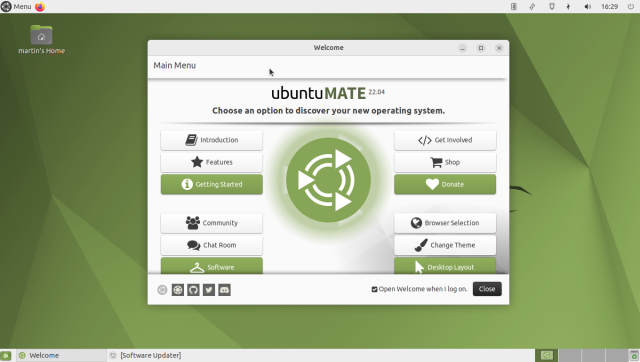
Linux? Well the number of services you run are on you, really. If you want 1 GB of Ram, install Mate and it's good. Monday rant over!
This entry was edited (3 months ago)

Say hello to @RocketChat a proud sponsor of Matrix Conference 2025 in Strasbourg!

🍴 Swing by their booth right by the food bar for a chat,
πŸ₯‚ join them co-hosting the welcome party on Wednesday, or
🎀 catch CEO Gabriel Engel on stage sharing his insights.

Thanks Rocket.Chat for sponsoring The Matrix Conference!

rocket.chat

Languages are fun, have mysterious rules called grammar, but their native speakers certainly don't care about all that. In other words, do native speakers of a language speak the language correctly, as textbooks prescribe? (Hint: Definitely not.)

Here's a video to illustrate this. Thanks, Google recommendations. youtube.com/watch?v=nIl_rdTUU1…

Winter blue tardis reshared this.

Today is nine years ago since I learned how a single fixed byte write outside a heap buffer in c-ares could be used in a sequence to execute code as root on Chrome OS:

daniel.haxx.se/blog/2016/10/14…

This entry was edited (3 months ago)

I don't know who of you posted this theory but thanks to you and my colleague who helped me test this, I know for sure no that you can use the sound split feature of your screen reader to send just the sound of your other apps, without the TTS, while screen-sharing on meeting platforms. I tested this with NVDA and Jitsi running inside Chrome. When NVDA is on the left and everything else right, only a faint echo of my TTS could be heard most likely owing to how my headset and the jack of my Thinkpad is wired. This must mean that probably Chrome or Windows take the right channel as the mix in case of doubt and when everything has to be mono, but then I might be wrong on all of that so let's goooo! I'll have to test with other platforms. #Accessibility #A11y #Blind

This is amazing research by Nadia Heninger and her co-authors Wenyi Morty Zhang, Annie Dai, Keegan Ryan, Dave Levin and Aaron Schulman. TL;DR a huge number of satellite links over our heads are totally unencrypted. satcom.sysnet.ucsd.edu/
This entry was edited (3 months ago)

It still boggles my mind that Xcode's *built in* AI autocomplete keeps suggesting APIs that don't exist.

Like, it's literally sitting on top of a compiler that can determine if an API exists, so why can't it ask the compiler *before* suggesting it?

The entire purpose of autocomplete is to help me find out the real name of hard-to-remember APIs. I'm perfectly capable of *misremembering* them by myself, I don't need the computer to do it for me

Just booked the train ticket to #Strasbourg for the #matrix conference 15-18 Oct. Check out the schedule:
2025.matrix.org/schedule/#full…
@fairkom is a silver sponsor of the matrix foundation and will present their experiences deploying SchulchatRLP for half a million pupils, teachers and parents on Sat Oct 18th 10:00. The greatest challenges were syncing users and groups from a central IDM and building a #kubernetes cluster on premises.
@matrix

πŸš€ We’re ready for The Matrix Conference 2025, kicking off tomorrow in Strasbourg!

🌍 300+ participants. 20+ countries. 10+ governments. All championing Matrix-based sovereign, secure and interoperable communications.

Read the blog for highlights and insights, and tune in for the livestream.

element.io/blog/ready-for-the-…

⇧