FOSDEM 2026 Reflections
Original Post

Last weekend, I attended FOSDEM, the largest Open Source conference in Europe. The last time that I attended was exactly a decade ago, and I had forgotten what it was really about.

But this became instantly obvious when (nearly) the first slide during the Opening Remarks shouted loudly: "Open Source has always been political". The emotional introduction instantly brought home what Open Source is really about: Activism to break the chains of "big tech". Although big tech wasn't so big when they started the conference over 25 years ago, it is now more required than ever.

As I remembered that it can be really hard to get into the rooms where talks are held — FOSDEM can be really busy — I had made a plan to divide my two days up in roughly four blocks to follow talks in the same room. I also made sure I showed up a talk (or two before), to have a better chance of having a seat in the talks I wanted to attend.

I spend most of Saturday following talks in the Geospatial and Legal & Policy tracks. Although Geospatial, mostly through OpenStreetMap, is my fun open data involvement, the Legal & Policy tracks were good to see.

In From Policy To Practice; Open Source in The Dutch Government, I learned from Gina Plat how the (old and new) Dutch governments are now pushing ahead with Open Source. With the more volatile situation in the USA, where constant threats of tariffs and other economic measure, they seem to now have understood, that it is vital to build up their own stacks. Although there have been policy and plans before, there is now also funding available to reduce the liability on US big tech stacks and software. It's not perfect, but there is certainly progress.

After more geo fun in the afternoon, I attended Neil Brown's "Online Safety" laws: reflections for FOSS projects (video). Although I am familiar with the topic, and have written about this before to my MP, it was good to see Neil explain how this affects open source projects specifically. The main take-away here was that although you can follow the law(s) to the latter, it is likely going to be more important to check what risk there actually is for users, and for the project itself, when the regulator comes knocking on the door.

Talks on regulations, mostly in the EU form, is what my piqued my interest next, and I spend most of my Sunday morning in the Open Source & EU Policy track.

I arrived early enough to catch the Digital Omnibus: is the EU's tech simplification a Risk or Opportunity from Open Source. How EU Policy is created is often complicated. This talk critically explored the challenges that policymakers have to make the regulatory burden on EU projects and products lighter. At the same time, regulation should not get in the way of innovation and competitiveness, but also not be so light that the general protections towards user privacy and control are watered down too far.

I was mainly aiming to see "The Fediverse and the EU's Digital Service Act". Jordan Maris moderated this panel discussion, with Sandra Barthel, Alexandra Geese (MEP for the Greens/EFA group), and Felix Hlatky (executive director of Mastodon GmbH), answering questions. The whole discussion was interesting, my main takeaways were the explanations by Alexandra on the DSA.

The provisions under the DSA are frequently derided by the American tech bros and their government allies as "censorship". Alexandra eloquently argued that the provisions in the DSA are explicitly meant to do the opposite. The DSA requires large operators to explain what their algorithms do, and how they work, to (try to) prevent the doom-spiral towards hate speech and othering. These algorithms have been designed to keep users engaged so that they see more advertisements. And the best way to keep users on your platform is to make them feel angry about something — usually vulnerable groups of people.

While listening to the panel, the though occurred to me that the approach by the EU is very different from the approach across the ocean. Where there the mentality is "work fast and break things", with no regulation to protect people's rights succinctly, in the EU the approach is strong regulation to prevent harm.

But that does require that the provisions are properly enforced, with enough resources, and sometimes with enough political will to not kowtow to the Americans with their tantrums. I suspect that we will see more of these tantrums in a short while, now that the EU is more keen to show its fangs as well.

On this side of the pond all is not well either. The UK's Online Safety Act is already a sad state of affairs, especially now there are rumours that they are considering banning age gating VPNs as well. But Age Verification as a measure to "save the children" is popping up in many jurisdictions. Age Verification and Assurance are antithetical to the open nature of the Web and free expression, and will not work regardless.

Where the focus now mainly is on websites themselves, there is a distinct possibility that regulators will want to enforce age on service level (app stores/package managers), on browser level, and on operating system level. These all conflict with open source variants (F-droid, Firefox, Linux), unless you withdraw the freedom that users have on what to run on their devices.

Nobody has any idea how a wide roll-out of Age Verification and Assurance will work out. It's like going straight to a release without beta testing. Preventing the broadening of Age Verification and Assurance is where the next fight for the open web and freedom of expression now must be.

We don't have the luxury of sitting on our hands, and as the opening slides of FOSDEM indicated that "Open Source has always been political", the closing remarks were equally pungent: We can't afford to not be politically active, and that's why we must engage with politicians. FOSDEM has fanned the flames in me for doing more again. Stay tuned!

And remember: "If we lose our democracies, Open Source is irrelevant and goes away".

Fediverse bespielen: Eine Übersicht für Social Media Verantwortliche

caliandro.de/blog/Fediverse%20…

Da ich öfters mit Bekannten, die für ihre Klinik, Kirchengemeinde, Verein, NGO, Kleinbetrieb die Social Media Präsenz managen öfters zum Thema IT-Sicherheit und IT Souveränität spreche, komme ich eigentlich immer auch auf das Fediverse als gesunde Alternative zu den großen Content Plattformen zu sprechen. Hierbei ist mir aufgefallen, dass es kaum Informationen zum Fediverse für berufliche Nutzende gibt. Daher also dieser Artikel als Gesprächsgrundlage für mich sowie als Nachschlagemöglichkeit für Interessierte


Edit: Ihr habt Verbesserungsvorschläge, Fehler gefunden oder Ergänzungen, die weiterhelfen? Teilt sie sehr gerne hier in den Kommentaren mit. Ich werde versuchen, alles zu berücksichtigen und einzubinden.
Danke

#fediverse #socialmedia #guidesign

This entry was edited (3 hours ago)
in reply to Carola Ottenburg

Danke! Ich nehme an, du hast einen 27"++ Monitor?

Aktuell ist das Layout wirklich so adaptiv, dass es die max. Browserfensterbreite nutzt.
Das könnte ich einfach auf eine feste maximale Breite beschränken.

Die Schriftgröße hatte ich vor längerer Zeit deutlich erhöht, eher pro Lesbarkeit und weil ich hier kaum mit Bildern und Grafiken arbeite.

Ich arbeite hier mit relativer Größe em und werde heute Abend mal prüfen, ob ich hier etwas optimieren kann.

Maybe I'm one of an increasingly small group of AI-assisted coding holdouts by insisting on reviewing most if not all generated code--I don't think I'll ever be complete robot factory about it because I've seen too many dumb mistakes--but it really does get overwhelming. Recently I switched from a plan-based workflow to beads, and it feels like it might be a game-changer.

Beads is like a mini command-line issue tracker built for agents. Instead of writing giant markdown plans that inevitably go off the rails, I instead have it open beads/issues for tasks, each with dependencies and blockers. I can then tell it to pick work from bd ready, which kicks off a full test/develop/review/close cycle complete with review comments, evidence, and verification stages. When done, I'm left with a much more manageable review artifact that the agent has already checked for obvious footguns, rather than a few sections in the middle of a plan that may or may not be done. When that's done, I can just ask for another round of picking something from bd ready and repeat.

Neatly, it also seems to open issues when it finds bugs or things that might be wrong. And none of this pollutes any human-facing issue trackers, so plans can be broken down into very granular tasks. Paired with jj, I even have it retroactively editing linked changes as long as those changes aren't pushed and immutable.

I also appreciate that it seems to do handoff well. I'm working on porting Paperback to Linux. It did a live region implementation, including researching 2 implementation paths and documenting its research in a ticket. When done, it assigned me another ticket to test the flow in Orca, complete with very specific steps on hotkeys to test and expected announcements.

I hear so many stats on how developers are XX% less effective with AI than they believe they are. I'd be interested in how those stats translate to folks with disabilities. Even with all the workflow ceremony I've created that basically mimics a ticket implement/review cycle, I feel like I'm working far faster than I could before, and after my review feedback, my work is of comparable or better quality. Maybe it'd be different if I could just skim a syntax-highlighted screen of code for errors, or quickly research dbus APIs and libraries. But I can't, so here we are.

Two announcements.
1. WhatsApp scripts have been updated. Leasey has also been updated to reflect this change.
Pressing Control+Shift+F10 should enable you not to hear the tutorial messages as you move through the chat list. This is a toggle action so can be enabled or disabled.
2. There will need to be a Leasey update to coincide with the February 2026 update to JAWS. While we will be very close to the release of Leasey version 11 at that point, version 10 users will also receive this update.

Sustainable accessibility in complex organisations: strategic foundations by Henny Swan on the @TetraLogical blog:
tetralogical.com/blog/2025/11/…

#SustainableAccessibility #accessibility #a11y #strategy

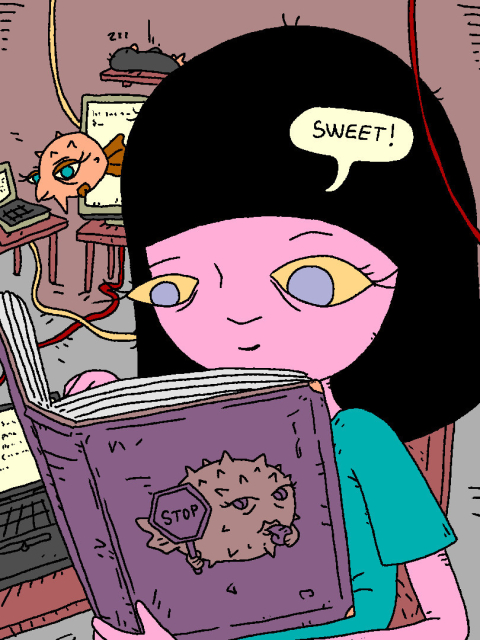
acquired - tome of pf

(this is not sponsored content, I just like the book)

thank you @pitrh

nostarch.com/book-of-pf-4th-ed…

#unix_surrealism #comic #technomage #openbsd #pf #bookofpf

This entry was edited (2 hours ago)

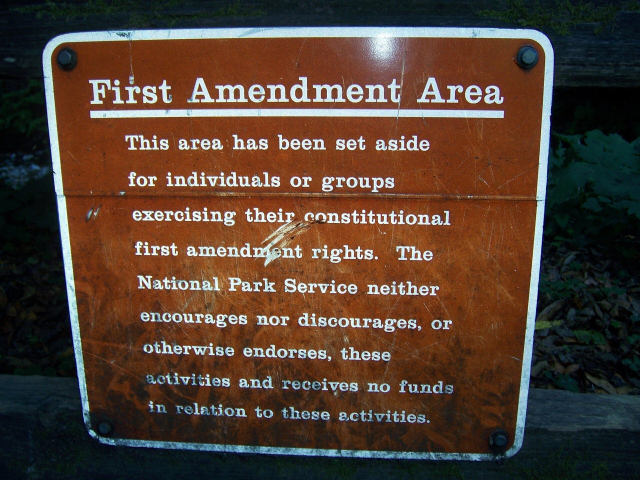
Analysis: The Long War on Free Speech

Under virtually every president, the US govt "has treated the First Amendment with contempt"...

..."consistently attacking the speech & assembly rights of Americans who speak out against the crimes & abuses of the Washington ruling class."

"The federal government’s hatred of the freedom of speech rights... is among the most clear & powerful testimonies of our country’s history."

counterpunch.org/2026/02/03/th…

#USPol #EUPol #CdnPoli #FreeSpeech #Censorship .

Analysis: Hitler, Stalin & Trump

"Every area of life—from culture & the arts to education & science—becomes subordinated to the preferences" of the authoritarian leader.

"Hitler was unusually successful, reordering every aspect of German society."

Trump’s retributions "are designed to intimidate political opponents, particularly liberals & progressives in the states that voted against him in 2016, 2020, & 2024."

counterpunch.org/2026/02/02/ac…

#USPol #EUPol #CdnPoli #Autocracy #Trump .

#XMPP Community

The #Chat of the Future Initiative discusses their spring 2026 activities today from 19:00 (UTC+1)!

Activities: XMPP’s strong points, organising online meet-ups and #interoperabilty sessions.

xmpp.org/2026/01/chat-of-the-f…

#jabber #chat #rtc #messaging #federation #opensource

Ever wondered how car engine #SoundDesign for games is achieved? Check out this deep dive with test files to try. boomlibrary.com/blog/the-car-e…

Just been thinking about my childhood.
A lot of people took a lot of time to nurture my love for music. I could go on all day about that.
Today though, one memory in particular sticks out, involving one rather short conversation with @FreakyFwoof, which contributed to that more than I think we could ever have foreseen.
If I was being poetic, I might say he showed me the keys to my very soul. So wanted to reach out and say a massive thank you for that.
in reply to Andre Louis

We were in the music room just after a lesson, and you asked me what I listened to. My musical taste was very narrow back then. Most people listen to music for the lyrics. I listened out for how well someone could show off in a solo. And you said, very casually, "you don't know what you're missing", and encouraged me to start listening to music with an open mind. In other words, you gave me permission to explore, instead of judging me for not exploring. Dunno if that makes sense or not. Either way, it helped a lot, and I've come to appreciate just how intricately artistic music is since then. So thanks.

The Guardian has a piece on British typographer and graphic designer Margaret Calvert, who’s (partially or wholly) responsible for the British highway signage typeface (Transport), the British Rail typeface (Rail Alphabet) and the pictographs on British road signs, and whose autobiography is also out:

theguardian.com/artanddesign/2…

Motherfucker on Psychology Today literally argues that AI is bad because "before AI, confidence usually carried the weight of effort, and that effort was often a badge of accomplishment."

Conclusion:

Confidence is for non-disabled successful people. AI is bad because it allows disabled people to have confidence and maybe, just maybe, gives them the wherewithal to get out of disability.

Fuck everyone writing about AI right now like they know anything because they clearly know less than nothing about the real world. 😾

John Nosta, if you can see this, literally fuck you, you hack.

#AI #Ableism #Accessibility #PsychologyToday #Neurodiversity #DigitalEquity #DisabilityJustice #TechEthics #JohnNosta #CognitiveLiberty

in reply to Ellis C.A. Arcwolf (Author)

Please reply telling me how much you enjoy talking over disabled people, and I will gratefully block you.

I have to deal with enough shit from neurotypicals and society while battling homelessness. Go run your toxic purity tests elsewhere. AI is currently saving my life. You are—as you come at me trying to make me feel bad for not giving up—actively working to end it.

Your rage reminds me that the world is cruel and wants me dead. And I refuse to die, no matter how much you try to make me want to kill myself.

Seriously, if this is you, the kindest thing you can do for me is fuck off and let actual humans who care about other humans and not only about virtue signaling have a say.

#AI #Accessibility #DisabilityJustice #Ableism #ActuallyAutistic #Neurodivergent #Survival #Homelessness #MentalHealth #DigitalEquity #CognitiveLiberty #Gatekeeping #ToxicPurity #BlockList