During tomorrow's webinar, we'll be demonstrating how you can download and listen to podcasts on your BT Speak! Tuesday, July 1, 7:00 PM Eastern time us02web.zoom.us/j/81033758140?… #BTSpeak #Blind
To all LinkedIN colleagues
After careful consideration, we have made the difficult decision to cease trading, and as of 30 June 2025, will be closing our operations permanently.
Here is a cool video of a 747 pilot getting to do a once in a lifetime experience, that being actually getting the chance to ride with the blue Angels! youtu.be/cg2HHgMvzNo?si=2gbTyW…
One of my earliest memories as a kid was watching fighter jets fly over my house and seeing the Blue Angels when they came to town. Watching the video I sti...
Have you ever wished that you could download and listen to your favorite podcasts on your BT Speak? Have you wished that you could download your favorite NFB Newsline content every morning for offline reading. As of today, you can. We are pleased to be able to offer you these features, along with being able to set reminders for your appointments, in this latest free update for your BT Speak. Read all of the details at blazietech.com/july-2025-updat… DG #BTSpeak #blind
With the clarity of hindsight, it's fine to say Honda would obviously nail a reusable rocket test
But, I don't think anyone outside the company actually expected this. Honda has a history of venturing out to experimental work E.G. robotics, but this is totally new
In this video, @patrick_h_lauke, Principal Accessibility Specialist, takes a dive into some of the built-in accessibility features of the Fire TV platform.
For many users with disabilities, web content is just one part of a wider digital experience that includes apps, streaming services, and devices that aren’t traditionally associated with web accessibility.
In this video we'll give a quick rundown of some of the accessibility features of the Amazon Fire TV – pairing a bluetooth keyboard as a controller, VoiceVie...
And here's another archive of various DOS screen reader demos,, manuals and other vintage blindness software. Note: My antimalware program, MalwareBytes, flagged this site as having malicious activity. I am fairly certain that this was a false positive but it is still wise to scan anything that you download. ftp.zx.net.nz/pub/mirror/ftp.i…
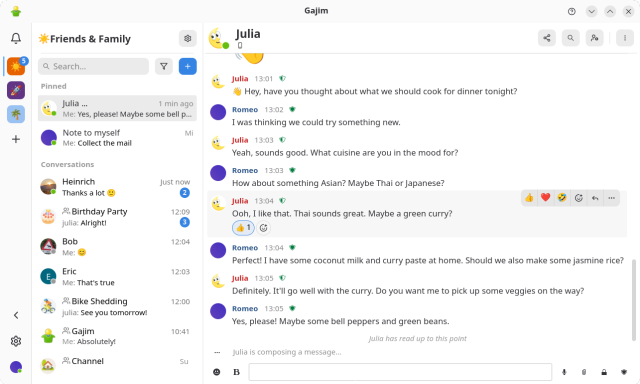
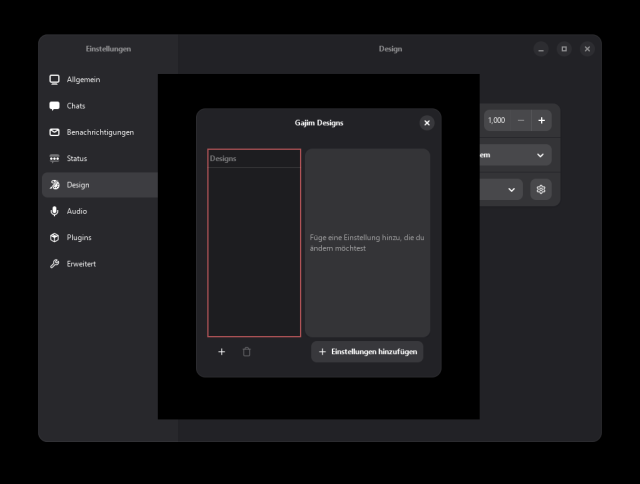
A fresh new look for Gajim arrived! 😎 With this release Gajim introduces Adwaita, a library providing styles, nicely designed user interface elements, animations and more. Many dialogs, including Preferences and Plugin management have been redesigned.
This release is available on Windows again - finally!
What’s New Gajim 2.3 comes with a new design featuring Adwaita, a user interface library which provides building blocks for modern adaptive applications.
adwaita this monster from gnome? I'm not surprised as it is more and more difficult to build gtk3+ app without it. But still, I don't welcome it, it's more burden you have to deal with (and versions)
Congrats on the release! Anytime a Linux GUI app gets more beautiful, that means a great deal to all the non-geeky users of the world, where aesthetics and convenience are king. I just hope it stops short of getting bloated and slow - witness the sluggish Node.js horror show that the #Signal desktop client is, in #Linux.
BTW: What version of OMEMO does Gajim support? Does the website or documentation say this anywhere?
In recent GTK4 versions (around GTK 4.19), I get a black border around every GTK window. I compile GTK myself using the latest Visual Studio Buildtools...
And here's an archive of various DOS screen reader demos,, manuals and other vintage software. Note: My antimalware program, MalwareBytes, flagged this site as having malicious activity. I am fairly certain that this was a false positive but it is still wise to scan anything that you download. ftp.zx.net.nz/pub/mirror/ftp.i…
I was once told I was being dramatic, when I explained that an animation was making me nauseous. Expect: I’m not the only one. Motion and pseudomotion in digital interfaces can trigger nausea, vertigo, migraines, and even seizures for users with vestibular disorders, migraines, epilepsy, and other neurological conditions.
Newton’s Cradle with one red ball hanging on a thread, retracted and about to bang into five silver balls also hanging by threads. Motion sensitivity is a...
one of the more astounding things I've learned from Jon is that rail nerds and rail advocates love trains more than the rail industry loves trains. gruene.social/@jon/11477181237…
Attached: 1 image
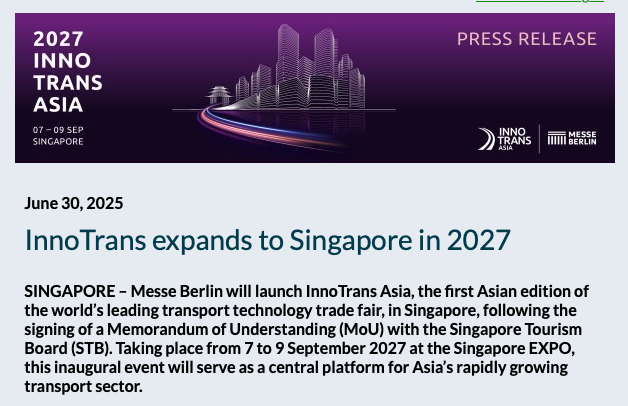
Messe Berlin
Let's expand Innotrans - the railway trade event - to Singapore, a place *PRETTY MUCH NO-ONE CAN GET TO BY TRAIN*
🤨
https://www.innotrans.de/en/innotrans-asia/
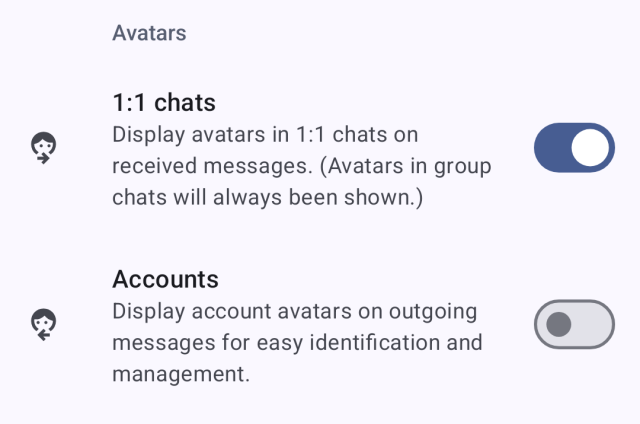
A couple of versions ago I introduced a setting in #Conversations_im to hide the avatars next to message bubbles.
I'm personally not a big fan of the look, but it does bring it closer to what Signal and Google Messages are doing.
The next version will split that out into two settings: One that controls the avatar on received messages and one on sent messages. (Indicating what account is being used.) Hiding only the latter is a decent compromise for those who use the app with a single account.
CBC - The Canadian government rescinds the digital services tax, days after President Trump demanded it gone and cut off Canada-US trade negotiations. cbc.ca/news/politics/digital-s…
all countries should have a digital services tax. For years my small company with a t/o less than 100k paid more corporation tax than most of the large international digital companies did.
Please join us for our monthly webinar scheduled for Tuesday, July 1 at 7:00 PM Eastern Time. We’ll be introducing a new feature which will be included in the next BT Speak update. You will also have a chance to ask questions and provide feedback to the team at Blazie Technologies. Below is the Zoom meeting link. us02web.zoom.us/j/81033758140?…
Meeting ID: 810 3375 8140 Passcode: 024541
One tap mobile +13017158592,,81033758140#,,,,*024541# US (Washington DC)
Dial by your location • +1 301 715 8592 US (Washington DC)
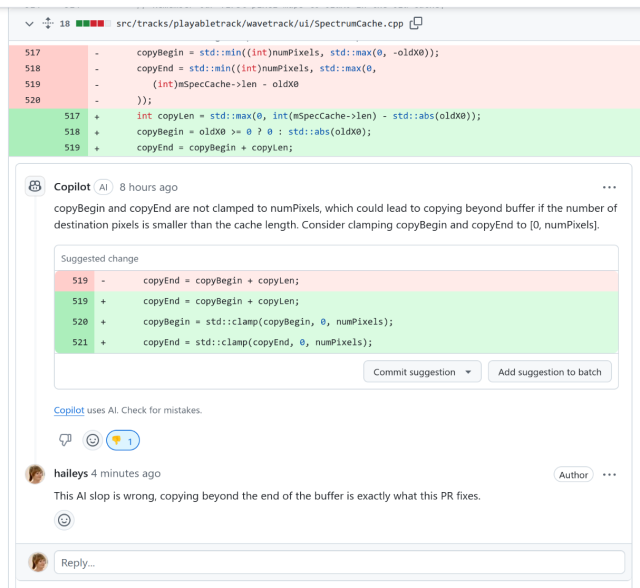
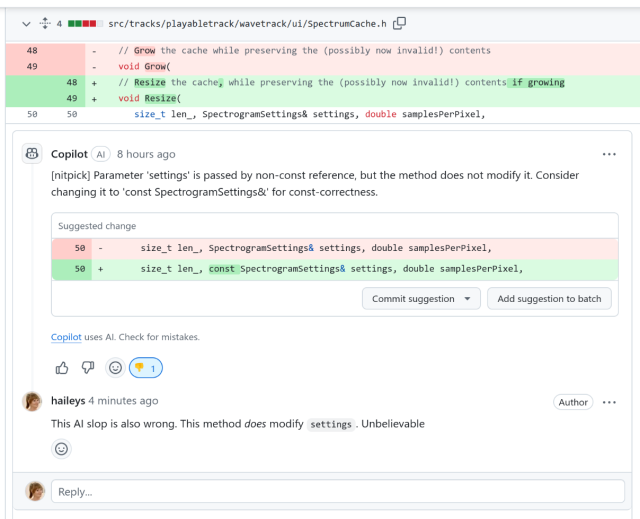
I have taken to looking for Copilot AI in GitHub responses before filing issues. If it’s there, I don’t file. Feeling a bit validated here: hails.org/@hailey/114752144098…
(limited alt to come, but if you want more ask OP…)
Sent a pull request to Audacity fixing a crash bug I'd been running into frequently. The cause was an out-of-bounds memmove. Classic C++ areas.
Anyway I got a fucking copilot review on my PR which left two comments, both completely wrong, one of which suggesting I reintroduce the out of bounds memory access. I'm furious!
Alas I've just ordered a WIFI enabled, AI washing machine; and the copyright doesn't even include CURL; I thought the 5 year warranty would enable be to ask @bagder for advice on getting my clothes cleaner. Still, it seems to have everything else, NuttX and contiki low power OSs (neither of which I've come across), Uboot, wpa_supplicant, cJSON, FatFS (They've had fun misprocessing the GPL text as html or something)
Thanks to the Blind Vintage Tech list, here's an archive containing digitized copies of Computer Talk magazine. Another great find. groups.io/g/bvtc/message/727
@rooktallon I think that the contents of all of these archives of vintage blindness software, manuals, periodicals, etc., should definitely be uploaded to the @internetarchive just as someone did with Playback. I'm willing to assist with this but I won't have time in the next few weeks. If anyone has the time to do it, please feel free.
So there must be at least ONE single video showing one of the alledged killings. Not asking for ten. Not asking for five. Just ONE video. Hamas was able to produce dozens of videos of their own attacks but not to produce ONE actually showing IDF shooting at unarmed civilians. But people believe what they want to believe, so proof doesn't matter, apparently.
L'un de mes artists favoris de tous les époques et peuples. « Captain, don't you leave me, Clear away in the morning, There's no one here that needs me, Oh, bring her round. » #Mastobada youtube.com/watch?v=tT-HSu7SpH…
Provided to YouTube by The Orchard EnterprisesClear Away in the Morning · Gordon BokPeter Kagan and the Wind℗ 1971 Smithsonian Folkways Recordings. Originall...
In a recent CNN report, skepticism surrounds the Trump Organization’s claim that its new “T1” smartphone is “Made in the USA.”
Experts, including Todd Weaver, CEO of Purism, challenged the claim, citing striking similarities between the T1 and a low-cost Chinese phone, the Revvl 7 Pro 5G, made by Wingtech, a Chinese manufacturer.
Weaver emphasized the logistical and technical difficulty of building a phone in the U.S.
Purism makes premium phones, laptops, mini PCs and servers running free software on PureOS. Purism products respect people's privacy and freedom while protecting their security.
Provided to YouTube by Keltia MusiqueQuinze marins · Michel Tonnerre · Michel Tonnerre · Michel TonnerreTi Beudeff (Chants de marins - Songs of the Sea from ...
Wszedł w życie European Accessibility Act. No i ciekawe jak to będzie. Podobnie jak z klauzulami niedozwolonymi pewnie pojawią się spryciarze szantażujący małe sklepy, bo nie wstawiły alta.
A co z dużymi? Co z Allegro, które jak wynika z artykułu ma duże problemy z dostępnością i na razie ich nie rozwiązuje?
Z tego co rozumiem, w przeciwieństwie do Amerykańskiego ADA, coś takiego (niestety) w Europie nie ma sensu.
W USA to osoba niepełnosprawna wytacza proces, który może odwołać po osiągnięciu porozumienia z oskarżonym, tzw. settlement. Z racji, że w Amerykańskim systemie prawnym nie pokrywamy opłat za obsługę prawną strony przeciwnej, niezależnie od wyniku procesu, często bardziej opłaca się zapłacić trollowi, nawet jeżeli troll nie ma racji i sprawa jest do wygrania.
Tutaj takie "trollowanie" ma zdecydowanie mniej sensu. Każda sprawa musi i tak przejść przez urzędy, a osoba trollująca ma zdecydowanie mniej możliwości pójścia na ugodę. Spodziewam się też, że ewentualne kary (zwłaszcza te dla trolla) będą w rzeczywistości zdecydowanie mniejsze, co zniechęci do takich praktyk.
IMO ten Amerykański system wcale nie jest taki zły jak go malują, ale to już insza inszość.
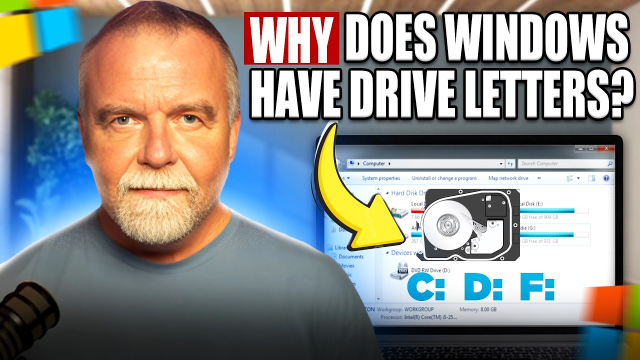
I know why c: is the first Windows drive letter, but I had no idea about most of the rest of this. Mounting into folders? Hard links? I never knew Windows could do any of this. youtube.com/watch?v=7Rbw953DXg…
Dave explains both why Windows still has drive letters and how you can operate free of them using modern Windows features link hard links, soft links, juncti...
I got caught up in this this weekend. I was supposed to fly home Saturday but my flight got bumped to Sunday. More than 200 flights were delayed over Saturday and Sunday at Vancouver International Airport. And Monday is expected to be a busy travel day. (Maggie MacPherson/CBC)
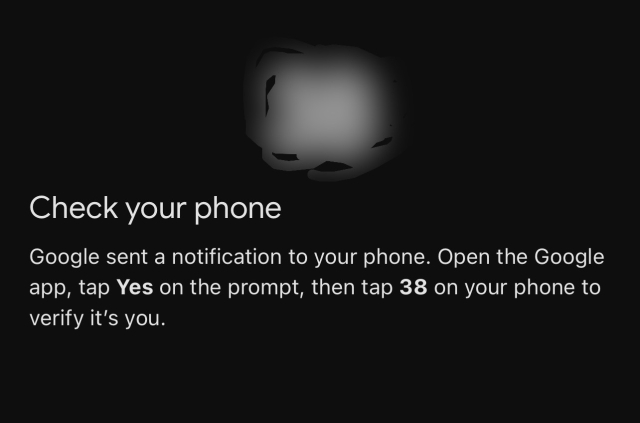
So I bought a new phone and found out I can’t log into any Google apps because I have two factor authentication and one of the factors is being logged in to a Google app on your phone.
So I need to be logged in to the Google app to login to the Google app. 🤦🏾♂️
uh huh. I'm not spending the time to build those checkboxes and mapping tables for 3+ different TLS libraries. It's the admin's job to know their security requirements and how their chosen software meets those requirements. If they don't know them, they can keep the defaults.
In OpenLDAP we don't dictate which crypto library you use. We certainly aren't going to tell you which cipher suites to use, that's up to you.
I wish I never had to think about cipher suites and could just rely on OpenSSL's defaults, but when an OpenSSL update happens and I can no longer connect to WiFi networks I need to connect to (but have no control over), I need to go around copy/pasting strings I find on StackOverlow into config files T_T
I wish security people didn't go around breaking people's systems all the time
Nobody is typing those strings in. They cut and paste, and the most often done modification is "remove this particular bit".
A string in a config is far superior to some sort of GUI for this, as some people will simply check or uncheck all the boxes. 99% of the time I've modified the cyphersuite I've been in a ssh session - please, no GUI.
The best alternative is a frequent patch cadence by the software provider, and maybe some ugly error messages ("you are using known-bad cipher XYZ - pausing 300 seconds" on startup) or even an abort if someone is trying to use known-bad ciphers. If people don't patch promptly, that's on them, the world needs people to serve as examples of what not to do...
The real issue here is obsolete blog posts and overly-trusting "admins" who treat the cyphersuite as voodoo - and checkboxes won't fix them.
📣 Do-It-Blind (DIB) online Besprechung am Montag, 30. Juni, um 19:00 Uhr. Du bist eingeladen! Wöchentlich am Montag besprechen wir neue Formen der digitalen und inklusiven Zusammenarbeit. Mach mit! 🛠️ #make #blind #inklusionbbb.metalab.at/rooms/joh-szv-o…
Learn using BigBlueButton, the trusted open-source web conferencing solution that enables seamless virtual collaboration and online learning experiences.
Digital Sovereignty in Practice: Web Browsers as a Reality Check
Reading in Servo’s latest weekly report that it’s now passing 1.7 million Web Platform Subtests, I started wondering: How much investment would it build it into a competitive, independent browser, in the context of all this talk on digital sovereignty?
The current browser landscape reveals how concentrated digital control has become. Roughly 75% of global web traffic flows through browsers based on Google’s Chromium engine; not just Chrome, but Microsoft Edge, Samsung, and dozens of others. Apple’s Safari dominates iOS but remains locked to their ecosystem. Firefox, once a genuine alternative, has declined to under 5% market share globally. This means American companies control how billions of users worldwide access the web. Every search, transaction, and digital service flows through infrastructure ultimately controlled by Silicon Valley. For societies valuing their independence and sovereignty, this represents a fundamental vulnerability that recent geopolitical events have made impossible to ignore.
Digital infrastructure is as important as energy or transportation networks. Unlike physical infrastructure, however, digital systems can be controlled remotely, updated unilaterally, and modified to serve the interests of their controllers rather than their users. Browsers exemplify this challenge because they’re both critical and seemingly replaceable. In theory, anyone can build a browser. The web standards are open, and rendering engines like Servo prove it’s technically feasible.
In practice, building browsers requires sustained investment, institutional coordination, and overcoming network effects that entrench existing players. If democratic societies can successfully coordinate to build and maintain competitive browser alternatives, it demonstrates their capacity for more complex digital sovereignty goals. If they cannot, it reveals the institutional gaps that need addressing.
Firefox offers important lessons about the challenges facing independent browsers. Mozilla has indeed faced difficulties: declining market share, organizational challenges, and ongoing technical issues. The organization has also alienated its most dedicated supporters by pivoting toward advertising, AI initiatives and cutting their impactful public advocacy programs.
However, Firefox remains the only major browser engine not controlled by Apple or Google, serving hundreds of millions of users worldwide. Its struggles reflect structural challenges that any alternative browser would face: the enormous engineering effort required to maintain web compatibility, the network effects favouring dominant platforms, and the difficulty of sustaining long-term technical projects through diverse funding sources.
Yet, building a competitive alternative browser infrastructure would require substantial but manageable investment. Here is a ballpark estimation I made based on existing browsers: Annual operating costs would include:
Engineering Team of ±50 developers, designers, managers etc.: €15 million.
Quality Assurance and Testing Infrastructure: €10 million
Security Auditing and Vulnerability Management: €10 million
Standards and Specification Development: €5 million.
It would probably take around 3-4 years to fully build an alternative browser from scratch, less so if it’s a fork of one of the existing ones. Forking Chromium/Gecko or building upon Servo’s foundation could reduce this timeline to 18-24 months for basic functionality, though achieving full web compatibility and market readiness would still require several additional years of refinement. The initial development sprint needs to be followed by a sustained engineering effort needed afterward, for maintaining compatibility with evolving web standards, fixing security vulnerabilities, and keeping pace with performance improvements.
The core challenge isn’t technical; it’s institutional. How do you sustain long-term technical projects through democratic processes that span multiple countries with different priorities, resources, and political systems? Successful models exist. The European Space Agency coordinates complex multi-national technical projects. CERN manages cutting-edge research infrastructure across dozens of countries. The Internet Engineering Task Force maintains critical internet standards through voluntary coordination among global stakeholders. The “Reclaiming Digital Sovereignity” proposal specifically addresses this challenge by advocating for “new public institutions with state and civil society representation” to govern universal digital platforms, alongside “multilateral agreements on principles and rules for the internet” as safeguards for autonomous, democratically governed solutions.
Browser development could follow similar patterns: international frameworks that respect national sovereignty while enabling coordinated action, governance structures that balance technical expertise with democratic accountability, and funding mechanisms that provide stability across political cycles. The Reclaiming Digital Sovereignity’s report’s emphasis on “democratic international consortia” and “public knowledge networks led by a new public international research agency” provides concrete institutional models that could be adapted for browser development. Germany’s Sovereign Tech Agency represents another model for public investment in digital infrastructure for the public interest.
With all that being said, browsers represent one of the more achievable digital sovereignty goals. They’re built on open standards, rely heavily on open source components, and face fewer network effects than platform-based services. Other areas of the technology stack would be far more challenging, and far less open.
Success here would demonstrate that democratic societies can coordinate effectively on complex technical infrastructure and pass the first hurdle. Failure would reveal institutional gaps that need addressing before attempting more ambitious digital sovereignty goals. Democratic digital sovereignty is challenging but feasible, if societies are willing to think institutionally, invest sustainably, and build incrementally rather than trying to recreate Silicon Valley with different ownership structures.
Ultimately, the real question isn’t whether democratic societies can build alternative technologies, but whether they can build the democratic institutions necessary to govern them effectively across the complex realities of international coordination, competing priorities, and long-term sustainability. I believe browsers offer an ideal place to start testing these institutional innovations. The technical challenges are surmountable. The institutional ones remain to be proven.
Views expressed are personal and do not represent any organization.
It is time for Linux to fully join the ✨AI✨ gravy train. Now you finally can ask our AI agent to answer the ultimate Linux questions: is Linux about choice?
To write this article, I went beyond the limits of my technical knowledge, which is that of an advanced user who has studied standard formats and their characteristics in depth, to understand why standard formats – one of the pillars of digital sover…
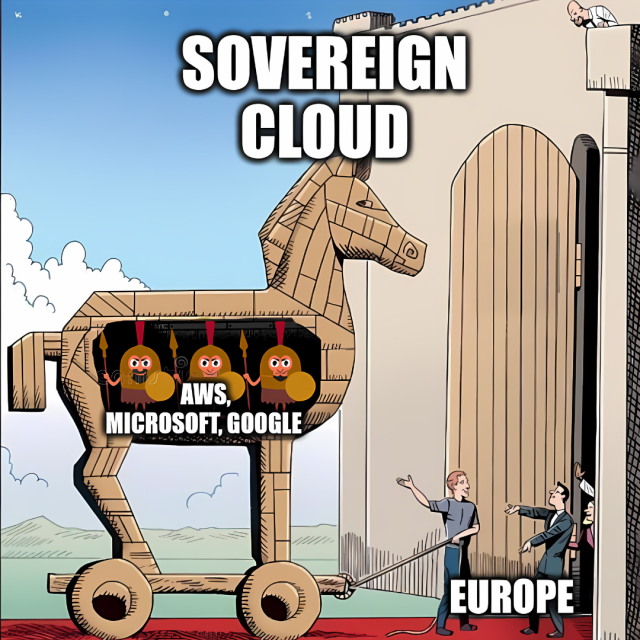
Microsoft, Google, and AWS recently published “sovereign clouds”.
❌ BUT digital sovereignty doesn’t come from shiny new product names such as these “sovereign clouds” - which still must hand out data to US without a warrant based on the CLOUD Act and FISA.
✅ Digital sovereignty comes from full European legal and technical control. Everything else is nothing more than sovereign washing.
AWS, Microsoft, Google - they all launched "sovereign clouds" recently. But the truth is, all US companies are subject to US data sharing legislation. Let's explore whether it's safe to use US clouds or whether it's just "sovereign washing".
@Dragon It's still in beta, we plan to make it available on Revolutionary as well. You can book Legend just for one month and then switch to Revolutionary once you're done with the import. Apologies for the hassle.
I'll have to revisit it, I remember trying tuta a while ago and it not being suitable for me, it was before you even had Import though so that may have been why
Created a free account to play with the android app (I did have one ages ago, but it got deleted due to inactivity so shouldn't be breaking the 1 free account rule)
Android app synced contacts, need to check I can export/import calendar.
I think the reason I ended up not going with tuta last time was the lack of import (which you now have) but i need to check.
Yeh I just moved my domain over, had an issue with a + address not working but I think It just took a while for the alias to create.
I have a couple logins elsewher ethat use + addressing (which zoho just supported) looks like they DO work on tuta if you have either a catchall or create them explicitly.
Thankfully I didn't use + addressing much e.g me+service@mydomain.
@bartknubben Actually, we used to use a small German provider, but had to switch because they could not defend adequately against attacks, see here: tuta.com/blog/ddos-dns-attack
We don't like having to use AWS, but for the domain, we must use something big as for some reason we're a high-profile target for attacks. 🤔
What alternatives would you suggest (we'd love to switch to something better!)?
There are certainly EU anycast DNS providers that could fix this for you. Might also be a good idea to use two of them. See for example: - cloudns.net/ - rcodezero.at/en - netnod.se/dns




















 For options see: european-alternatives.eu/categ…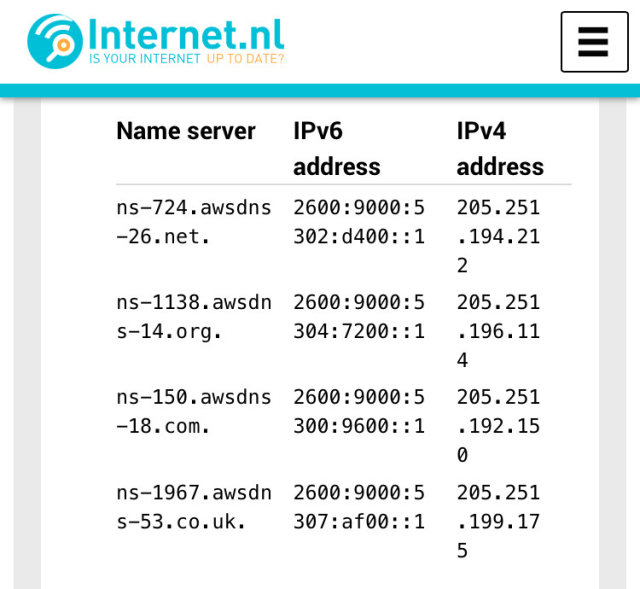











feld
in reply to Doughnut Lollipop 【記録係】 • • •