Search

Items tagged with: digitalsovereignty


3/3

HOW EASY IS IT TO MOVE FROM MICROSOFT?

TECHNICALLY: Very feasible. Strong FOSS alternatives exist for everything:
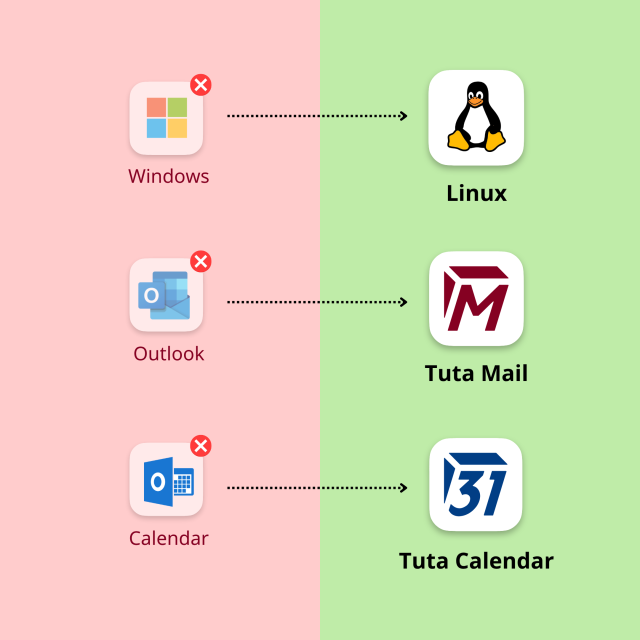
Windows → Linux (Ubuntu, Debian, Fedora)

Office → OnlyOffice, LibreOffice

Exchange/Teams → Matrix/Element, Nextcloud

SQL Server → PostgreSQL, MariaDB

Benefits: No per-seat licenses, data sovereignty, transparent security, longer hardware life, no forced obsolescence.

THE REAL CHALLENGE: Organizational, not technical

Legacy Windows-only apps & VBA macros (need rewriting or VMs)

User retraining & change management (people lose muscle memory)

Political will & leadership commitment (critical!)

External partner expectations (.docx, Outlook, Teams)

SUCCESS FACTORS (proven by Lyon & Gendarmerie):
• Strong political backing at highest levels
• Adequate budget & realistic timeline
• Comprehensive training programs
• Willingness to maintain hybrid systems during transition
• Local/regional procurement (Lyon: 100% French contractors)

CURRENT MOMENTUM:
Denmark, Germany (Schleswig-Holstein), Netherlands, Italy, and Slovenia are all pursuing similar digital sovereignty initiatives through FOSS

Bottom line: #France proves that digital sovereignty through open source works at massive scale (103K+ workstations). They're not reinventing wheels—they're making smart use of mature, proven technology with European hosting and governance.

Lyon Register article: theregister.com/2025/06/26/lyo…

#OpenSource #DigitalSovereignty #Linux #FOSS #France #Lyon #PublicSector #Ubuntu #Matrix #GendBuntu #Europe #Microsoft

(3/3)


In our journey to #DigitalSovereignty, here's where we are:

- Domain registration: TransIP and Prolocation 🇳🇱
- Email, calendar, collaborative writing, and more: mailbox.org 🇩🇪
- Document store: Tresorit 🇨🇭
- Critical infra hosting: Hetzner 🇩🇪
- Discourse hosting: Communiteq 🇳🇱
- Security: 1Password.eu 🇨🇦/🇪🇺 and Yubico 🇸🇪

Next up: GitHub —> Codeberg 🇩🇪

To-do: Slack —> Zulip, Matrix, Mattermost?

#OpenSource #DNS #BGP


I think #Signal seems to be a really good app. Both from UX perspective and privacy (as far I've heard from others).

But it's still US software hq:ed in Mountain View California (with Alphabet, Google, LinkedIn), so switching to it does nothing (0) towards European digital independence. It doesn't help promote the emergence of strong European alternatives to US tech. It actually does the opposite when the European alternatives miss out on an influx of new users.
#digitalsovereignty #diday


Every time I install a new piece of infrastructure for my homelab as part of becoming more independent from Big Tech, I see a hint on the homepage of that new piece of infrastructure that mentions they received sponsorship from @nlnet almost as if NLNet has been silently preparing Europe for #DigitalSovereignty with Open Source projects ;) I like!


Once again, the buy #European is trending. What are your favorite European brands? 🇪🇺

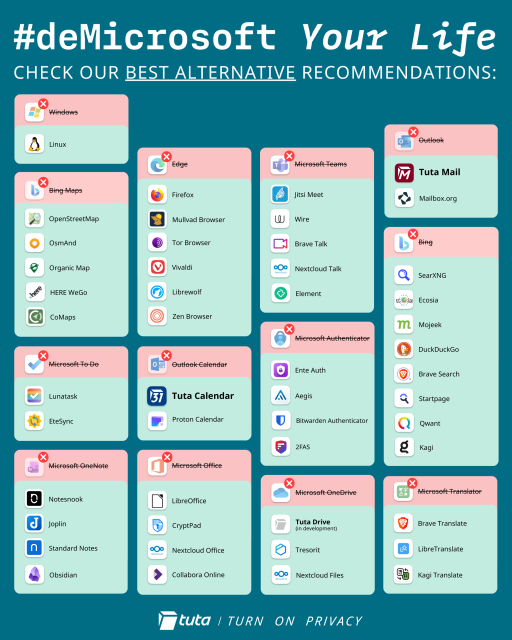
In our latest guide, we take a look at the best European products you can use 👉️ tuta.com/blog/boycott-us-choos…

#BuyEuropean #PrivacyFirst #GDPR #DigitalSovereignty #PrivacyTech


In my opinion, lack of accessibility is the main *real* argument against the widespread adoption of Free and Open Source Software.

I reckon, if, especially European, governments and institutions really are serious about digital sovereignty, they should invest serious money (I'm talking billions with "B") into that area.

#a11y #FOSS #DigitalSovereignty #EU


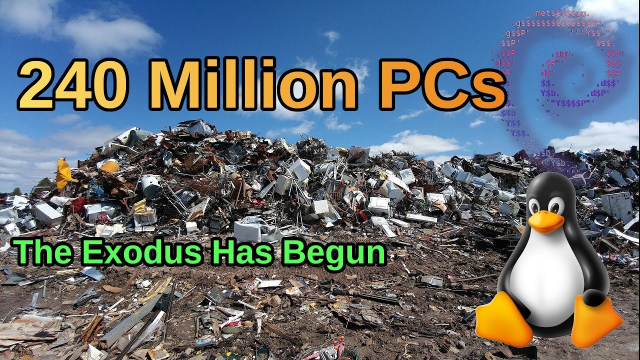
🚨 NEW VIDEO: The Windows Exodus Has Begun.

2025 was the breaking point. Forced hardware retirement and intrusive AI have sparked a mass migration to GNU/Linux. In this video, I explore:

📈 The data behind the 3.20% Steam high.

🇪🇺 How the EU is saving millions by ditching Microsoft.

🛡️ Why 2026 is the year of Digital Sovereignty.

Stop fighting your OS. Start owning it.

🔴 Full Video: youtube.com/watch?v=dLzdTgCXyR…

#TerminalTilt #WindowsExodus #Windows10 #Windows11 #Microsoft #WindowsEOL #Recall #Copilot #DigitalSovereignty #Privacy #DigitalPrivacy #NoAI #HumanMade #DeGoogle #EthicalTech #Autonomy #DataSovereignty #AntiSpyware #Telemetry #SurveillanceCapitalism #RightToPrivacy #Encryption #SoftwareFreedom #ExitWindows #Migration #LinuxGaming #GamingOnLinux #SteamDeck #Valve #Proton #Bazzite #SteamOS #HandheldGaming #PCGaming #ROGAlly #LegionGo #GamingCommunity #SteamHardwareSurvey #EWaste #Sustainability #RightToRepair #PlannedObsolescence #CircularEconomy #GreenTech #SaveThePC #Hardware #Environment #EUtech #PublicMoneyPublicCode #OpenStandards #SchleswigHolstein #GermanyTech #GovernmentIT #DigitalRights #Linux #GNUlinux #Debian #Trixie #FOSS #FLOSS #OpenSource #LibreOffice #Thunderbird #Nextcloud #SelfHosted #HomeLab #CLI #CommandLine #Terminal #Bash #FishShell #Dotfiles #SysAdmin #QueerTech #TransInTech #DisabledInTech #Accessibility #Queer #LGBTQIA #LGBT #HumanContent #ContentCreator #SmallYouTuber #SmallStreamer #YouTube #IndieCreator #SupportIndependent #LinuxUser #Tech #TechNews #OperatingSystems


Happy Jabber Day 🎂 🥳

On January 4, 1999, Jabber was first announced to the public¹.

Twenty-seven years later, Jabber—or XMPP, as it became known after standardization through the #IETF—remains the only truly vendor-independent, federated instant messaging platform.

In almost three decades, XMPP has never stopped evolving and remains our best tool for digital independence.

¹: tech.slashdot.org/article.pl?s…

#DigitalIndependenceDay #Jabber #XMPP #DiDit #DigitalSovereignty #DiDay #JabberDay


Meredith Whittaker (@Mer__edith) has been invited to speak at #39C3 later today. If you make it to the mic in time, here is an interesting question for her: "If I’m put on a boycott list by the Trump regime because I’m openly anti-fascist or oppose war crimes, will you adhere to US laws and block my access to #Signal?"

#DigitalSovereignty #DIDit


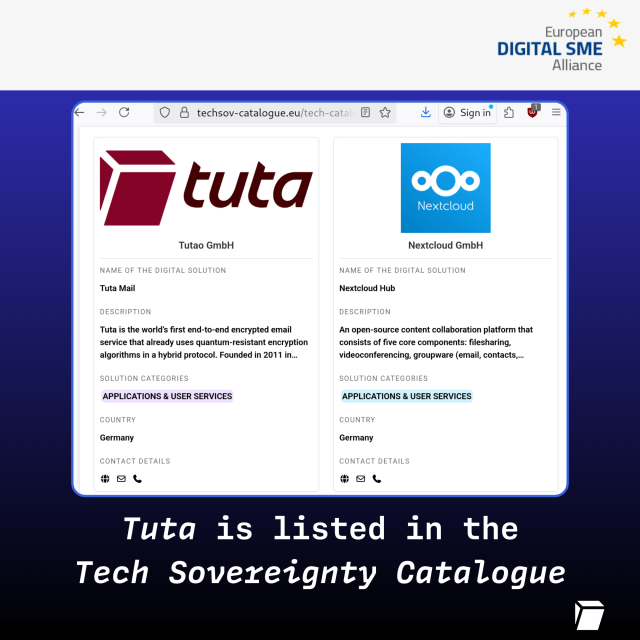
🚀🇪🇺 Big news: Tuta has been accepted into the European Tech Sovereignty Catalogue by European Digital SME Alliance.

We're proud to help build a strong, sovereign European tech stack — with privacy-first technology made in Europe. 🔒

#DigitalSovereignty #EuropeanTech


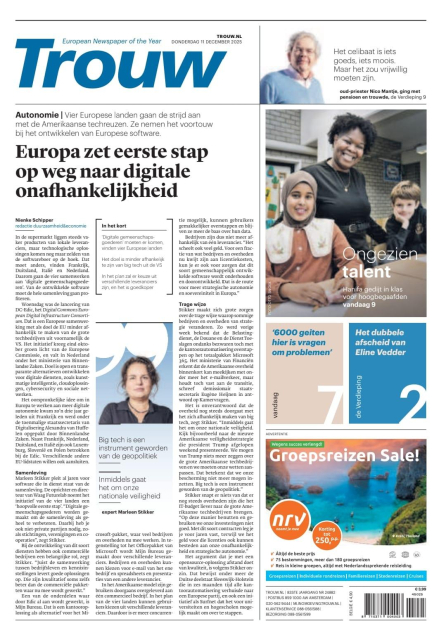
The first article in one of our national newspapers this morning about the launch of the European Digital Infrastructure Consortium (#EDIC) today 🍾🇪🇺

Title: "Europe takes first step towards digital independence. Four European countries are taking on the American tech giants, taking the lead in developing European software." 🇳🇱🇫🇷🇩🇪🇮🇹

#digitalsovereignty #eupolicy #opensource


Today we are calling on institutions around the world to take control of their #DigitalSovereignty, including their social accounts. Governments should communicate directly with their citizens on open platforms, not through the mouthpiece of a corporation.

blog.joinmastodon.org/2025/12/…


BTW AWS is used across Québec websites... even #RAMQ's Health Booklet, AKA #carnet, which includes scans, prescriptions, sampling, etc., etc., etc.

THAT MEANS TRUMPISTAN HAS ACCESS TO ALL OUR HEALTH INFORMATION.

Canada.ca ALSO USES the #cloud... so all that Revenue Canada/CRA #data is AT RISK.

DIGITAL SOVEREIGNTY NOW!

#cdnpoli #polcan #assnat ##polQC #QCpoli #internet #digitalsovereignty


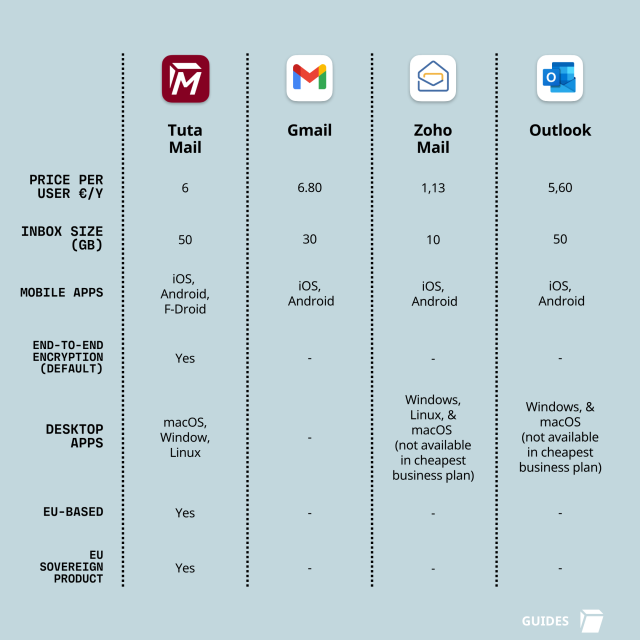
Most businesses use #Outlook or Google #Workspace - even doctors and lawyers. Though they should know better!

Today we're comparing Gmail, Outlook, Zoho Mail & Tuta Mail so you don't have to. 🔐✨

If you know any business still not encrypting your data, share this link: tuta.com/blog/best-email-for-b…

#privacy #digitalsovereignty


“Open source has proven itself to be a winning strategy — not recently, but for decades.” — Adriana Groh, Sovereign Tech Agency CEO.

#EUSummit #DigitalSovereignty,


Quite the gap between theory and practice: while German federal states, armed forces and French gendarmerie rely on #OpenSource because they have understood that #digitalSovereignty is only achievable with open technology, the closing declaration for tomorrow‘s #DigitalSummit treats OS like a hobby. 1/4


In my personal opinion: Instead of banning, say, Chinese companies from delivering infrastructure components like the EU is pondering with Huawei and mobile networks, the ultimate goal should be to demand open source software/firmware for these components and reproducible builds of all software components so #DigitalSovereignty becomes default.


Aber ist uns eigentlich bewusst, was hier gerade passiert ist?

Der Dienstleister, der das für #SH umgesetzt hat, hat sich gerade ein weltweit einmaliges Wissen erarbeitet. 40.000 Postfächer migrieren? Das ist kein Projekt, das ist eine Doktorarbeit in Sachen digitaler Unabhängigkeit.

Was glauben Sie, ist dieses Wissen wert? Und warum reden wir nicht darüber, wie wir diese Expertise in ganz Europa skalieren?

Das ist die wahre stille Revolution.

#DigitalSovereignty

heise.de/news/Schleswig-Holste…


No more Microsoft Exchange. 🇩🇪German consultancy IAGO GmbH celebrates its decision to switch to Tuta Mail. 🎉

The benefit:

✅ Digital sovereignty
✅ Security
✅ GDPR-compliance

Check here what Niclas has to say about Tuta and what feature he loves most. ❤️
➡️ tuta.com/blog/iago-switched-fr…

#Privacy #DigitalSovereignty #EmailEncryption #MadeInGermany


Great Intelligence2 episode with @pluralistic

open.spotify.com/episode/2DoEu…

I loved his call for #DigitalSovereignty. It is great how #FOSS provides countries to provide a viable alternative. Interoperability & being able to reverse engineer the products is key.

open.spotify.com/episode/2DoEu…

This would do so much for innovation, too. The whole focus on printer ink is such a great example, as is the nursing one. Monopolies are anti-capitalist & anti-innovation. Lots I hadn't considered for #privacy


Today's AWS debacle is the perfect example of the reason why in the last few years I started to be less enthusiastic about Signal, and more oriented to federated or even P2P solutions like XMPP and Jami. I wrote about it already:

gagliardoni.net/#im_battle_202…

Signal was down for few hours today, after an outage that affected AWS:

mastodon.world/@Mer__edith/115…

Let's ignore for a second the blind reliance on AWS or any other cloud provider. In a decentralized system, this would not have happened, or at least it would have not impacted so many users.

Yes, I am a cryptographer myself, I know that Signal's encryption is the best. But encryption is not everything. Availability issues, geopolitical troubles, risk of enshittification, limitations on users' freedom to use and control the software lead to a lack of trust, even in a supersecure solution. And I say that with honest admiration for the folks at Signal, who are doing a great job.

May they prove me wrong over and over again.

#signal #im #aws #amazon #privacy #security #digitalsovereignty #selfhosting #fediverse #federation #p2p #enshittification #xmpp #jami #politics #opensource #freesoftware #libre


PSA: we're aware that Signal is down for some people. This appears to be related to a major AWS outage. Stand by.


🚨 Another massive AWS outage just took down Roblox, Fortnite, Coinbase, Snapchat, and all Supercell games.

Half the internet has gone dark because of one Big Tech company. This is not innovation, it is monopoly risk.

💡It’s time to choose alternatives.

#GoEuropean #OneClickAway #DigitalSovereignty #AWS #Outage


In Europe everyone is talking about #DigitalSovereignty - which is great! But we can't have that and undermine our sovereignty by giving law enforcement the key to all encrypted communication. To us at Tuta it's clear:

"There are no backdoors for the good guys only".

🧵 (3/7)


Of what use is #DigitalSovereignty when you need an Apple or Android device to install the App that implements your Digitally Sovereign solution? Always make sure there is a device-independent (or more flashy: technology-neutral :) way for citizens to use your solution without being forced to share data with Apple or Google.


#digitalsovereignty in Portugal. Government CTO will be someone who was Microsoft employee until a week ago. Way to go #portugal! Let's just put Oracle's boss as Tax Minister too... Are people really this short sighted? Am I crazy to see issues here? digitalinside.sapo.pt/manuel-d…


Yes, password managers are important, and so is digital sovereignty — especially in these troubling times. That’s why it’s crucial to choose a password manager that operates outside the jurisdictions of the United States, Russia, and China

Heylogin — Germany, Europe
heylogin.com

pCloud Passwords — Switzerland Europe
pcloud.com/pass.html

Locker Password Manager — Vietnam, Asia
locker.io

#PasswordManager #DigitalSovereignty #Passwords


"Microsoft can't protect French data from US government access"

"The Senate hearing exposed tensions between sovereignty rhetoric and practical implementation. While French officials promote digital independence, procurement decisions consistently favor non-European solutions for critical infrastructure projects."

ppc.land/microsoft-cant-protec…

Where have we seen this before? Oh yes on our own university: opentech-auc.org/posts/2025-04…

#DigitalSovereignty #BigTech #usfacism


75% of web traffic flows through Google's Chromium. Apple controls Safari. American companies control how billions access the web.

Building a competitive browser alternative: ~€50-70M annually, 3-4 years. @servo proves it's technically possible with a small team.

The challenge isn't technical, it's institutional: can democratic societies coordinate long-term tech projects?

Read more: tarakiyee.com/digital-sovereig…
#DigitalSovereignty


Digital Sovereignty in Practice: Web Browsers as a Reality Check


Reading in Servo’s latest weekly report that it’s now passing 1.7 million Web Platform Subtests, I started wondering: How much investment would it build it into a competitive, independent browser, in the context of all this talk on digital sovereignty?

Servo is an experimental web browser engine written in Rust, originally developed by Mozilla Research as a memory-safe, parallel alternative to traditional browser engines like Gecko and WebKit. After Mozilla laid off the entire Servo team in 2020, the project was transferred to Linux Foundation Europe, where it continues to be developed with minimal funding from individual donors and Igalia, a team of just five engineers. Servo’s progress demonstrates what’s possible with intentional investment in independent browser projects.

As initiatives like EuroStack propose €300 billion investments in digital infrastructure and researchers proposing comprehensive roadmaps for “reclaiming digital sovereignty” through democratic, public-led digital stacks, browsers are an ideal test case to ground these ambitious visions in reality.

The current browser landscape reveals how concentrated digital control has become. Roughly 75% of global web traffic flows through browsers based on Google’s Chromium engine; not just Chrome, but Microsoft Edge, Samsung, and dozens of others. Apple’s Safari dominates iOS but remains locked to their ecosystem. Firefox, once a genuine alternative, has declined to under 5% market share globally. This means American companies control how billions of users worldwide access the web. Every search, transaction, and digital service flows through infrastructure ultimately controlled by Silicon Valley. For societies valuing their independence and sovereignty, this represents a fundamental vulnerability that recent geopolitical events have made impossible to ignore.

Digital infrastructure is as important as energy or transportation networks. Unlike physical infrastructure, however, digital systems can be controlled remotely, updated unilaterally, and modified to serve the interests of their controllers rather than their users. Browsers exemplify this challenge because they’re both critical and seemingly replaceable. In theory, anyone can build a browser. The web standards are open, and rendering engines like Servo prove it’s technically feasible.

In practice, building browsers requires sustained investment, institutional coordination, and overcoming network effects that entrench existing players. If democratic societies can successfully coordinate to build and maintain competitive browser alternatives, it demonstrates their capacity for more complex digital sovereignty goals. If they cannot, it reveals the institutional gaps that need addressing.

Firefox offers important lessons about the challenges facing independent browsers. Mozilla has indeed faced difficulties: declining market share, organizational challenges, and ongoing technical issues. The organization has also alienated its most dedicated supporters by pivoting toward advertising, AI initiatives and cutting their impactful public advocacy programs.

However, Firefox remains the only major browser engine not controlled by Apple or Google, serving hundreds of millions of users worldwide. Its struggles reflect structural challenges that any alternative browser would face: the enormous engineering effort required to maintain web compatibility, the network effects favouring dominant platforms, and the difficulty of sustaining long-term technical projects through diverse funding sources.

Servo’s recent progress illustrates both the potential and the resource constraints of independent browser development. Since 2023, Igalia’s team of just five engineers has increased Servo’s Web Platform Test pass rate from 40.8% to 62.0%, added Android support, and made the engine embeddable in other applications, even demonstrating better performance than Chromium on Raspberry Pi. This progress on a shoestring budget shows what focused investment could achieve, while also highlighting how resource-constrained independent browser development remains.

Yet, building a competitive alternative browser infrastructure would require substantial but manageable investment. Here is a ballpark estimation I made based on existing browsers: Annual operating costs would include:

  • Engineering Team of ±50 developers, designers, managers etc.: €15 million.
  • Quality Assurance and Testing Infrastructure: €10 million
  • Security Auditing and Vulnerability Management: €10 million
  • Standards and Specification Development: €5 million.

At this point I would just round up to around 50-70 million annually, which I’m sure would comfortably cover everything I missed. The proposed EuroStack initiative already envisions €300 billion over multiple years. Browsers represent a tiny fraction of what democratic societies already spend on strategic infrastructure. This calculation proves that the cost isn’t the primary barrier: the European Space Agency for example has had a budget of €7.8 billion in 2024. Europe can afford to build a browser.

It would probably take around 3-4 years to fully build an alternative browser from scratch, less so if it’s a fork of one of the existing ones. Forking Chromium/Gecko or building upon Servo’s foundation could reduce this timeline to 18-24 months for basic functionality, though achieving full web compatibility and market readiness would still require several additional years of refinement. The initial development sprint needs to be followed by a sustained engineering effort needed afterward, for maintaining compatibility with evolving web standards, fixing security vulnerabilities, and keeping pace with performance improvements.

The core challenge isn’t technical; it’s institutional. How do you sustain long-term technical projects through democratic processes that span multiple countries with different priorities, resources, and political systems? Successful models exist. The European Space Agency coordinates complex multi-national technical projects. CERN manages cutting-edge research infrastructure across dozens of countries. The Internet Engineering Task Force maintains critical internet standards through voluntary coordination among global stakeholders. The “Reclaiming Digital Sovereignity” proposal specifically addresses this challenge by advocating for “new public institutions with state and civil society representation” to govern universal digital platforms, alongside “multilateral agreements on principles and rules for the internet” as safeguards for autonomous, democratically governed solutions.

Browser development could follow similar patterns: international frameworks that respect national sovereignty while enabling coordinated action, governance structures that balance technical expertise with democratic accountability, and funding mechanisms that provide stability across political cycles. The Reclaiming Digital Sovereignity’s report’s emphasis on “democratic international consortia” and “public knowledge networks led by a new public international research agency” provides concrete institutional models that could be adapted for browser development. Germany’s Sovereign Tech Agency represents another model for public investment in digital infrastructure for the public interest.

With all that being said, browsers represent one of the more achievable digital sovereignty goals. They’re built on open standards, rely heavily on open source components, and face fewer network effects than platform-based services. Other areas of the technology stack would be far more challenging, and far less open.

Success here would demonstrate that democratic societies can coordinate effectively on complex technical infrastructure and pass the first hurdle. Failure would reveal institutional gaps that need addressing before attempting more ambitious digital sovereignty goals. Democratic digital sovereignty is challenging but feasible, if societies are willing to think institutionally, invest sustainably, and build incrementally rather than trying to recreate Silicon Valley with different ownership structures.

Ultimately, the real question isn’t whether democratic societies can build alternative technologies, but whether they can build the democratic institutions necessary to govern them effectively across the complex realities of international coordination, competing priorities, and long-term sustainability. I believe browsers offer an ideal place to start testing these institutional innovations. The technical challenges are surmountable. The institutional ones remain to be proven.

Views expressed are personal and do not represent any organization.

#digitalSovereignity #funding #internetStandards #openSource #publicInterest


Europe’s at a digital crossroads.

Big Tech’s “Sovereign Clouds” are a Trojan Horse - servers in the EU, but still under US law (CLOUD Act, FISA): tuta.com/blog/sovereign-washin…

True digital sovereignty means European tech.

Together with @ecosia #Wire #MeisterTask and @Mastodon we want to empower businesses, governments and administrations to choose technology that protects Europe’s future.

#DigitalSovereignty is just #oneclickaway 👇


Unfortunate discussion now about how much #BuyEuropean should be considered, and in which surprisingly the European Parliament advisor Lukasz Klejnowski makes the important point that it can't be about the EU being fully autonomous.

Tech is global, the internet is global, and that's a good thing. And we can support and buy ethical tech globally as well.

#DigitalSovereignty #NGIForum25


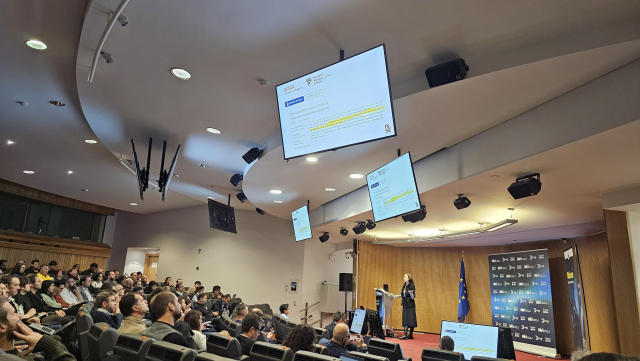
I'm only an hour into the conference but am a bit worried already about the #DigitalSovereignty topic to be -- again -- mostly discussed as a geopolitical issue like the #EuroStack rather than from a user freedom and individual autonomy angle. Let's see where the discussion goes...