

Reading in Servo’s latest weekly report that it’s now passing 1.7 million Web Platform Subtests, I started wondering: How much investment would it build it into a competitive, independent browser, in the context of all this talk on digital sovereignty?
Servo is an experimental web browser engine written in Rust, originally developed by Mozilla Research as a memory-safe, parallel alternative to traditional browser engines like Gecko and WebKit. After Mozilla laid off the entire Servo team in 2020, the project was transferred to Linux Foundation Europe, where it continues to be developed with minimal funding from individual donors and Igalia, a team of just five engineers. Servo’s progress demonstrates what’s possible with intentional investment in independent browser projects.
As initiatives like EuroStack propose €300 billion investments in digital infrastructure and researchers proposing comprehensive roadmaps for “reclaiming digital sovereignty” through democratic, public-led digital stacks, browsers are an ideal test case to ground these ambitious visions in reality.
The current browser landscape reveals how concentrated digital control has become. Roughly 75% of global web traffic flows through browsers based on Google’s Chromium engine; not just Chrome, but Microsoft Edge, Samsung, and dozens of others. Apple’s Safari dominates iOS but remains locked to their ecosystem. Firefox, once a genuine alternative, has declined to under 5% market share globally. This means American companies control how billions of users worldwide access the web. Every search, transaction, and digital service flows through infrastructure ultimately controlled by Silicon Valley. For societies valuing their independence and sovereignty, this represents a fundamental vulnerability that recent geopolitical events have made impossible to ignore.
Digital infrastructure is as important as energy or transportation networks. Unlike physical infrastructure, however, digital systems can be controlled remotely, updated unilaterally, and modified to serve the interests of their controllers rather than their users. Browsers exemplify this challenge because they’re both critical and seemingly replaceable. In theory, anyone can build a browser. The web standards are open, and rendering engines like Servo prove it’s technically feasible.
In practice, building browsers requires sustained investment, institutional coordination, and overcoming network effects that entrench existing players. If democratic societies can successfully coordinate to build and maintain competitive browser alternatives, it demonstrates their capacity for more complex digital sovereignty goals. If they cannot, it reveals the institutional gaps that need addressing.
Firefox offers important lessons about the challenges facing independent browsers. Mozilla has indeed faced difficulties: declining market share, organizational challenges, and ongoing technical issues. The organization has also alienated its most dedicated supporters by pivoting toward advertising, AI initiatives and cutting their impactful public advocacy programs.
However, Firefox remains the only major browser engine not controlled by Apple or Google, serving hundreds of millions of users worldwide. Its struggles reflect structural challenges that any alternative browser would face: the enormous engineering effort required to maintain web compatibility, the network effects favouring dominant platforms, and the difficulty of sustaining long-term technical projects through diverse funding sources.
Servo’s recent progress illustrates both the potential and the resource constraints of independent browser development. Since 2023, Igalia’s team of just five engineers has increased Servo’s Web Platform Test pass rate from 40.8% to 62.0%, added Android support, and made the engine embeddable in other applications, even demonstrating better performance than Chromium on Raspberry Pi. This progress on a shoestring budget shows what focused investment could achieve, while also highlighting how resource-constrained independent browser development remains.
Yet, building a competitive alternative browser infrastructure would require substantial but manageable investment. Here is a ballpark estimation I made based on existing browsers: Annual operating costs would include:
At this point I would just round up to around 50-70 million annually, which I’m sure would comfortably cover everything I missed. The proposed EuroStack initiative already envisions €300 billion over multiple years. Browsers represent a tiny fraction of what democratic societies already spend on strategic infrastructure. This calculation proves that the cost isn’t the primary barrier: the European Space Agency for example has had a budget of €7.8 billion in 2024. Europe can afford to build a browser.
It would probably take around 3-4 years to fully build an alternative browser from scratch, less so if it’s a fork of one of the existing ones. Forking Chromium/Gecko or building upon Servo’s foundation could reduce this timeline to 18-24 months for basic functionality, though achieving full web compatibility and market readiness would still require several additional years of refinement. The initial development sprint needs to be followed by a sustained engineering effort needed afterward, for maintaining compatibility with evolving web standards, fixing security vulnerabilities, and keeping pace with performance improvements.
The core challenge isn’t technical; it’s institutional. How do you sustain long-term technical projects through democratic processes that span multiple countries with different priorities, resources, and political systems? Successful models exist. The European Space Agency coordinates complex multi-national technical projects. CERN manages cutting-edge research infrastructure across dozens of countries. The Internet Engineering Task Force maintains critical internet standards through voluntary coordination among global stakeholders. The “Reclaiming Digital Sovereignity” proposal specifically addresses this challenge by advocating for “new public institutions with state and civil society representation” to govern universal digital platforms, alongside “multilateral agreements on principles and rules for the internet” as safeguards for autonomous, democratically governed solutions.
Browser development could follow similar patterns: international frameworks that respect national sovereignty while enabling coordinated action, governance structures that balance technical expertise with democratic accountability, and funding mechanisms that provide stability across political cycles. The Reclaiming Digital Sovereignity’s report’s emphasis on “democratic international consortia” and “public knowledge networks led by a new public international research agency” provides concrete institutional models that could be adapted for browser development. Germany’s Sovereign Tech Agency represents another model for public investment in digital infrastructure for the public interest.
With all that being said, browsers represent one of the more achievable digital sovereignty goals. They’re built on open standards, rely heavily on open source components, and face fewer network effects than platform-based services. Other areas of the technology stack would be far more challenging, and far less open.
Success here would demonstrate that democratic societies can coordinate effectively on complex technical infrastructure and pass the first hurdle. Failure would reveal institutional gaps that need addressing before attempting more ambitious digital sovereignty goals. Democratic digital sovereignty is challenging but feasible, if societies are willing to think institutionally, invest sustainably, and build incrementally rather than trying to recreate Silicon Valley with different ownership structures.
Ultimately, the real question isn’t whether democratic societies can build alternative technologies, but whether they can build the democratic institutions necessary to govern them effectively across the complex realities of international coordination, competing priorities, and long-term sustainability. I believe browsers offer an ideal place to start testing these institutional innovations. The technical challenges are surmountable. The institutional ones remain to be proven.
Views expressed are personal and do not represent any organization.
#digitalSovereignity #funding #internetStandards #openSource #publicInterest

The European Space Agency budget will increase this year by 10% to €7.8B ($8.5B), the agency announced at its annual press briefing yesterday.Jack Kuhr (Payload)
How does Substance Designer + Inkscape sound?
That's pretty much exactly what Graphite is. A new free, open source, procedural vector graphics application.
gamefromscratch.com/graphite-f…

Graphite is a free and open source Vector graphics application build on a graph node system enabling procedural creation animation and moreMike (GameFromScratch)
We have an exciting job opening available at Moog to join my team in Asheville, NC: Application Software Engineer - Synth Editors.
You'll find a link with all details below, we're all looking forward to making great and inspiring synths with you!
inmusicbrands.pinpointhq.com/e…

39 years today since Jim Henson's cult classic 'Labyrinth' was released on June 27th 1986, with George Lucas as executive producer, starring Jennifer Connelly as Sarah Williams and David Bowie as Jareth the Goblin King.
(Original illustration by Kevin M Wilson apemeetsgirl.com)
#Labyrinth #OTD #Movies #Cinemastodon #FilmMastodon #80s #JimHenson #OnThisDay #Art #Artwork #Illustration

Have you ever wondered what funding models exist, or what might be the best option for your project?
Then this is for you:
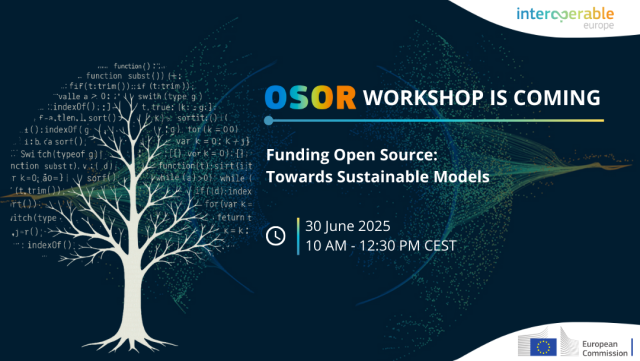
The Open Source Observatory is hosting an online workshop on 30 June 2025 dedicated to exploring funding strategies for open source projects.
@mechko, Head of the Sovereign Tech Fund, will speak about our approach to investing in open digital infrastructure in the public interest.
📅 30 June 2025
🕙 10:00–12:30 CEST
Register now: ec.europa.eu/eusurvey/runner/9…
EUSurvey is an online survey-management system built for the creation and publishing of globally accessible forms, such as user satisfaction surveys and public consultations.ec.europa.eu
what was once a cornerstone of the #milwaukee burger scene, bombers has since lost its way. food quality has diminished over the years and there are far better places to grab a burger (oscars and archies to name a couple).
although i've never been a fan, thanks for pioneering the modern burger scene in our city!
milwaukeerecord.com/food-drink…

“AJ Bombers has been a cornerstone in the Milwaukee community for the past 16 years, and it’s beloved by so many, including myself.”Matt Wild (Milwaukee Record)
Mal.was erfrischendes aus der Verwaltungswelt: Offizielle Kommunikation mit Behörden via @matrix und #MLS!
Der #ITPlanungsrat hat heute die Fortführung des Vorhabens zur „Zielarchitektur Postfach- und Kommunikationslösungen” beschlossen. Jetzt geht es in die nächste Phase der Transitionsplanung & Validierung.
@cwo berichtet: heise.de/news/Wie-Buerger-kuen…
Alle Details unter gitlab.opencode.de/it-planungs… (natürlich alles CC-BY 🙂)
#fitko #itplr #zapuk #matrix #bundid #mjp #elster #muk #egvp #egov #ozg
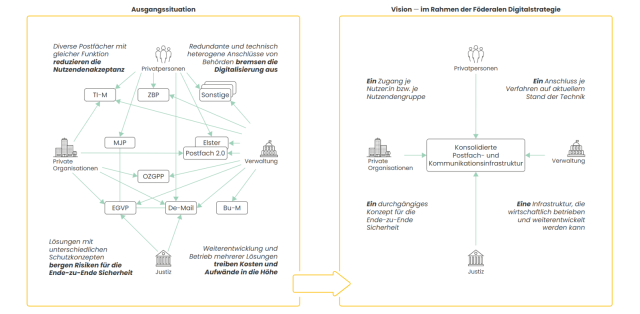
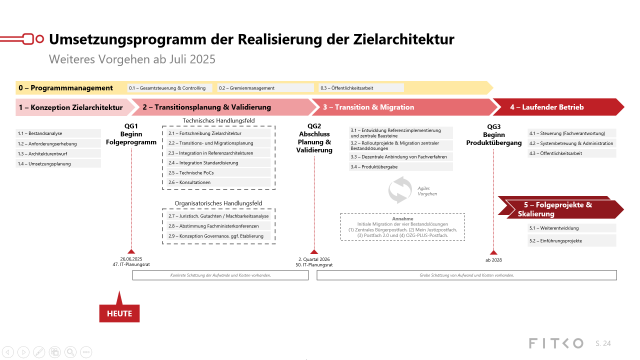
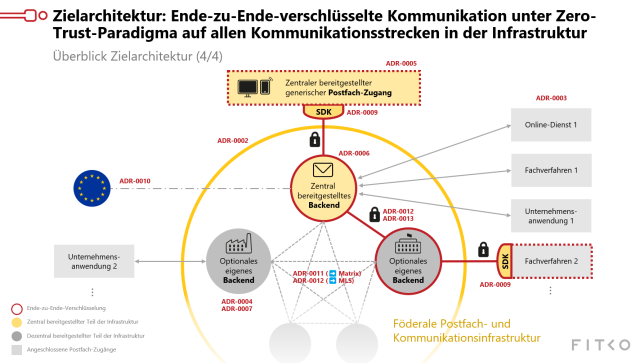
Bund und Länder planen ein Bürgerpostfach, wohl mit dem Messaging-Standard Matrix. Ein Durchbruch für die Digitalisierung oder ein neues De-Mail-Fiasko?Christian Wölbert (heise online)
Oh, wow! The German IT Planning Council decided yesterday to consolidate a bunch of disparate communication tools into a unified system based on Matrix and MLS.
Here's the record of their decision and the other options they considered: gitlab.opencode.de/it-planungs…
#Matrix #OpenSource #FOSS #ProtocolsNotPlatforms #DPI #DPG

Informationen zur Umsetzung von Beschluss 2024/28 des IT-Planungsrates.GitLab
Valgrind is an instrumentation framework for dynamic analysis tools. It translates your program into an intermediate representation (VEX). Valgrind tools (like memcheck) transform/instrument the VEX representation. Valgrind then uses classic compiler optimizations on that internediate representation. And finally the VEX is translated back to machine code.
Florian Krohm made a list of missing constant folding operations: bugs.kde.org/show_bug.cgi?id=5…
Take a peek if you would like to hack on Valgrind!

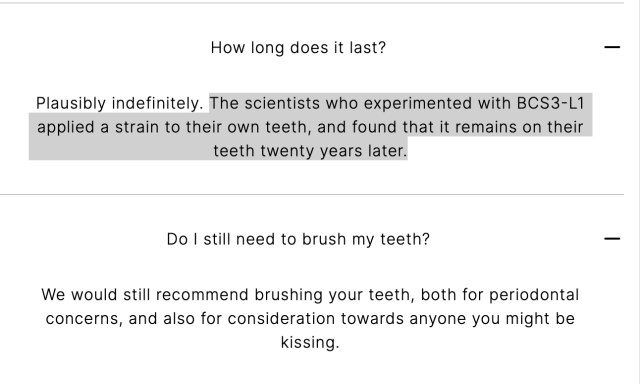
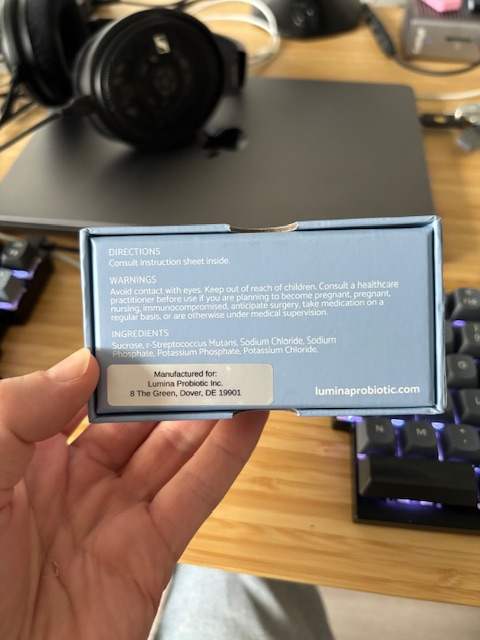
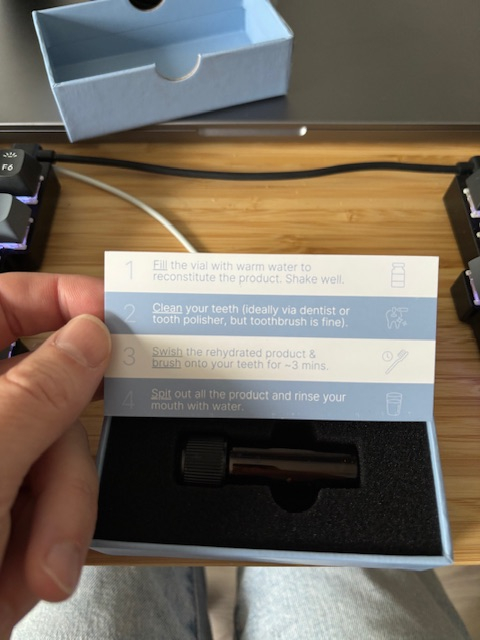
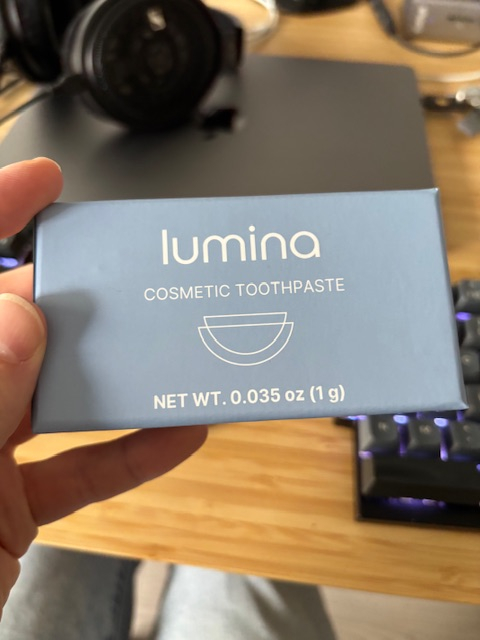
Well, I received my Lumina Probiotic and used it. There are many brow beating nerds on Orange Site that were convinced it would hurt people because... ~reasons~
Preorder now - bring balance to your oral microbiomeLumina Probiotic
Bcachefs may be headed out of the kernel
lwn.net/Articles/1027289/ #LWN
The history of the bcachefs filesystem in the kernel has been turbulent, most recently with Li [...]LWN.net



GTK development would not be possible without the help of the @gnome project. Donations—especially recurring ones—to GNOME are necessary to ensure the continued existence of the infrastructure GTK relies on for building and testing.
reshared this
Kelly Sapergia reshared this.

No data caps: “Four simple national Internet tiers that include unlimited data.”…Jon Brodkin (Ars Technica)
Напоминаю всем, что у меня есть очень удобный бот для скачивания книг с флибусты, так что велком!
2 cases of #measles confirmed in Prince Edward Island with many public exposure sites listed.
Health officials say 2 people diagnosed were 'unvaccinated or partially vaccinated'...
cbc.ca/news/canada/prince-edwa… #healthcanada #vaccinate #getvaccinated #cdnpoli #polcan #PEI

Tramvaji jezdim v Liberci zridka. Vsude to mame kousek a navstev oblasti za nadrazim, kde by se tramvaj hodila, je za rok presne nula. I tak letos potkavam dost casto tuhle modrou smrt na novych karetne-listkovych terminalech.
Udelat to modre je za me dobry napad. Vina se prenese na windows a lide se vubec na chudactvo tramvajove ridicstvo nezlobi. Ovsem vcera jsem se dozvedel plot-twist. Tady se nic nesynchronizuje, ani zadna komunikace neprobiha. Je to aktivni stav toho zarizeni, ktery si muze revizor zapnout a vypnout magickou kartickou ... kdyz to vidam tak casto, tak si rikam, kdo jim tu magickou karticku vyfouk a jen tak ze srandy vypina terminaly v tramvajich.
Taky by se mi takova karticka hodila.

Sen Paula Simons @Paulatics on the Senate passing Bill C-5 today w/o amendments bc they were "painted into a corner": #cdnpoli
"If we had made amendments, it would either require all the MPs to come back from their summer vacation and make the PM very unhappy, or we would have to wait until September ... and the PM had made a commitment the bill would be passed by July 1."
Then what good is the Senate?
Senators have ONE job: be the sober second thought. You should have opposed it. I personally can't because the excuse of MP I have in my riding already called me extremist in the past when I disagreed with Bill the Senate let past.
Lot of people want to abolish the Senate. You just gave us the reason. And I'm am now agreeing with them.
I have to tip my hat to Microsoft for having worked so hard to convince the world that the City of Munich failed with their Linux migration.
It's of course just a big fat lie. Munich is since 20+ years growing their Open Source footprint. They are sharing and they are growing their use of open source.
reshared this
Munich's open source success makes me, as a Berliner, very envious.
And then @klml rubs it in by saying they have the largest municipal IT org in Germany 🥲
(Technically true because B is divided. (Which is part of why it is tricky.))
me: there’s nothing worse than opening a blank document
microsoft word: hold my beer
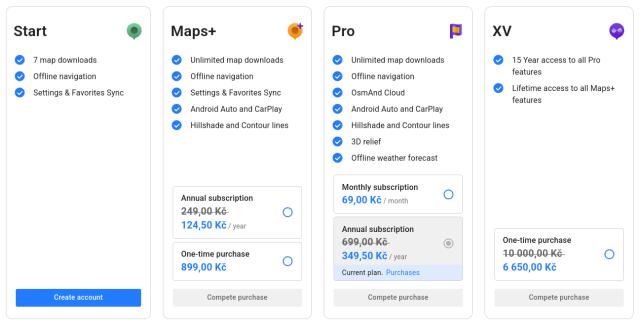
Just so you know, #OsmAnd is celebrating its 15th anniversary with 50% off its plans, which you can now pay for directly without paying the 'app tax' to Google or Apple.
I highly recommend OsmAnd — it's a Swiss army knife for maps! Open source. Based on #OpenStreetMap.
reshared this
I'm a friend of @gnome now ❤ Really love GNOME as my desktop UI, and hope that someday I will also use it on my phone :) Keep up the great work!
Good news for Palm OS users! Python now now encodes 0x9b correctly as › instead of a control character!
github.com/python/cpython/pull…
#Python #PalmOS

0x8b correctly encodes to ‹, but 0x9b was mistakenly marked as a control character instead of ›. You can see the correct glyphs in this screenshot of Palm OS 3.5, or on this page: Issue: Missin...GitHub

"Hello pervert" sextortion emails are going through some changes and the price they're demanding has gone up considerably.Pieter Arntz (Malwarebytes)

On June 28, 2025, the European Accessibility Act becomes enforceable, advancing digital accessibility and rights for 110M+ disabled people across the EU and beyond.Jenny Lay-Flurrie (Microsoft)
André Polykanine reshared this.
The Swift Programming language was originally created for Apple's platforms, but it's open source and was ported to Windows in 2020.Paul Thurrott (Thurrott.com)

A few years ago I wrote blog posts on what I called Accessibility Island and Ethical Accessibility. In a nutshell these posts outlined the human consequences of accessibility gaps and the need for …The Idea Place
75 let od justiční vraždy Milady Horákové.
Jako údajná hlava skupiny na svou popravu čekala nejdéle. „Skutečně postupně slyšela, jak se otvírají dveře jednotlivých cel a Oldřich Pecl, Záviš Kalandra a Jan Buchal jsou odváděni na popravu...“ irozhlas.cz/veda-technologie/h…
Democracy & climate advocates, listen up! 🌍 On "You Are Not So Smart," Erica Chenoweth discusses the 3.5% Rule: nonviolent change with just 3.5% participation. Powerful insights for planet & people. #Democracy #ClimateAction #DigitalGov
youarenotsosmart.com/2025/05/1…

If you want to overthrow a dictator, resist an authoritarian regime, or create a movement that can change the national status quo, you don’t need half the country to join, you only need 3.5 p…You Are Not So Smart
Don't miss Marcy Jacobs, Maryland's Chief Digital Experience Officer, on The #CXTippingPoint podcast!
She shares insights on building user-centered digital government, from her work at USDS/VA to Maryland's new Digital Service team. It's all about designing services around people.
Listen now: dorrisconsulting.com/thecxtipp…
#GovTech #CX #CustomerExperience #DigitalGov

The CX Tipping Point Podcast, hosted by Martha Dorris, is the only podcast focused on improving the experience that citizens, businesses and governments have when interacting, engaging and transacting with the government.dorrisconsulting
Canadians, pay attention: Bill C-2 is a quiet threat to your privacy and civil liberties.
With so much happening around the world, it’s easy to miss what’s going on in our own backyard. But Bill C-2, now in the House of Commons, deserves your attention.
It lowers the threshold for law enforcement to access your private data—without a warrant. All it takes is "reasonable suspicion."
What kind of data?
* Internet and cellphone metadata
* Your location and activity logs
* Information shared across borders with foreign agencies
All accessed more easily under vague “exigent circumstances”
As a person who’s been accosted based on “reasonable suspicion” due to…. existing, I’m concerned that this bill expands surveillance powers and erodes due process protections that Canadians have long relied on.
I keep seeing arguments like, “If you’re not doing anything wrong, you have nothing to worry about.”
Let me be clear: that’s not how rights work.
Free societies are built on the principle that the law protects the innocent—not that we must prove we have nothing to hide.
If you're concerned (and you should be), reach out to your Member of Parliament. Let them know you oppose C-2 and support real protections for Canadian privacy and civil rights.
You can read the full bill here:
parl.ca/DocumentViewer/en/45-1…
Let’s not sleepwalk into surveillance. We deserve better.
PS The Citizen Lab has an excellent write up citizenlab.ca/2025/06/a-prelim…
PPS If you're a Canadian resident, find your Member of Parliament here: ourcommons.ca/members/en
#PrivacyMatters #BillC2 #Canada

On June 3, 2025, the Canadian government tabled Bill C-2, omnibus legislation that, if passed, would introduce a wide array of new federal agency and law enforcement powers, and would significantly reform substantive and due process laws in Canada fo…Alyson Bruce (The Citizen Lab)





Alexis
Unknown parent • • •Alexis
Unknown parent • • •Alexis
Unknown parent • • •Alexis
Unknown parent • • •