
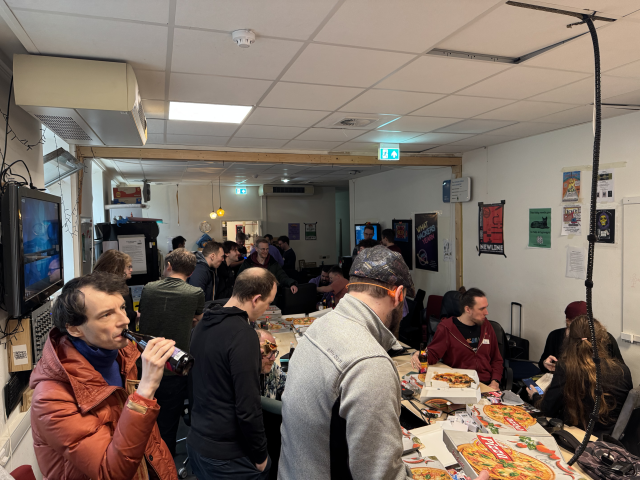
We're starting to see the first results of the hackathon! Florian here is building a Rust bot that talks to Christian's receipt printer, and makes it print what they send to a room.
Prototypes are taking form, keep up the good work everyone!
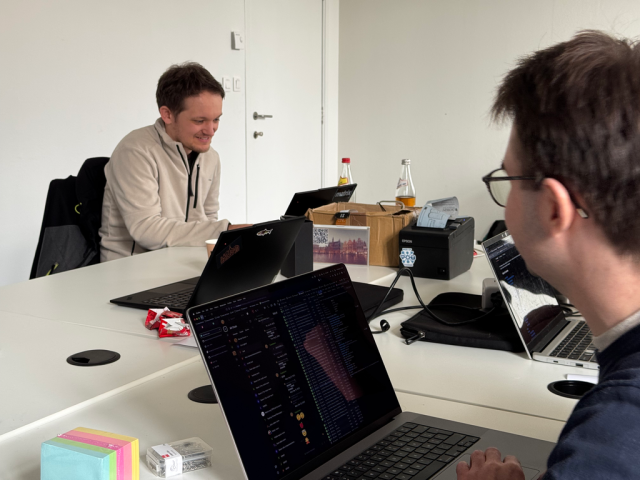
We're starting to see the first results of the hackathon! Florian here is building a Rust bot that talks to Christian's receipt printer, and makes it print what they send to a room.
Prototypes are taking form, keep up the good work everyone!
reshared this
Hey, pals, this study is headed by J Michael Bailey, Kenneth Zucker, and Lisa Littman, noted transphobes and pseudoscientist. Littman in particular ison the advisory board for the genocidal anti-trans group GENSPECT.
Do not, under any circumstance, participate in this junk study.
RE: social.tchncs.de/@kuketzblog/1…
the question is not "is Signal big tech?" but "am I using and supporting big tech if I use and donate to signal?" and the answer is YES
Ist der Messenger Signal »Big Tech« – oder nicht? https://www.kuketz-blog.de/ist-der-messenger-signal-big-tech-oder-nicht/Kuketz-Blog 🛡 (Mastodon)
Fact of the day: the Ford Edsel ("a 1950s flop so notorious that it’s taught in business schools to this day") outsold the Cybertruck 2:1, "in a country with half the population."
ebsco.com/research-starters/hi…
(h/t Luke Savage in the American Prospect, prospect.org/2026/01/30/teslas…)
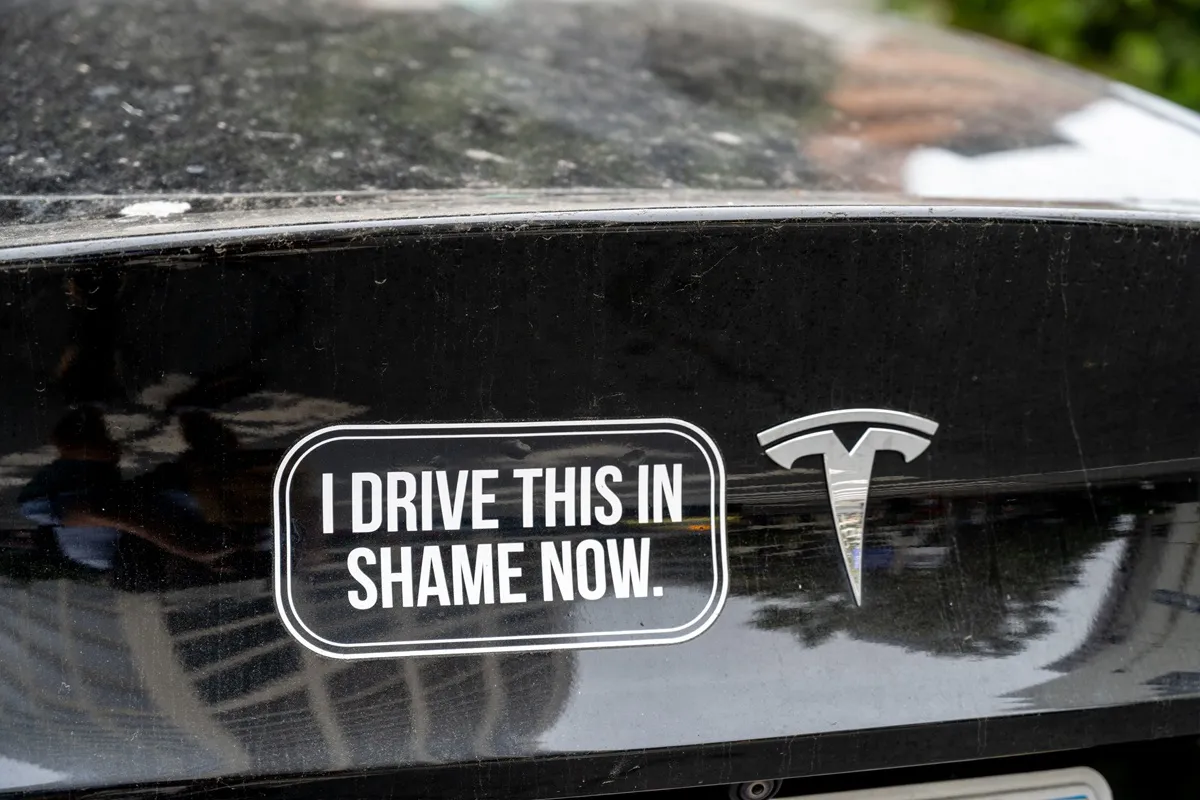
But how long can Elon Musk keep running on air? Potentially quite a long time.Ryan Cooper (The American Prospect)
#XMPP Summit
After the break, @Goffi presented about #Data Policy: xmpp.org/extensions/inbox/data…
The XMPP Summit:
xmpp.org/2025/11/xmpp-summit-2…
Meet us at #FOSDEM 2026, too!
#jabber #chat #opensource #messaging #federation #Brussels, #Belgium #opensource #rtc

The XMPP Standards Foundation (XSF) is exited to announce the 28th XMPP Summit taking place in Brussels, Belgium next year - just before FOSDEM 2026. The XSF invites everyone interested in development of the XMPP protocol to attend, and discuss all …xmpp.org
Several of our teams will be at #fosdem26 ... we'll introduce our PQC and Reliable Deletion ("forward secrecy") efforts, and give an overview over multi-relay #chatmail architectures. Or catch us on the booth or some sunny place outside :)
invite link for public fosdem26 group
attention: consider joining with a dedicated conference chat profile because large public groups can attract trolls. Your private profiles are safe/unaffected then.
Peter Vágner likes this.
ArcaneChat reshared this.
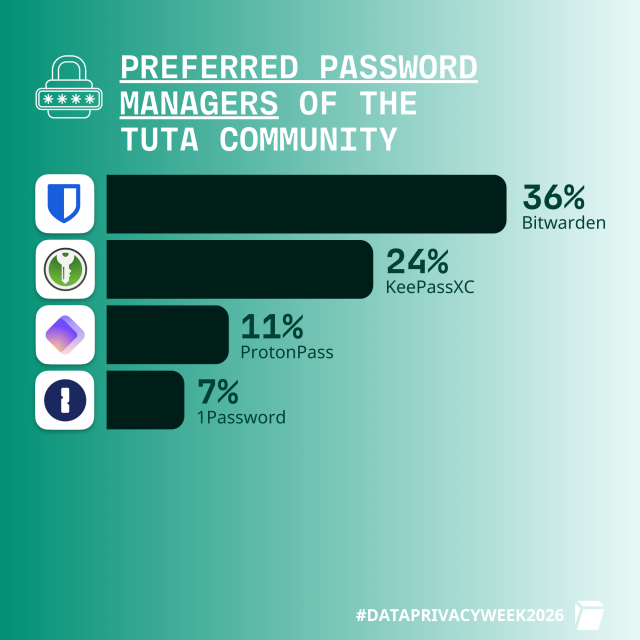
Finishing off #DataPrivacyWeek with our community's recommended password managers! 🔑
Which one's are missing and which would you recommend?

A password manager is an easy tool to increase the security of your digital identity. In this guide, we take a look at the best three password managers and why you should start using one.Tuta
Unofficial Bitwarden compatible server written in Rust, formerly known as bitwarden_rs - dani-garcia/vaultwardenGitHub
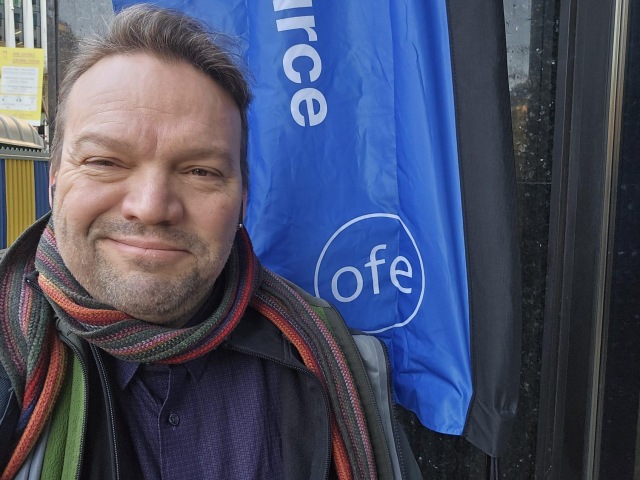

GregKH (@gregkh) awarded the Prize for Excellence in Open Source 2026
daniel.haxx.se/blog/2026/01/30…
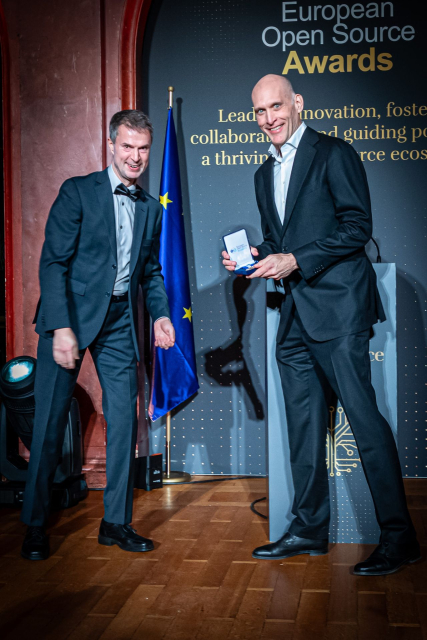
I had the honor and pleasure to hand over this prize to its first real laureate during the award gala on Thursday evening in Brussels, Belgium.daniel.haxx.se
Peter Vágner likes this.


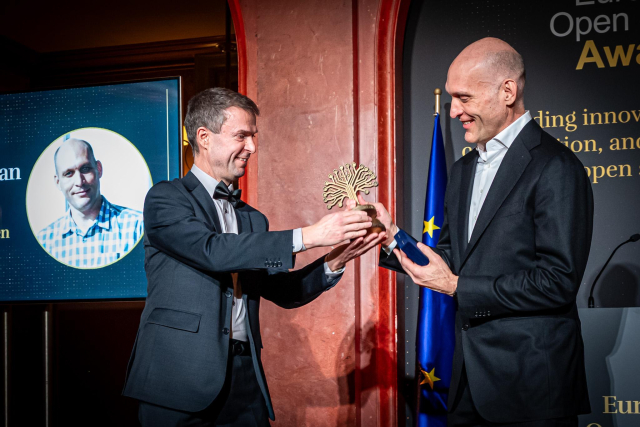
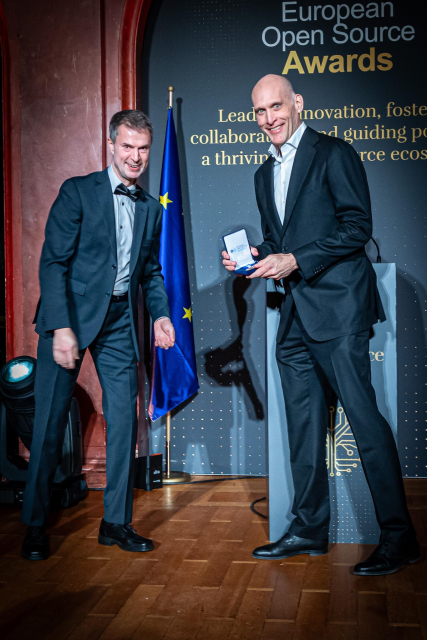
The Prize for Excellence in Open Source … goes to…
Greg Kroah-Hartman, Fellow at the The #Linux Foundation!
We could think of no one more deserving of this Award than Greg - who has ensured through maintaining of different kernel subsystems and the Linux kernel stable releases that thousands of devices function seamlessly and securely.
The Prize for Excellence was presented by the European Open Source Academy, @bagder
awards.europeanopensource.acad…
reshared this

reshared this
"Open source is not free, we need to invest. If we want to build a strong leader in Europe, we need to inject money!"
Marc Palazon of Smile Group spotlights the need for investment in his closing statement.
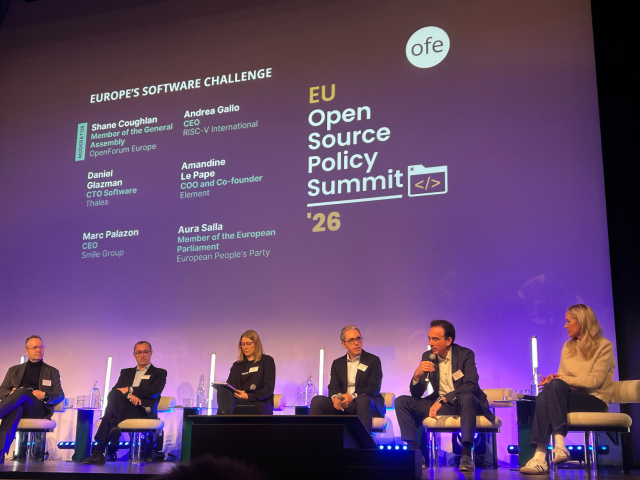
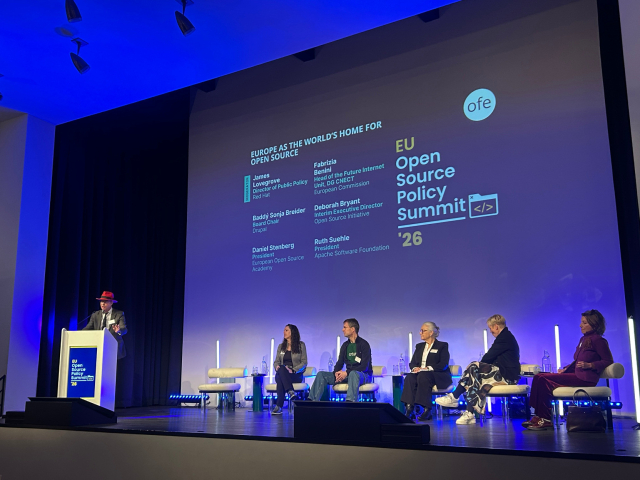

Open Source alone won't deliver digital sovereignty. Europe must fix procurement and fund those who actually build it.Dries Buytaert
#XMPP Summit
Listen in to the #encryption topics around #MLS, #MIMI & #OMEMO.
The XMPP Summit:
xmpp.org/2025/11/xmpp-summit-2…
Meet us at #FOSDEM 2026, too!
#jabber #chat #opensource #messaging #federation #Brussels, #Belgium #opensource #rtc #e2ee
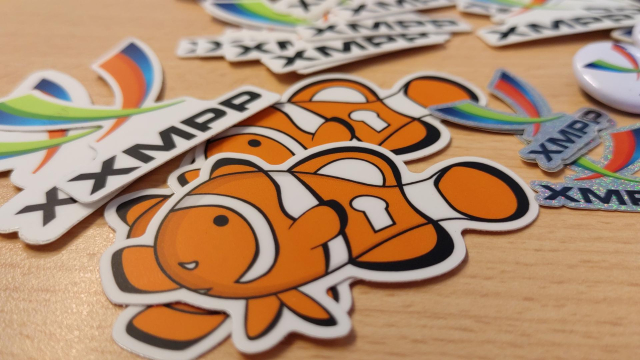
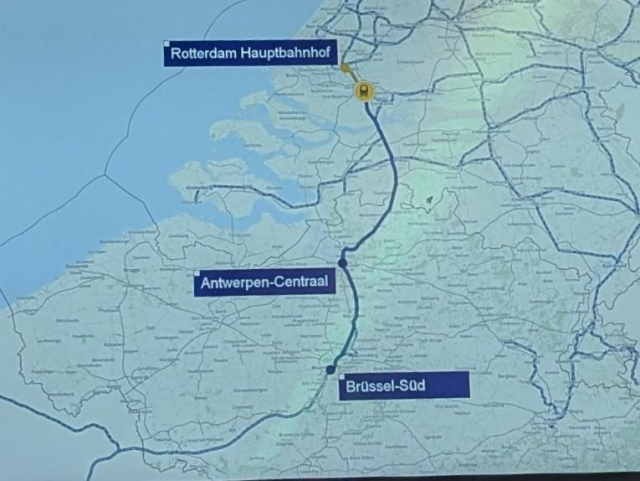
The XMPP Standards Foundation (XSF) is exited to announce the 28th XMPP Summit taking place in Brussels, Belgium next year - just before FOSDEM 2026. The XSF invites everyone interested in development of the XMPP protocol to attend, and discuss all …xmpp.org
#StroongeCast E72: You've Changed youtu.be/1LisvaFbVTA
This week we're discussing how we've changed both as a couple and individually. It's hard to see change when you've been together for a long time, but when we actually sat down and talked about it, we did notice some things that we were surprised to realise.
Change is so gradual when you live with someone else, that it may not always be glaringly obvious that it's even occurring at all.
Download: onj.me/media/stroongecast/72_-…
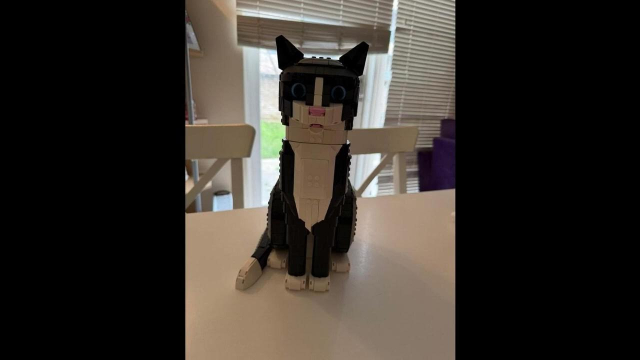
Welcome to episode 72.This week we're discussing how we've changed both as a couple and individually. It's hard to see change when you've been together for a...YouTube
reshared this

Did you noticed that there is a new Social Media App called "upscrolled"?
It turns out that there are a lot of anti-Semitic and Islamist people hanging around there, and some hateful, anti-Semitic texts have already been deleted.
Somehow, it was clear to me that various artists, for example from Bluesky, can now be found there.
I think it would be cool to have a server for Jewish artists. Everywhere you go as an artist, you encounter boycott, exclusion and hostility.
You have to constantly justify yourself.
People who give commissions tend towards zero because they don't want to be associated with you as an artist.




Hiisikoloart
in reply to 🆎 • • •David Chisnall (*Now with 50% more sarcasm!*)
in reply to Hiisikoloart • • •In theory, it’s people who care a lot about audio quality. They often claim to have better than average frequency range in their ears (many do, but a lot claim to hear things only bats can actually hear).
For a long time, a lot of consumer audio equipment was pretty terrible, so there were real reasons for wanting something better, I remember listening to a CD that I’d heard many times on my CD player and ripped to my iPad and discovering that CD player from the ‘80s had completely lost a load of low-volume bits and there was material that would probably have been audible on an expensive player in the ‘80s and was easily audible on a cheap player in the early 2000s.
At the same time, the Loudness War happened. Music execs found that people were more likely to like music if it was loud the first time they heard it. So they started making CDs louder. But CDs have a fixed dynamic range, so making it loader lost detail. They couldn’t do this with records because the needle would jump out of the track, so we had a weird period where LPs had better audio fidelity than CDs. Unfortunately, LPs are really finicky and it’s very easy to scratch them if you don’t perfectly balance the stylus to avoid more than minuscule pressure on the surface.
So, to listen to the highest-quality music, you needed a moderately expensive record deck, a decent amplifier (and pre-amp: again, LPs are annoying to play), and speakers. And it was fairly noticeable if you got any of these wrong.
But then DACs got a lot better. Cheap USB audio adaptors for computers had much better precision than anything available in the ‘80s, and could be placed outside of the case and away from RF interference from the computer. AAC audio supports a variable dynamic range (so bumping the loudness is just a scaling factor, not a loss of precision). Baseline speaker and amplifier quality improved a lot. By the mid 2000s, fairly cheap equipment gave better sound quality than anything you could buy in the ‘90s.
By then, an entire industry had grown up to cater to people who wanted the best sound quality possible and an even larger group of people who wanted to be seen as having the best sound quality. It moved from music appreciation to conspicuous consumption as a primary market driver. And that made it a ripe target for scams.
For analogue things, there were obvious things you could sell, like cables with gold-plated connectors. Gold is a good conductor and, unlike copper, doesn’t corrode, so this would make a difference (whether the difference is audible is another matter). But the move to mostly digital paths made this harder. You got very silly things like ‘audiophile grade’ Ethernet cables and optical connectors, which ignored the fact that the digital protocols had built-in error correction and that audio is staggeringly low bandwidth in comparison to other things carried over these connections so there’s space for a lot of error correction. A load of these things can be run over a wire coathanger with no loss in quality.
The entire ecosystem became dominated by very silly things. But they’re all quite interesting because they have some plausible-looking science behind them, which then goes off in a nonsense direction. For example, Ethernet is an electrical protocol, so signal quality matters. Gold is a good conductor. Gold connectors on Ethernet cables will reduce signal degradation. Pay no attention to the fact that the Ethernet standard is specified based on specifically rated cables and won’t be any better on ones with marginally better connectors.
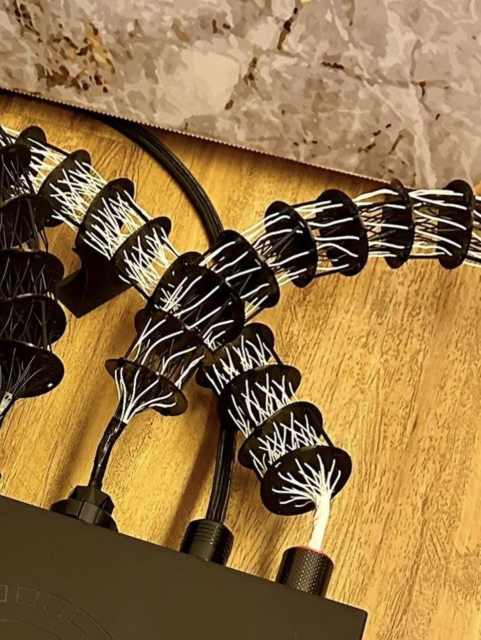
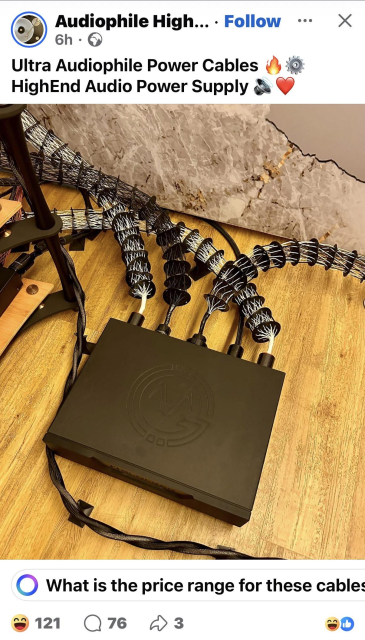
My guess from the picture is that someone has noticed that electrical noise from a power supply can be a problem and has built something that looks very plausibly like it would solve that.