in reply to Blurry Moon

@sun @feld Anyone should have the book thrown at them for kicking a dog that wasn't being aggressive, especially a small dog.
> 70 year old man from Egypt
this has probably been how he's treated any street dog that approached him his whole life without even thinking about it. If he couldn't show any restraint in an airport, then he almost certainly wouldn't in a local park when someone's shih tzu runs up to him. It's for the best that he's deported.
This entry was edited (5 months ago)

I am slowly oxidizing my unix CLI. A lot of people have made rust based versions of common unix utilities and some of them are REALLY good.

Like fd-find for doing essentially find . -name blah. And rg (ripgrep) which does grep -R but it's aware of git, files like pyc or .bak files, and it excludes them by default.

Now I have sd which is hopefully replacing the last thing I used perl for. I write perl -pi -e s/x/y/g a lot. Just doing a quick string replace inside a file. So sd can start doing that.

I'm also trying to get used to zellij instead of tmux and starship for modern prompt decorations like the kids do.

These kids, my friends, are welcome on my lawn.

#rust #cli #linux

in reply to scy

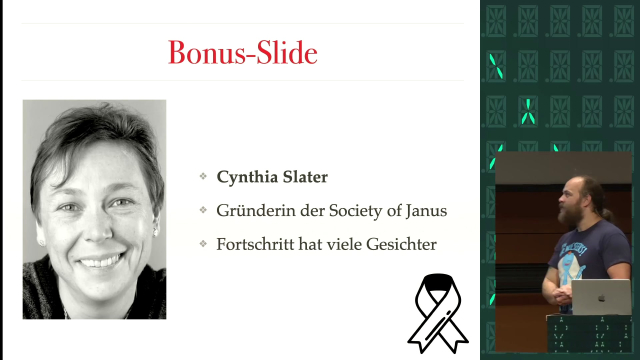
An ner anderen Ecke in dem Thread gab's ne Empfehlung für diesen Talk hier von der #GPN22:

media.ccc.de/v/gpn22-250-warum…

Ich hab da erst dran vorbeigescrollt, aber ihn mir jetzt doch angeschaut. Und wow, der hat sehr gute Argumente dafür, warum Kink gut zum Chaos passt, und der Vortragende ist auch einfach super sympathisch. Find ich. Empfehlung!

#GPN23

Get ready for Windows 11, version 25H2 - Windows IT Pro Blog techcommunity.microsoft.com/bl…

Khronos reshared this.

Day 3 of running Windows XP in 2025 is up.
I opened Enafore to check my Mastodon replies. It worked—for a few seconds. Then the notifications started. And they didn’t stop. Ping. Ping. Ping. I couldn’t reply. I could barely move the cursor. I watched the system buckle in real time.
So I tore XP apart.
I disabled over thirty services, deleted Windows File Protection, nuked the prefetch cache, rewrote shutdown behavior, and killed every background process that wasn’t strictly mine. If it touched the network, tried to log something, or ran without permission, it’s dead.
And you know what? Enafore runs fine now. JAWS doesn’t read new posts live, but I don’t care. I can read. I can reply. XP obeys.
Discord, though? Wouldn’t even load in the browser. Just a blank page. So tomorrow, I’m pulling in what channels I can through IRC. It’s not over.
Read the full post:
fireborn.mataroa.blog/blog/dea…
#WindowsXP #Retrocomputing #BlindComputing #Accessibility #IRC #Mastodon #DeadOSWalking

It's my pleasure to announce storyseedlibrary.org/ - a #library of #solarpunk #art and story seeds to help you imagine a better #climate future!

Huge thanks to all the artists who shared their art under various #creativeCommons licenses, including @the_lemonaut , @NiwlCraft and @jacobcoffin ! No AI will replace handcrafted art!

If you liked our @SolarpunkPrompts #podcast , the Story Seeds are expanding its concept - soon with more, unpublished ones!

#climateChange #illustration #writing

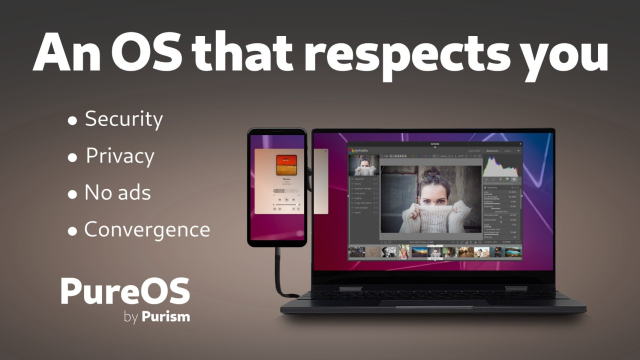
Who says you can’t have #privacy and #security in an OS? Meet PureOS — the #Linux OS that respects you.

No ads
No trackers
No #surveillance
No terms of service traps

PureOS supports Purism’s Librem 5 & Liberty Phone.

More Info: puri.sm/posts/what-is-pureos-a…

Hurray! Another San Francisco bookstore is following Booksmith's example and pulling Harry Potter books.

From the SF Chronicle:

Fabulosa Books followed suit on Wednesday, June 25.

The queer Castro bookstore shared a picture of a whiteboard to its Instagram account with the message, “We are no longer buying + selling books by J.K. Rowling as she is devoting her life to nastiness.”

The caption thanks Booksmith for “setting a good example.”

sfchronicle.com/entertainment/… or archive.vn/Udyth

#LGBTQ #trans #books #SanFrancisco #JKRowling #HarryPotter

#AndroidAppRain at apt.izzysoft.de/fdroid today brings you 6 updated and 1 added apps:

* PaperWise: quickly convert images from your camera or gallery into high-quality PDF files 🛡️

RB status: 631 apps (47.9%)

Enjoy your #free #Android #apps with the #IzzyOnDroid repo :awesome:

Digital Sovereignty in Practice: Web Browsers as a Reality Check


Reading in Servo’s latest weekly report that it’s now passing 1.7 million Web Platform Subtests, I started wondering: How much investment would it build it into a competitive, independent browser, in the context of all this talk on digital sovereignty?

Servo is an experimental web browser engine written in Rust, originally developed by Mozilla Research as a memory-safe, parallel alternative to traditional browser engines like Gecko and WebKit. After Mozilla laid off the entire Servo team in 2020, the project was transferred to Linux Foundation Europe, where it continues to be developed with minimal funding from individual donors and Igalia, a team of just five engineers. Servo’s progress demonstrates what’s possible with intentional investment in independent browser projects.

As initiatives like EuroStack propose €300 billion investments in digital infrastructure and researchers proposing comprehensive roadmaps for “reclaiming digital sovereignty” through democratic, public-led digital stacks, browsers are an ideal test case to ground these ambitious visions in reality.

The current browser landscape reveals how concentrated digital control has become. Roughly 75% of global web traffic flows through browsers based on Google’s Chromium engine; not just Chrome, but Microsoft Edge, Samsung, and dozens of others. Apple’s Safari dominates iOS but remains locked to their ecosystem. Firefox, once a genuine alternative, has declined to under 5% market share globally. This means American companies control how billions of users worldwide access the web. Every search, transaction, and digital service flows through infrastructure ultimately controlled by Silicon Valley. For societies valuing their independence and sovereignty, this represents a fundamental vulnerability that recent geopolitical events have made impossible to ignore.

Digital infrastructure is as important as energy or transportation networks. Unlike physical infrastructure, however, digital systems can be controlled remotely, updated unilaterally, and modified to serve the interests of their controllers rather than their users. Browsers exemplify this challenge because they’re both critical and seemingly replaceable. In theory, anyone can build a browser. The web standards are open, and rendering engines like Servo prove it’s technically feasible.

In practice, building browsers requires sustained investment, institutional coordination, and overcoming network effects that entrench existing players. If democratic societies can successfully coordinate to build and maintain competitive browser alternatives, it demonstrates their capacity for more complex digital sovereignty goals. If they cannot, it reveals the institutional gaps that need addressing.

Firefox offers important lessons about the challenges facing independent browsers. Mozilla has indeed faced difficulties: declining market share, organizational challenges, and ongoing technical issues. The organization has also alienated its most dedicated supporters by pivoting toward advertising, AI initiatives and cutting their impactful public advocacy programs.

However, Firefox remains the only major browser engine not controlled by Apple or Google, serving hundreds of millions of users worldwide. Its struggles reflect structural challenges that any alternative browser would face: the enormous engineering effort required to maintain web compatibility, the network effects favouring dominant platforms, and the difficulty of sustaining long-term technical projects through diverse funding sources.

Servo’s recent progress illustrates both the potential and the resource constraints of independent browser development. Since 2023, Igalia’s team of just five engineers has increased Servo’s Web Platform Test pass rate from 40.8% to 62.0%, added Android support, and made the engine embeddable in other applications, even demonstrating better performance than Chromium on Raspberry Pi. This progress on a shoestring budget shows what focused investment could achieve, while also highlighting how resource-constrained independent browser development remains.

Yet, building a competitive alternative browser infrastructure would require substantial but manageable investment. Here is a ballpark estimation I made based on existing browsers: Annual operating costs would include:

  • Engineering Team of ±50 developers, designers, managers etc.: €15 million.
  • Quality Assurance and Testing Infrastructure: €10 million
  • Security Auditing and Vulnerability Management: €10 million
  • Standards and Specification Development: €5 million.

At this point I would just round up to around 50-70 million annually, which I’m sure would comfortably cover everything I missed. The proposed EuroStack initiative already envisions €300 billion over multiple years. Browsers represent a tiny fraction of what democratic societies already spend on strategic infrastructure. This calculation proves that the cost isn’t the primary barrier: the European Space Agency for example has had a budget of €7.8 billion in 2024. Europe can afford to build a browser.

It would probably take around 3-4 years to fully build an alternative browser from scratch, less so if it’s a fork of one of the existing ones. Forking Chromium/Gecko or building upon Servo’s foundation could reduce this timeline to 18-24 months for basic functionality, though achieving full web compatibility and market readiness would still require several additional years of refinement. The initial development sprint needs to be followed by a sustained engineering effort needed afterward, for maintaining compatibility with evolving web standards, fixing security vulnerabilities, and keeping pace with performance improvements.

The core challenge isn’t technical; it’s institutional. How do you sustain long-term technical projects through democratic processes that span multiple countries with different priorities, resources, and political systems? Successful models exist. The European Space Agency coordinates complex multi-national technical projects. CERN manages cutting-edge research infrastructure across dozens of countries. The Internet Engineering Task Force maintains critical internet standards through voluntary coordination among global stakeholders. The “Reclaiming Digital Sovereignity” proposal specifically addresses this challenge by advocating for “new public institutions with state and civil society representation” to govern universal digital platforms, alongside “multilateral agreements on principles and rules for the internet” as safeguards for autonomous, democratically governed solutions.

Browser development could follow similar patterns: international frameworks that respect national sovereignty while enabling coordinated action, governance structures that balance technical expertise with democratic accountability, and funding mechanisms that provide stability across political cycles. The Reclaiming Digital Sovereignity’s report’s emphasis on “democratic international consortia” and “public knowledge networks led by a new public international research agency” provides concrete institutional models that could be adapted for browser development. Germany’s Sovereign Tech Agency represents another model for public investment in digital infrastructure for the public interest.

With all that being said, browsers represent one of the more achievable digital sovereignty goals. They’re built on open standards, rely heavily on open source components, and face fewer network effects than platform-based services. Other areas of the technology stack would be far more challenging, and far less open.

Success here would demonstrate that democratic societies can coordinate effectively on complex technical infrastructure and pass the first hurdle. Failure would reveal institutional gaps that need addressing before attempting more ambitious digital sovereignty goals. Democratic digital sovereignty is challenging but feasible, if societies are willing to think institutionally, invest sustainably, and build incrementally rather than trying to recreate Silicon Valley with different ownership structures.

Ultimately, the real question isn’t whether democratic societies can build alternative technologies, but whether they can build the democratic institutions necessary to govern them effectively across the complex realities of international coordination, competing priorities, and long-term sustainability. I believe browsers offer an ideal place to start testing these institutional innovations. The technical challenges are surmountable. The institutional ones remain to be proven.

Views expressed are personal and do not represent any organization.

#digitalSovereignity #funding #internetStandards #openSource #publicInterest

This entry was edited (5 months ago)

It's hear! I finally was able to convert it to mp3, so that way, Mastodon supports it. My mother had this phone, when i was growing up, and i wanted one, to add to my collection! My good friend, Stephen, was going to throw the phone out, because he couldn't root it. I heard him talking about it, and i told him, if you don't want it, let me have it, as it's one of thos phones that are becoming hard to come by. He gave it to me, in an Olive Garden parking lot, one year ago, and i have been taking care of it since, along with two other old phones my mom and dad gave me. Anyways, i hope this brings you back to the early days of Android, where Accessibility was not fully featured, and was just a nightmare of buttons. Eyes Free Shell will be featured, however, it is no longer being developed. It was an accessible Android launcher, made to give some level of accessibility to blind android adopters. This phone runs Android 2.2, if you are curious!

How does Substance Designer + Inkscape sound?

That's pretty much exactly what Graphite is. A new free, open source, procedural vector graphics application.

gamefromscratch.com/graphite-f…

#gamedev #indiedev

39 years today since Jim Henson's cult classic 'Labyrinth' was released on June 27th 1986, with George Lucas as executive producer, starring Jennifer Connelly as Sarah Williams and David Bowie as Jareth the Goblin King.

(Original illustration by Kevin M Wilson apemeetsgirl.com)

#Labyrinth #OTD #Movies #Cinemastodon #FilmMastodon #80s #JimHenson #OnThisDay #Art #Artwork #Illustration

This entry was edited (5 months ago)

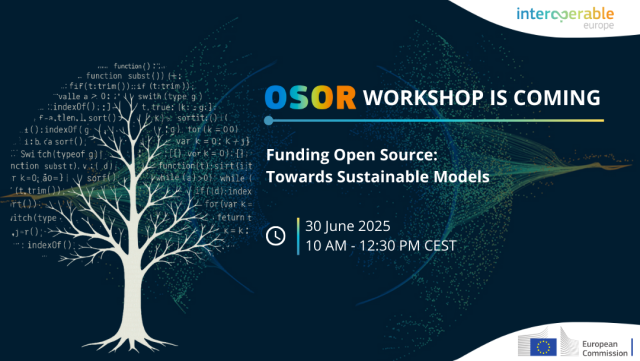
Have you ever wondered what funding models exist, or what might be the best option for your project?

Then this is for you:

The Open Source Observatory is hosting an online workshop on 30 June 2025 dedicated to exploring funding strategies for open source projects.

@mechko, Head of the Sovereign Tech Fund, will speak about our approach to investing in open digital infrastructure in the public interest.

📅 30 June 2025
🕙 10:00–12:30 CEST

Register now: ec.europa.eu/eusurvey/runner/9…

@EC_DIGIT

This entry was edited (5 months ago)

what was once a cornerstone of the #milwaukee burger scene, bombers has since lost its way. food quality has diminished over the years and there are far better places to grab a burger (oscars and archies to name a couple).

although i've never been a fan, thanks for pioneering the modern burger scene in our city!

milwaukeerecord.com/food-drink…

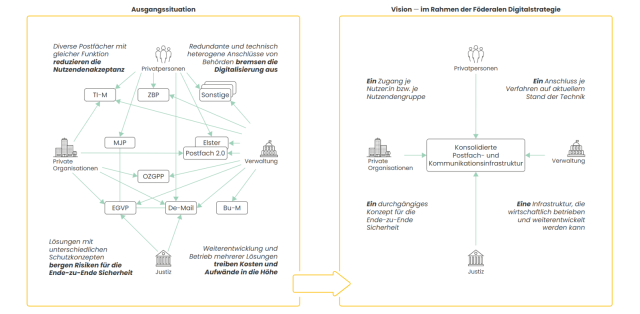
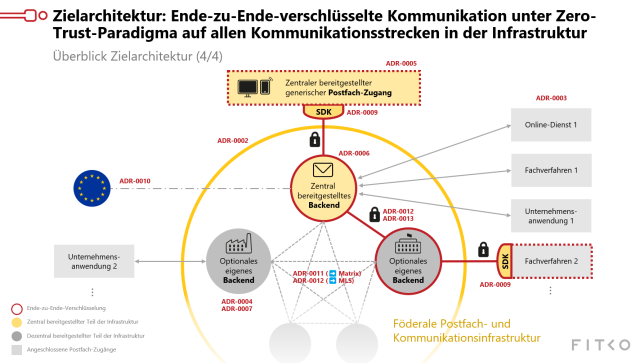
Mal.was erfrischendes aus der Verwaltungswelt: Offizielle Kommunikation mit Behörden via @matrix und #MLS!

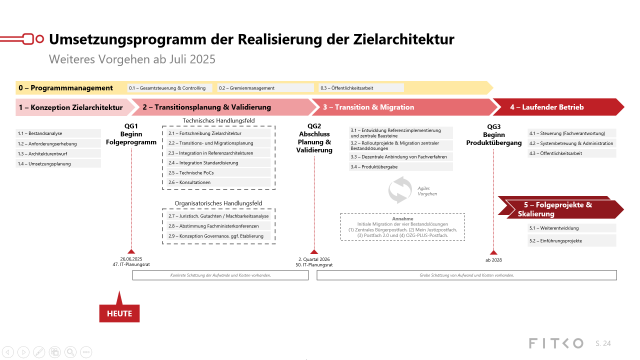
Der #ITPlanungsrat hat heute die Fortführung des Vorhabens zur „Zielarchitektur Postfach- und Kommunikationslösungen” beschlossen. Jetzt geht es in die nächste Phase der Transitionsplanung & Validierung.

@cwo berichtet: heise.de/news/Wie-Buerger-kuen…

Alle Details unter gitlab.opencode.de/it-planungs… (natürlich alles CC-BY 🙂)

#fitko #itplr #zapuk #matrix #bundid #mjp #elster #muk #egvp #egov #ozg

Oh, wow! The German IT Planning Council decided yesterday to consolidate a bunch of disparate communication tools into a unified system based on Matrix and MLS.

Here's the record of their decision and the other options they considered: gitlab.opencode.de/it-planungs…

#Matrix #OpenSource #FOSS #ProtocolsNotPlatforms #DPI #DPG

This entry was edited (5 months ago)

Valgrind is an instrumentation framework for dynamic analysis tools. It translates your program into an intermediate representation (VEX). Valgrind tools (like memcheck) transform/instrument the VEX representation. Valgrind then uses classic compiler optimizations on that internediate representation. And finally the VEX is translated back to machine code.

Florian Krohm made a list of missing constant folding operations: bugs.kde.org/show_bug.cgi?id=5…

Take a peek if you would like to hack on Valgrind!