Hello everyone. The Canadian Council of the Blind podcast just published my Unseen Touchscreen course lecture about reading books on your iPhone. A fitting lecture to have just before the Summer break. castro.fm/episode/FsOEgc

#deltatauri is ready for testing.

support.delta.chat/t/help-test…

DeltaTauri is basically #deltachat_desktop , but using #tauri instead of electron.
Full Blogpost will follow soon.

treefit reshared this.

Miss #Pocket? 🥲 We have a fix! 👋

Nextcloud Bookmarks helps you organize and sync your links, offering extra privacy and integration opportunities on top of that. And it's open source. And people love it!

apps.nextcloud.com/apps/bookma…

I usually don't post during #AudioMo but I went to a great organ concert today and captured it with my stealth recording kit. I thought the results where pretty nice for what they are, so I guess here's the Sarabande by Georg Friedrich Händel, recorded on the 2000 Kleis organ located in the Händel House in Halle (Saale), Germany. Its the biggest organ in Halle I think with 4200 pipes. Sounds pretty impressive, let me tell you. A few more recordings follow in the thread.

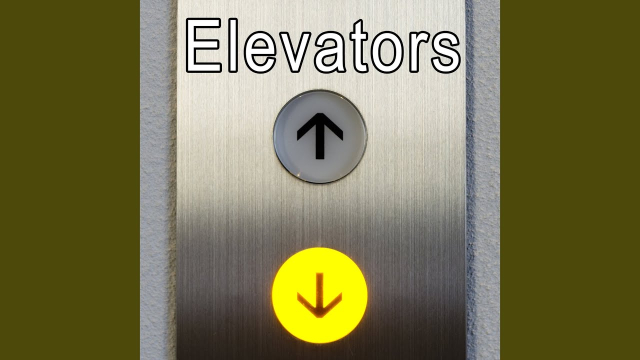
#AudioMo 2025 day 6. This recording was made in 2018 when I was still in high school, a year before I graduated. This is a small elevator that they had to have to comply with the ADA, since the front hallway had a second floor. Recorded with my phone and for some reason tons of compression, sorry about that.
This entry was edited (6 months ago)
in reply to miki

It's actually part of the accessibility requirement here. When an elevator arrives at a floor, it must have an audible indicator. This was usually a bell. Better yet, this indicator must be a single tone when going up, and a double tone when going down. That way, in a bank of elevators, a blind person can know that the elevator they wanted has arrived based on where they're going without being able to see any light-up panels, and also track where the door is.
This entry was edited (6 months ago)

This is Giant Fruit Bat, known as a “flying fox.” Their wingspan can extend to four feet.

Photographer Hardik Shelat captured the beautiful animal in a rare daytime appearance. It came out of its nocturnal slumber to cool off in the intense Indian heat.

#Photography #Animals #Nature #Bats #GiantFruitBat #FlyingFox #HardikShelat

The #Zed text editor (zed.dev) finally opened early access program for their #Windows builds. I suggest everyone from the #Accessibility dev community to sign up for it, hopefully (maybe!) we will be able to shape its accessibility. Many sighted people from the Apple land praise it for speed and amount of useful functions. I won't quit using #VSCode of course, but why not to have another tool in the box?

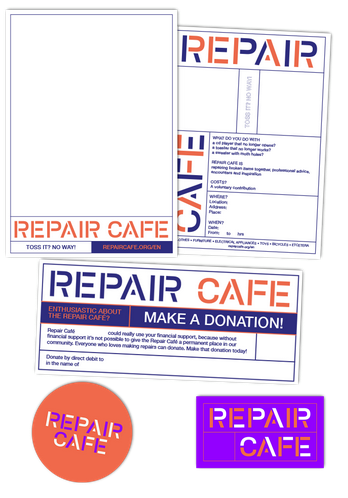
Want to start a Repair Café in your area?

You can!

Repair Café International enables local groups around the world to start their own:

repaircafe.org/en/join/start-y…

@RepairCafeInternational supports #EndOf10 to prevent #eWaste!

#RCInternational #RepairCafe #RightToRepair #Linux #FreeSoftware #OpenSource #FOSS #FLOSS #Windows #Win10

#AudioMo

This is one I posted a couple of years ago, but I've had new followers since then.

In March of 2010, I set up an always streaming set of microphones at my childhood home, then using an old, small form factor Pentium III desktop computer running Windows XP. In the late summer of 2014, I installed a similar setup at my New York apartment, this time using an old laptop running Windows 7.
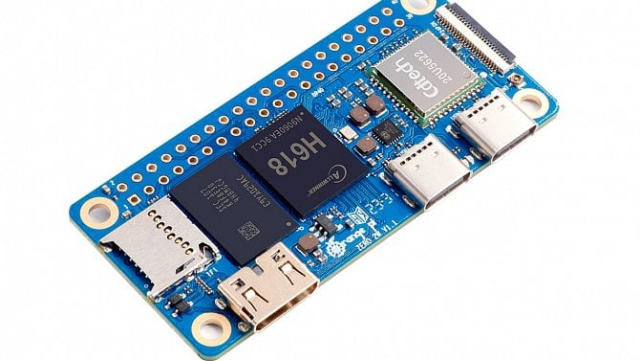
In 2015, I switched to a Raspberry Pi 2 model B running Liquidsoap, added 24/7 archiving, and installed a second, nearly identical setup at the New York apartment.

I had to take the New York stream down when we moved five years ago, and my parents' have moved since then, but the stream there still exists.

What follows is a presentation highlighting some of the more unusual things these streaming setups recordedover a period between 2011 and 2020.

For those interested in such things, the live audio stream of my parents' back yard lives here:
stream.borris.me:8888/outside

Purism Featured in Fortune!

Secure Phone Made in the USA. While Big Tech claims U.S. smartphone manufacturing is “impossible” or “too expensive,”

In a recent Fortune feature, CEO, Todd Weaver explains how the Liberty Phone is made in the U.S.: puri.sm/posts/fortune-com-feat…

in reply to Turris project

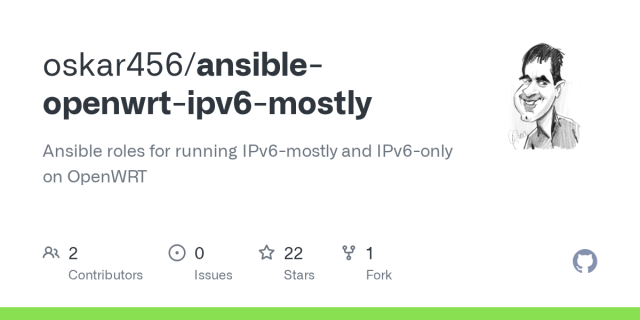
After all those years, I automated the most of the setup with #Ansible so it can be easily reproduced next year:

github.com/oskar456/ansible-op…

We don’t treat #Hamas claims as fact, unlike some in the media,

says #WhiteHouse Press Secretary #karolineleavitt
when asked about reports accusing #Israel of killing civilians near an aid center.

Maybe the BBC should stop spreading fake news to vilify Israel?

Heute ist #Sehbehindertentag!

Der @DBSV thematisiert #Touchscreens

Oft sind sie der einzige Weg, um an #Informationen und #Dienstleistungen zu gelangen. Es ist deshalb wichtig, dass Touchscreens auch von Menschen mit #Seheinschränkung #barrierefrei genutzt werden können.

Ein #sehenswertes #Video des #DBSV gibt es dazu (bisher leider) nur auf YouTube:

youtube.com/watch?v=SVCmMV0Y4d…

#a11y #Inklusion #digitaleTeilhabe

Even with close confirmation I sometimes close my terminal and think "OH FUCK NO." Coming soon to Ghostty, you can undo that. 🥰 (Technical details: we keep the terminal running for a configurable time in the background before terminating for real, similar to email undo send).

(macOS only for now, AppKit APIs provide a nice undo manager implementation that eases this quite a bit. I still have to do research on GTK for Linux.)

in reply to Mitchell Hashimoto

This is potentially very dangerous. If you realize you have a destructive operation running which you did not intend to run, some users might have a "close close close" reflex, without realizing that it won't, in fact, stop the operation.

This way, you go from running rm -rf / for half a second to doing that for 10 seconds.

Same with media, I have a "close reflex" whenever I'm trying to figure out the structure of some audio file, pass the wrong parameters to Sox's play and get white noise blasted at me at full volume.

Apparently Lufthansa has a new "cabin concept" called Allegris. (source seatmaps . com)

Let's break down the basic economy class feature: seating space.

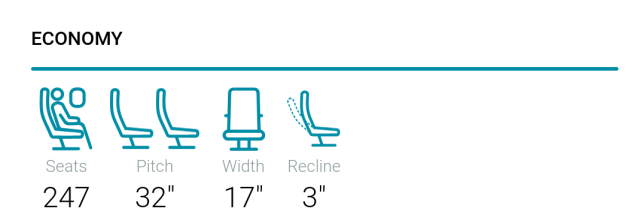
The regular one on B789 (787-9):

32" pitch (that's the distance between two seat) and 3" recline (mean 3" if personal space invasion).

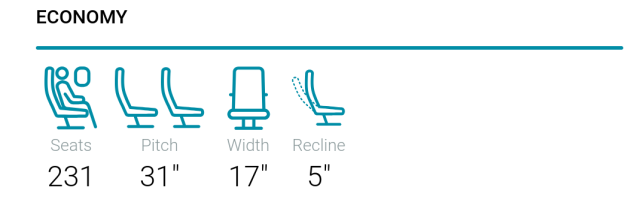
Now the new Allegris on B789 (787-9):

31" pitch (one inch less,, 2.54cm) and 5" recline (2 more inches of personal space invasion). In short 3 more inches (7.6cm) of incomfort for tall people like me.

(1/2)

in reply to Hubert Figuière

And people wonder why I hate flying (in Economy). But simply put I'm tall and when I seat my knee already touch the front seat. And it gets worse over. Now when the person in front recline the seat, it hurts. I gave seen: 1. people doing violently (slaming the seat back) 2. people insisting they must when there is no room, and waiting I get to the washroom to do it so I can't seat back. Got scolded my Swiss crew for that.

(2/x)

in reply to Hubert Figuière

And then airline charge a premium for "front" seat (bulkhead or emergency exit). They are less convenient like less storage, no bag on the floor, or screen that must be stowed away. But I guess they don't discount that inconvenience, but they do charge more money for the leg room. And even if the seats are empty, you can GFY, at least on Air Canada.

(IANAL, but it becomes discriminatory)

(3/x)

Depressing but instructive as hell

AI really is "fake data science for software bros" so often

propublica.org/article/inside-…

in reply to Cat Hicks

Reading this continues to explain to me (finally, and at devastating scale) why I was SO frustrated trying to be a scientist working with software engineers building edtech who would NEVER listen to behavioral science about any aspect of human behavior and instrumented the worst systems for ever actually learning about human behavior. Just constantly thinking we could magically derive answers to our questions. And this was well before AI was used in this way! The mental fragility was there.
in reply to Cat Hicks

I honestly find the technical details of LLMs quite interesting -- like I find *many* models quite interesting. But the mad interaction effects, the amplification of existing exploitable fragilities in our mental models, that is boggling too. I feel it is necessary to understand just how cruel our systems already were (how we deal with health, and concepts of efficiency in a society that won't take care of its children), as a core piece of this and who gets to use this and in what way.

Keep up-to-date! #LibreOffice 25.2.4 is now available: blog.documentfoundation.org/bl… #foss #OpenSource #freesoftware #Office

LibreOffice reshared this.

Re: last boost (mathstodon.xyz/@j_bertolotti/1…), about the researchers who trained a model trying to use only public-domain and openly licensed data, here's the paper: arxiv.org/abs/2506.05209 and here's the HuggingFace for the comma-v0.1-2t model: huggingface.co/common-pile (For anyone itching to play with it, no, it's not on Ollama, at least not yet; it's brand new.)


"AI companies claim their tools couldn't exist without training on copyrighted material. It turns out, they could — it's just really hard. To prove it, AI researchers trained a new model that's less powerful but much more ethical. That's because the LLM's dataset uses only public domain and openly licensed material."

tl;dr: If you use public domain data (i.e. you don't steal from authors and creators) you can train a LLM just as good as what was cutting edge a couple of years ago. What makes it difficult is curating the data, but once the data has been curated once, in principle everyone can use it without having to go through the painful part.
So the whole "we have to violate copyright and steal intellectual property" is (as everybody already knew) total BS.

engadget.com/ai/it-turns-out-y…


in reply to Matt Campbell

If someone (@simon?) puts together instructions for trying out this new model, it will be interesting to see how it compares to the well-known models that take the typical unscrupulous approach to training data and have undergone post-training (e.g. OpenAI's RLHF). I suspect that this model won't be nearly as useful (to the extent that LLMs are useful in the first place).

Calling all analog film photographers! 🎞️ I've been working on Filmbook, an open-source app to help you keep track of your film usage. It's built with Rust & GTK4/libadwaita for a smooth & modern experience – and it even runs on Linux phones like the Librem 5 and Pinephone Pro! 📱
The first version is ready for testing, and I'd love your input on what features would make it even better! Join the community & help shape Filmbook: codeberg.org/bjawebos/filmbook ✨ #filmphotography #analogphotography #rustlang #gtk #opensource #community #testing #featureideas #librem5 #pinephone #linuxphone

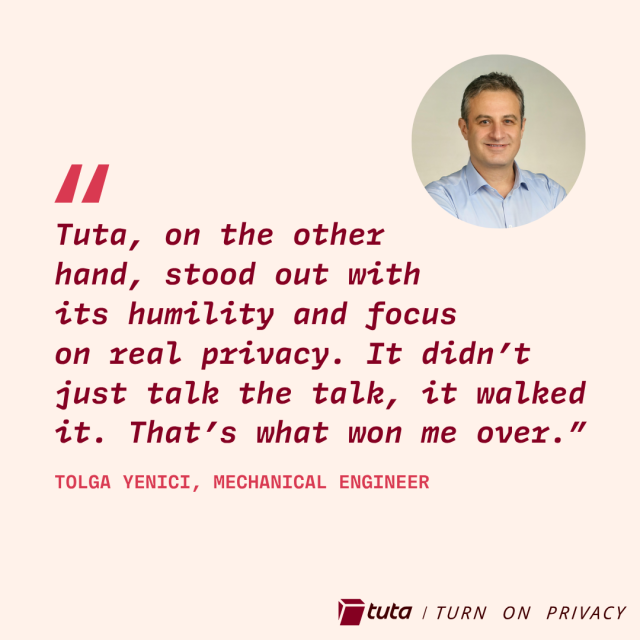
Your voice, our drive: We had the privilege of interviewing @tolgayenici a mechanical engineer residing in Canada, to find out why he chose Tuta Mail, how he became a privacy and open source enthusiast, and why privacy matters to him. 💬🔐

👉 Read the full interview: tuta.com/blog/tuta-user-interv…

#PrivacyMatters #TutaMail #OpenSource #MadeinGermany

"AI companies claim their tools couldn't exist without training on copyrighted material. It turns out, they could — it's just really hard. To prove it, AI researchers trained a new model that's less powerful but much more ethical. That's because the LLM's dataset uses only public domain and openly licensed material."

tl;dr: If you use public domain data (i.e. you don't steal from authors and creators) you can train a LLM just as good as what was cutting edge a couple of years ago. What makes it difficult is curating the data, but once the data has been curated once, in principle everyone can use it without having to go through the painful part.
So the whole "we have to violate copyright and steal intellectual property" is (as everybody already knew) total BS.

engadget.com/ai/it-turns-out-y…

reshared this

in reply to miki

Just to iterate on your idea (I still believe we can do better), we can force social networks to act as intermediaries between end users and AI bros. If the AI bros love subscription capitalism so much, let them subscribe to, say, Meta to scrape Facebook, with Meta being obligated to distribute the fee obtained between users on the platform.

...with an option to opt-out from scraping.
The world where I can sell my kidney but can't sell my personal data is kinda weird.

This entry was edited (6 months ago)
in reply to Bodil

By the way, I can't be the only one who's noticed the similarities between today's LLMs-in-programming "discourse" and the Agile fads of the previous decade or two. If you don't do TDD you'll be "left behind," if you don't do Scrum you'll be "left behind," if you don't do pair programming you'll be "left behind" etc. I'm just waiting for some vibe coding enthusiast to rediscover the derogatory term "cowboy programmer."