A Galaxy of Difference - Accessible Android
On my Samsung phone, that never happens. Besides more general issues discussed elsewhere on this site, TalkBack's hardware Braille display support works fine.Devin Prater (Accessible Android)
So what is development like for the BTSpeak?
Are you limited to making apps that only work with desktop mode, or can you do things that also integrate with the non-desktop experience? (Not up on my BTSpeak terminology so maybe there's a better description for "non-desktop-mode experience" but hopefully what I mean is clear)
What is development like? I know there are Python tutorials but is it limited to Python? Or can you build a TUI-style app and adapt it to work with specific keycodes/conventions?
Are there any developer docs?
I've had an idea for something that would likely be great for the BTSpeak and other notetakers for a while now, and my assumption is that the BTSpeak is probably the most open/easy to develop for. If that's correct, I'm curious what that process looks like.
On this day, forty years ago: 28 January 1986.
I was working on my astronomy PhD in the terminal room at the Royal Observatory Edinburgh.
Someone came in & told us the awful news. After so many launches & astronauts, we’d grown blasé & didn’t pay much attention anymore.
That changed in 73 seconds on that cold day & we learned again that space is hard.
I still remember their names:
Onizuka, Smith, McAuliffe, Scobee, Jarvis, Resnick, & McNair.
Ad astra, STS-51L Challenger crew ✨
Most hashtags are pretty obvious, you just put # in front of a topic. For example if a post is about coffee it might have the tag #Coffee
However, many popular hashtags have difficult-to-guess names, so I've started a list to help people discover them:
➡️ fedi.tips/fun-and-useful-hasht…
Copy-paste a hashtag into the search box in Mastodon if you want to browse or follow it.
If you have suggestions for non-obvious hashtags that should be added to the list, let me know in the replies 🙂
An unofficial guide to using Mastodon and the Fediversefedi.tips
If you would like to help financially support the development of a new Wayland compositor for Xfce, you can do so by contributing funds via our #OpenCollective accounts.
For US contributions:
opencollective.com/xfce
For EU contributions:
opencollective.com/xfce-eu
These contributions will help pay for the funding of longtime Xfce core developer Brian Tarricone to create xfwl4, a brand-new Wayland compositor for Xfce.
Thank you for your support!
#Xfce #Wayland #Rust #FOSS #Linux
Xfce is a lightweight desktop environment for UNIX-like operating systems. It aims to be fast and low on system resources, while still being visually appealing and user friendly.opencollective.com
From the Slint email list:
Dear all.
I am very sad to inform everyone that our friend Didier died last week.
Early 2015, I asked on the slackware list if brltty could be added in the
installer ; Didier answered promptly that he could do it on
slint. Afterwards, he worked hard so that slint became as accessible as
possible for visually impaired people.
You all know that all these years, he tried and succeeded to answer as
quickly as possible to our issues and questions.
He will be irreplaceable.
There is a fork of Mastodon available, called "Glitch Edition", that has some special features implemented. My new instance at social.defocn42.net is running this fork.
I came upon an interesting error when trying to connect to the instance. Adding the user "m1rk0@social.defcon42.net" failed because of an unknown network. Then i tried it the other way around from the Mastodon instance and could follow myself on Friendica. The connection is now mutual and the Mastodon instance is recognized as "glitchsoc".
Are there known issues with glitchsoc and Friendica? It's weird, that the connection can be established only from one side and is working normally afterwards.
Looks like the UK does not have our back:
"Keir Starmer rejected his Canadian counterpart’s call for mid-sized countries to band together in the face of unpredictable global powers — and insisted his “common sense” British approach will do just fine."
Like I said, we'll find out who our friends are.
politico.eu/article/keir-starm…
U.K. leader says he’s ‘a British pragmatist applying common sense’ after Canadian counterpart called for mid-sized countries to team up in the era of Trump.Dan Bloom (POLITICO)
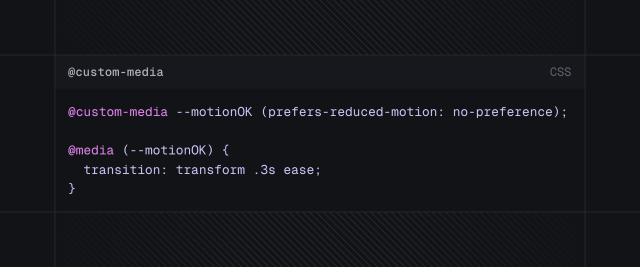
#CSS `@custom-media` available behind a flag in Firefox Nightly
Lovely syntax, just lovely.
nerdy.dev/custom-media
@custom-media working behind a flag in Firefox Nightly! @custom-media --motionOK (prefers-reduced-motion: no-preference); @media (--motionOK) { transition: transform .3s ease; } Lovely syntax.Adam Argyle (nerdy.dev)
Ich hätte ja gern ein erwachsenes, partnerschaftliches Verhältnis in meinem Betrieb.
Aber ich kriege es nicht hin.
Es vergeht kein Tag, an dem ich nicht gesagt bekomme, dass ich ja die Chefin bin.
Finally, a set of open earbuds that actually sound good and provide noticeable ambient noise reduction.Billy Steele (Engadget)
@clv1 hmm. this is where the new settings might help you.
Mess with these settings and see if they can help in your YAML:
settings:
# Smooth big formant jumps at boundaries (good for word-initial L+vowel clicks)
trajectoryLimit:
enabled: true
applyTo: [cf2, cf3]
maxHzPerMs:
cf2: 16
cf3: 20
windowMs: 30
applyAcrossWordBoundary: true
# Give /l/ a soft onglide (reduces the “snap” at the start of a word)
liquidDynamics:
enabled: true
lateralOnglide:
f1Delta: -50
f2Delta: 200
durationPct: 0.35
I didn’t realise just how US centric all of package management was until I made these tables 😅
The Dependency Layer in Digital Sovereignty: nesbitt.io/2026/01/28/the-depe…
Where package management fits in the digital sovereignty discussion.Andrew Nesbitt
for forges, you might wish to add @Codeberg (Germany, EU). Not sure where Sourcehut sits (is it NL, @sir ?)
So there ARE alternatives. And as already pointed out in another comment by @jens , Forgejo/Gitea can be self-hosted as well. And at least for Forgejo, Federation is upcoming IIRC, to take another hurdle (separate registrations) from self-hosted installs.
But yeah, that list reads horrible, re "sovereignty" 😢
Ich brauche eine Empfehlung für einen Rechtsanwalt für NRW-Schulrecht.
Lage oder Örtlichkeit ist ist egal, wenn es telefonische Beratung gibt.
Ich bitte um persönliche Erfahrungswerte, gerne auch per DN.
Danke!
It was interesting to read up on the AI assisted code review at lesswrong.com/posts/7aJwgbMEiK…
For context: I'm personally responsible for at least 29 curl CVEs. Out of the recent 6 CVEs mentioned in the blog post I found two. This gives me some perspective, I think.
I do not utilise AI tools in my vulnerability research. I am also fiercely critical of harmful proliferation of AI. This is due to the unsustainable way it is currently pushed, and use of as marketing ploy and gimmick rather than producing measurable benefit to users. This leads to negative impacts on economy, education & learning, not to mention impacts to nature due to wasteful use of energy.
This doesn't mean I am against AI. I have written by own AI tooling (fully local RAG with support for arbitrary number of models running on local nodes, implemented in python). I found the usefulness of such tool to be limited at best. It is somewhat useful in mass analysis of large document bases, but the level of analysis is superficial at best. These AI models are after all just language models, and do not have any true understanding or intelligence.
And here is the gist of it: The current tools are not intelligent. Understanding this limitation is the key of successful deployment and utilisation of AI tools. The tools can be useful in certain tasks, but they do not replace true intelligence.
The AI tooling AISLE are developing certainly is one of the better uses of AI, and definitely surpasses all my personal dabbling around it. It is clear that the tool does find vulnerabilities. The key question is how much hallucinations and false positives it produces: If the tool generates thousands of FPs and the true findings are hidden among them this limits the value and usefulness of the tool (of course it doesn't entirely negate it, many tools produce false positives). In short: The quality of the findings is key, and poor signal-to-noise ratio is highly undesirable.
Either way, I think there is a future for AI tools and they definitely will be helpful in vulnerability research.
I personally will keep exercising my wetware for this work, however.
#cybersecurity #infosec #vulnerabilityresearch #thoughtoftheday
Based on this deranged slop flood out of @mozilla : stateof.mozilla.org/
1) I'm happier about my decision to stop using Firefox.
2) I'm going to stop using @thunderbird .
Which is a shame, because Thunderbird is still the best mail client, and Firefox brought us hope in the IE days.
Thanks for making everything worse @mozilla .
Ktoré potraviny riedia krv a chránia pred trombózou?
▪️Kelp - Prírodné antikoagulanty. Môže znižovať viskozitu krvi.
▪️Cesnak - Obsahuje fytoncídy. Nielenže znižuje viskozitu krvi, ale pomáha aj neutralizovať širokú škálu toxínov. Podporuje kardiovaskulárne zdravie.
▪️Kurkuma - Riedi a čistí krv.
▪️Olivový olej - Vďaka svojim antioxidačným vlastnostiam znižuje aktivitu krvných doštičiek.
▪️Harmanček - Potláča aktivitu krvných doštičiek a zabraňuje zrážaniu krvi.
▪️Horčica - Omega 3 a vitamín B6 znižujú viskozitu krvi, čistia obehový systém a posilňujú cievy.
▪️Mastné ryby - vďaka Omega 3 zlepšujú medzibunkový metabolizmus, čím zabraňujú trombóze.
▪️Zázvor - normalizuje krvný obeh. Znižuje krvný tlak a podporuje normálny prietok krvi. Obsahuje salicylát, prírodný analóg aspirínu.
Feature: Developer behind it is sick with worry he might have changed software development in nasty waysSimon Sharwood (The Register)
Read a book review on my timeline that didn't mention the title or author.
Went to reply in confusion because the book sounded interesting, and realised the details were in the content warning and I have those completely disabled in my client.
Please don't use content warnings like email subject lines.
reshared this
France is rolling out Visio, a homegrown secure videoconferencing platform, to all government employees by 2027.
The move aims to replace American tools like Teams, Zoom and Webex that currently fragment public administration communications and create security vulnerabilities.
The platform already has 40,000 regular users and is being deployed to 200,000 agents. Major institutions like CNRS are switching over this quarter, with CNRS replacing Zoom for its 34,000 staff and 120,000 affiliated researchers by late March.
Visio runs on French sovereign cloud infrastructure certified by ANSSI, uses AI transcription technology from French startup Pyannote, and will add real-time subtitling from French AI lab Kyutai by summer 2026. Beyond security and digital sovereignty, the switch generates real savings of about 1 million euros per year for every 100,000 users leaving paid license solutions.
Minister David Amiel frames this as essential to protecting sensitive government data and scientific exchanges from exposure to non-European actors while supporting French tech companies.
numerique.gouv.fr/sinformer/es… #France #Greenland #MAGA #DonaldTrump #tarrifs #France #Google #MicrosofTeams
2/3
THE PROVEN TRACK RECORD:
France isn't experimenting—they've been doing this successfully for 20 years. The French Gendarmerie (national police, 100,000+ employees) pioneered this approach:
TIMELINE:
• 2005: Migrated from MS Office to OpenOffice
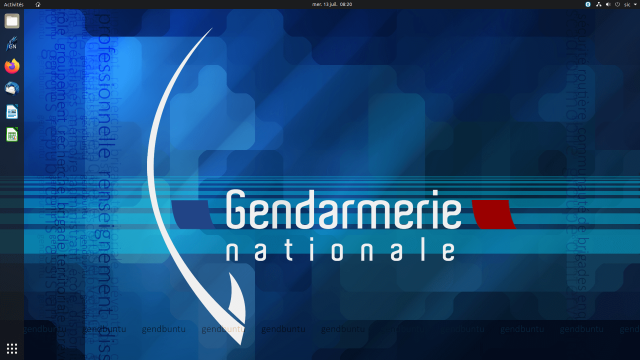
• 2008: Started Ubuntu desktop deployment (GendBuntu)
• 2014: Majority migration complete
• 2024: 97% of workstations running Linux (103,164 computers!)
FINANCIAL IMPACT:
• €2 million/year in licensing cost savings
• Additional savings from eliminating 4,500 servers
• Total 2004-2008: ~€50 million saved
STRATEGIC INVESTMENT:
In October 2025, France became the FIRST national government to officially partner with the Matrix Foundation—not just using it, but funding its development and participating in strategic decisions. This ensures the protocol evolves to meet European government needs.
So when we say France is "building bundles," they're really packaging, hardening, and supporting mature upstream FOSS (Linux, PostgreSQL, Matrix, etc.) with French hosting, governance, and integration—not reinventing everything from scratch.
GendBuntu: en.wikipedia.org/wiki/GendBunt…
Gendarmerie case study: canonical.com/blog/la-gendarme…
#Matrix
(2/3)
3/3
HOW EASY IS IT TO MOVE FROM MICROSOFT?
TECHNICALLY: Very feasible. Strong FOSS alternatives exist for everything:
Windows → Linux (Ubuntu, Debian, Fedora)
Office → OnlyOffice, LibreOffice
Exchange/Teams → Matrix/Element, Nextcloud
SQL Server → PostgreSQL, MariaDB
Benefits: No per-seat licenses, data sovereignty, transparent security, longer hardware life, no forced obsolescence.
THE REAL CHALLENGE: Organizational, not technical
Legacy Windows-only apps & VBA macros (need rewriting or VMs)
User retraining & change management (people lose muscle memory)
Political will & leadership commitment (critical!)
External partner expectations (.docx, Outlook, Teams)
SUCCESS FACTORS (proven by Lyon & Gendarmerie):
• Strong political backing at highest levels
• Adequate budget & realistic timeline
• Comprehensive training programs
• Willingness to maintain hybrid systems during transition
• Local/regional procurement (Lyon: 100% French contractors)
CURRENT MOMENTUM:
Denmark, Germany (Schleswig-Holstein), Netherlands, Italy, and Slovenia are all pursuing similar digital sovereignty initiatives through FOSS
Bottom line: #France proves that digital sovereignty through open source works at massive scale (103K+ workstations). They're not reinventing wheels—they're making smart use of mature, proven technology with European hosting and governance.
Lyon Register article: theregister.com/2025/06/26/lyo…
#OpenSource #DigitalSovereignty #Linux #FOSS #France #Lyon #PublicSector #Ubuntu #Matrix #GendBuntu #Europe #Microsoft
(3/3)
: Ingredients of future software salade Lyonnaise will include Linux, PostgreSQL, and OnlyOfficeSimon Sharwood (The Register)
Another reason why I wish more appliances still had physical buttons and knobs, aside from the obvious tactile one, is that it's an easy way for you to have a personal default setting.
My countertop dishwasher for example has only touch buttons. They are a pain to trigger, especially with wet hands, and it always starts at the energy- and water-saving programme, so helpfully named "1", which takes about 2 hours. Whereas I prefer the short programme, which takes only 30 minutes, since it's the only programme that doesn't include a drying cycle, and it usually cleans well-enough. I usually prefer to just open the door afterwards, pull the rack out on top of it, and let it air-dry while its contents are still hot. It's programme 3 though, so I'll have to press that programme-select button twice. every... single... time...
Whereas if the programme-select was just a physical knob, I could just leave it on programme 3. I also like to always have it start with a 5-minute steam, which could also just be a physical switch, instead of a non-tactile area I have to press every time. Hell, make it a knob that sets the duration of the steam session.
Even better; instead of mildly different predefined programmes, give me a whole bunch of knobs for pre-wash temperature and duration, main programme temperature and duration, rinse cycle. Put a nice, user-replaceable, LED above each of them that indicates which cycle it's currently in, and one shared countdown timer display, and I'm a happy camper.
#FiXatoRants #appliances #accessibility #a11y #kitchenAppliances #kitchen #DearDesigner #knobhead
Quin
in reply to Nolan Darilek • • •Matt Campbell
in reply to Quin • • •Matt Campbell
in reply to Matt Campbell • • •Nolan Darilek
in reply to Matt Campbell • • •Matt Campbell
in reply to Nolan Darilek • • •You can get to a shell in traditional mode, through the system administration menu or something like that.
The traditional mode is literally the Linux text console with BRLTTY configured for speech output and Braille keyboard input. The desktop mode is MATE with Orca, again using BRLTTY for keyboard input.
Nolan Darilek
in reply to Matt Campbell • • •Matt Campbell
in reply to Nolan Darilek • • •Matt Campbell
in reply to Matt Campbell • • •Nolan Darilek
in reply to Matt Campbell • • •Matt Campbell
in reply to Nolan Darilek • • •Matt Campbell
in reply to Matt Campbell • • •Devin Prater :blind:
in reply to Matt Campbell • • •