12 books in the week leading upto and the week of the holiday, including 13 days spent on a reread of a massive Harry Potter Fanfic. Not a bad run!
Details for anyone who want to keep up with my reading are at buttondown.com/SeansShelf/arch…

@Onqa6 🤔 Teda nechci do toho už zabrušovat, ale tady píšou, že i princezny chrápou 😀magazin.aktualne.cz/lifestyle/…
in reply to Archos

Je to tak 🤷🏻‍♂️. Berušku jsem poslal na plicní, zjistili, že má apnoi (občas v noci kromě chrápání přestala dejchat 😬, to se mi fakt nelíbilo, často jsem nespal a pozoroval ji 🙄 a budil ji, aby dýchala), takže dostala od zdravotní pojišťovny Philips DreamStation a je klid 😊 (byl/je na něj i software do Ubuntu 💚).
To se stalo před cca 7mi lety. Teď tam posílá i mě 😳, ale já jen občas chrápu ☺️🤔.
@Onqa6
This entry was edited (6 months ago)

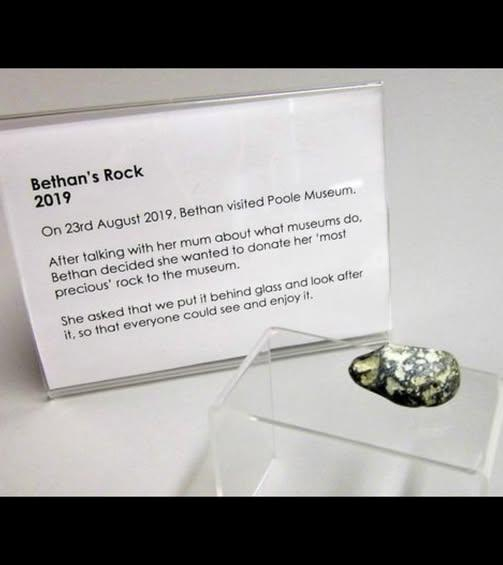
In August 2019, a young girl named Bethan visited Poole Museum in Dorset, England, with her mother. Inspired by the exhibits and a conversation about the purpose of museums, Bethan decided to donate her most treasured possession—a small rock—to the museum.
She requested that it be placed behind glass so others could appreciate it as she did. The museum staff honored her heartfelt request, and the rock was displayed in a glass case on the second floor, labeled “Bethan’s Rock.” #museums

Just in case anyone comes at you with adblocking is somehow immoral.

Adblocking is an essential tool of self defence.

In related news, I’m so happy uBlock is finally coming to Safari, but Wipr is also very good and is what I am using right now.

toot.cafe/@tomayac/11462376066…

This entry was edited (6 months ago)
in reply to Marcos Dione

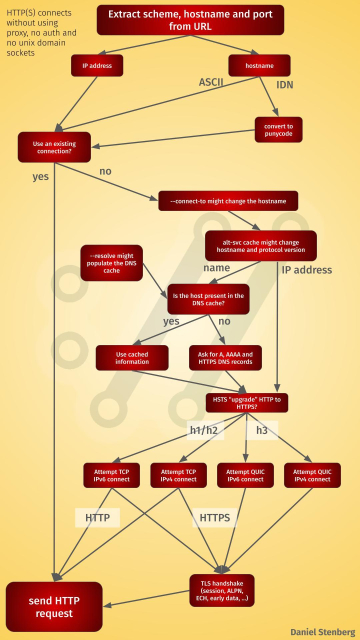
@mdione experimentally supported in current curl, RFC 9460: rfc-editor.org/rfc/rfc9460

Možná už tu někdo dával, ale @ppisa mě upozornil na #petici za open-source ve státní správě. Podpisů je tam pomálu a přitom petice je podle mě dobře formulovaná. Zvažte podpis. Děkuji, konec hlášení.
#gov #e-petice #opensource
portal.gov.cz/e-petice/1205-pe…
This entry was edited (6 months ago)

#curl 8.14.1 is out

daniel.haxx.se/blog/2025/06/04…

Thanks to Calvin Ruocco, Dan Fandrich, Daniel Stenberg, denandz on github, Ethan Everett, Jacob Mealey, Jeremy Drake, Jeroen Ooms, John Bampton, Kadambini Nema, Michael Kaufmann, Rasmus Melchior Jacobsen, Ray Satiro, Samuel Henrique, Stefan Eissing, Viktor Szakats, x-xiang on github, Yedaya Katsman, Yuyi Wang, z2_

#curl
This entry was edited (6 months ago)

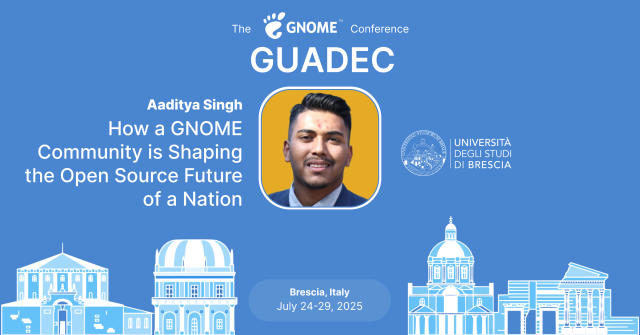
🌏 "How a GNOME Community is Shaping the Open Source Future of a Nation"
with Aaditya Singh at #GUADEC2025
📅 24 July 🕒 10:25 CEST 📍 Brescia

GNOME Nepal grew from a small group to a national FOSS leader. Learn how they did it.

🔗 events.gnome.org/event/259/con…
#FOSS #Nepal

Thank you
@openSUSE
for being a Gold #sponsor of #GUADEC2025! 🌟

The openSUSE project is a worldwide effort that promotes the use of Linux everywhere. openSUSE creates one of the world’s best Linux distributions.

Visit their website to know more: opensuse.org

#linux

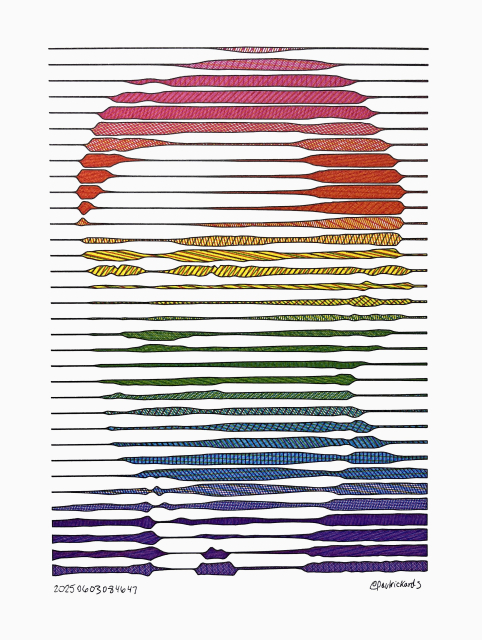
I’ve long admired the old ALDUS logo from the early PageMaker days on the Mac. I’ve used that style to create a #PenPlotter rainbow portrait of Alan Turing for pride month.

CMYK on 11”x15” watercolor paper using a vintage HP 7585B pen plotter generated and controlled with Python.

Available in my shop, in the Wildcards gallery. shop.paulrickards.com/wildcard…

#GenerativeArt #CreativeCoding #MastoArt #Art #ArtForSale #Artist #ArtForSaleByArtist #PenPlotterArt #PenPlot #NoAI

I've you've been following me awhile, you know much work I've put into creating a space in the fedi that differentiates itself from centralized platforms, not just as a foil to those places, but also to make an environment where we consider the possibilities beyond what we are told to believe.

It started with @fipamo dev tool I built for myself, that, through many interations, I am converting to an opinionated social media tool, built around the idea of having a more intimate and humane experience.

This led me to build @thebadspace community curation tool that individuals or communities can use to make moderation easier by identifying sources of harm and keeping them out of our spaces.

I have specific thoughts about safety in the largely unregulated fedi, which I teamed up with Nivenly to create a high level overview of how it could be implemented in independant social media platforms, called the FSEP (ha, which Bluesky seems to have, uhm, been inspired by for their "compostable moderation" feature, but that's another post). nivenly.org/docs/papers/fsep/

And last Friday, I hooked up with DAIR to host a panel called Imagining More, which brought together a crew of seasoned Black online professionals that talked about the challenges that inform the possibilities of web that is not just safer, but better for marginalized voices. twitch.tv/videos/2472547406

I'm not gonna lie, it's been a tough road to get here, but I am proud of the work I've done and the possibilities that are now being considered as we continue this grand experiment of independent social media. I've been a creative pro for a long time, but this has, by far, been the most rewarding work I have ever done.

And I plan on continuing, which of course takes resources. Not as much as you might think to keep it all moving forward, but it does take some.

Everything I do is funded by contributions from every day folks who want a better web or the occasional freelance work I pick. Everything. I don't take money from corporations or VC because what I'm building is for people to have a better and safer experience on the web. And it's going to stay that way.

gofundme.com/f/a-new-way-to-so…

So all that is to say I am very encouraged and excited about how everything is going. I want to do even more than what has been accomplished already.

Ha, and if you read all this I think you do too. So give what you can so I can continue to develop platforms and tools, write more thoughts about my vision for the independent web and create more events platforming the brilliant minds that are making it happen that you’re not hearing about.

Because even with the challenges and hardships I've endured, I strongly believe we are so much closer to having a web that enriches our lives than not.

We just have to keep pushing forward.

Thanks yall.

Happy #AudioMo! Here’s a moment I captured aboard Royal Caribbean’s Odyssey of the Seas cruise ship back in December. I originally hit record to catch a Cruise Director announcement, pretty routine. But just as it wrapped up, I heard something unexpected: piano music coming from an elevator.
To my surprise and delight, it was a stowaway pianist! Yes, they actually wheel a piano into the elevator and perform while it moves between floors. Naturally, I stayed on board and recorded a few selections.
Such a unique part of the cruise, I was thrilled to finally experience it in person.

Prepare for #WWDC25 by enabling audio descriptions for the TV app, as well as for supported videos in Safari, on iOS, iPadOS, and macOS. On iOS and iPadOS, go to Settings > Accessibility > Audio descriptions, and toggle the "Audio descriptions" switch on. On macOS, go to System Settings > Accessibility > Audio descriptions, and toggle the "Play audio descriptions when available" switch on. #TipTuesday applevis.com/podcasts/how-enab…

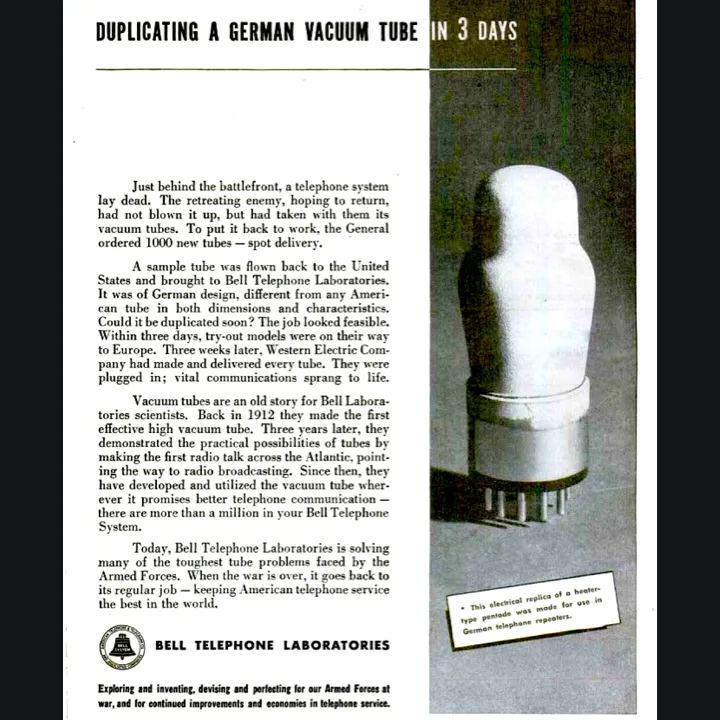
Why Bell Labs worked so well, and could innovate so much, while today’s innovation, in spite of the huge private funding, goes in hype-and-fizzle cycles that leave relatively little behind, is a question I’ve been asking myself a lot in the past years.

And I think that the author of this article has hit the nail on its head on most of the reasons - but he didn’t take the last step in identifying the root cause.

What Bell Labs achieved within a few decades is probably unprecedented in human history:

  • They employed folks like Nyquist and Shannon, who laid the foundations of modern information theory and electronic engineering while they were employees at Bell.
  • They discovered the first evidence of the black hole at the center of our galaxy in the 1930s while analyzing static noise on shortwave transmissions.
  • They developed in 1937 the first speech codec and the first speech synthesizer.
  • They developed the photovoltaic cell in the 1940, and the first solar cell in the 1950s.
  • They built the first transistor in 1947.
  • They built the first large-scale electronic computers (from Model I in 1939 to Model VI in 1949).
  • They employed Karnaugh in the 1950s, who worked on the Karnaugh maps that we still study in engineering while he was an employee at Bell.
  • They contributed in 1956 (together with AT&T and the British and Canadian telephone companies) to the first transatlantic communications cable.
  • They developed the first electronic musics program in 1957.
  • They employed Kernighan, Thompson and Ritchie, who created UNIX and the C programming language while they were Bell employees.

And then their rate of innovation suddenly fizzled out after the 1980s.

I often hear that Bell could do what they did because they had plenty of funding. But I don’t think that’s the main reason. The author rightly points out that Google, Microsoft and Apple have already made much more profit than Bell has ever seen in its entire history. Yet, despite being awash with money, none of them has been as impactful as Bell. Nowadays those companies don’t even innovate much besides providing you with a new version of Android, of Windows or the iPhone every now and then. And they jump on the next hype wagon (social media, AR/VR, Blockchain, AI…) just to deliver half-baked products that (especially in Google’s case) are abandoned as soon as the hype bubble bursts.

Let alone singlehandedly spear innovation that can revolutionize an entire industry, let alone make groundbreaking discoveries that engineers will still study a century later.

So what was Bell’s recipe that Google and Apple, despite having much more money and talented people, can’t replicate? And what killed that magic?

Well, first of all Bell and Kelly had an innate talent in spotting the “geekiest” among us. They would often recruit from pools of enthusiasts that had built their own home-made radio transmitters for fun, rather than recruiting from the top business schools, or among those who can solve some very abstract and very standardized HackerRank problems.

And they knew how to manage those people. According to Kelly’s golden rule:

How do you manage genius? You don’t


Bell specifically recruited people that had that strange urge of tinkering and solving big problems, they were given their lab and all the funding that they needed, and they could work in peace. Often it took years before Kelly asked them how their work was progressing.

Compare it to a Ph.D today who needs to struggle for funding, needs to produce papers that get accepted in conferences, regardless of their level of quality, and must spend much more time on paperwork than on actual research.

Or to an engineer in a big tech company that has to provide daily updates about their progress, has to survive the next round of layoffs, has to go through endless loops of compliance, permissions and corporate bureaucracy in order to get anything done, has his/her performance evaluated every 3 months, and doesn’t even have control on what gets shipped - that control has been taken away from engineers and given to PMs and MBA folks.

Compare that way of working with today’s backlogs, metrics, micromanaging and struggle for a dignified salary or a stable job.

We can’t have the new Nyquist, Shannon or Ritchie today simply because, in science and engineering, we’ve moved all the controls away from the passionate technical folks that care about the long-term impact of their work, and handed them to greedy business folks who only care about short-term returns for their investors.

So we ended up with a culture that feels like talent must be managed, even micromanaged, otherwise talented people will start slacking off and spending their days on TikTok.

But, as Kelly eloquently put it:

“What stops a gifted mind from just slacking off?” is the wrong question to ask. The right question is, “Why would you expect information theory from someone who needs a babysitter?”


Or, as Peter Higgs (the Higgs boson guy) put it:

It’s difficult to imagine how I would ever have enough peace and quiet in the present sort of climate to do what I did in 1964… Today I wouldn’t get an academic job. It’s as simple as that. I don’t think I would be regarded as productive enough.


Or, as Shannon himself put it:

I’ve always pursued my interests without much regard for final value or value to the world. I’ve spent lots of time on totally useless things.


So basically the most brilliant minds of the 20th century would be considered lazy slackers today and be put on a PIP because they don’t deliver enough code or write enough papers.

So the article is spot on in identifying why Bell could invent, within a few years, all it did, while Apple, despite having much more money, hasn’t really done anything new in the past decade. MBAs, deadlines, pseudo-objective metrics and short-termism killed scientific inquiry and engineering ingenuity.

But the author doesn’t go one step further and identify the root cause.

It correctly spots the business and organizational issues that exist in managing talent today, but it doesn’t go deeper into their economic roots.

You see, MBA graduates and CEOs didn’t destroy the spirit of scientific and engineering ingenuity spurred by the Industrial Revolution just because they’re evil. I mean, there’s a higher chance for someone who has climbed the whole corporate ladder to be a sociopath than there is for someone you randomly picked from the street, but not to the point where they would willingly tame and screw the most talented minds of their generation, and squeeze them into a Jira board or a metric that looks at the number of commits, out of pure sadism.

They did so because the financial incentives have drastically changed from the times of Bells Labs.

The Bells Labs were basically publicly funded. AT&T operated the telephone lines in the US, paid by everyone who used telephones, and they reinvested a 1% tax into R&D (the Bells Labs). And nobody expected a single dime of profits to come out from the Bells Labs.

And btw, R&D was real R&D with no strings attached at the time. In theory also my employer does R&D today - but we just ended up treating whatever narrow iterative feature requested by whatever random PM as “research and development”. It’s not like scientists have much freedom in what to research or engineers have much freedom in what to develop. R&D programs have mostly just become a way for large businesses to squeeze more money out of taxpayers, put it in their pockets, and not feel any moral obligation of contributing to anything other than their shareholders’ accounts.

And at the time the idea of people paying taxes, so talented people in their country could focus on inventing the computer, the Internet or putting someone on the moon, without the pressure of VCs asking for their dividends, or PMs asking them to migrate everything to another cloud infrastructure by next week, or to a new shiny framework that they’ve just heard in a conference, wasn’t seen as a socialist dystopia. It was before the neoliberal sociopaths of the Chicago school screwed up everything.

The America that invested into the Bell Labs and into the Apollo project was very different from today’s America. It knew that it was the government’s job to foster innovation and to create an environment where genuinely smart people could do great things without external pressure. That America hadn’t yet been infected by the perverse idea that the government should always be small, that it’s not the government’s job to make people’s lives better, and that it was the job of privately funded ventures seeking short-term returns to fund moonshots.

And, since nobody was expecting a dime back from Bell, nobody would put deadlines on talented people, nobody hired unqualified and arrogant business specialists to micromanage them, nobody would put them on a performance improvement plan if they were often late at their daily standups or didn’t commit enough lines of code in the previous quarter. So they had time to focus on how to solve some of the most complex problems that humans ever faced.

So they could invent the transistor, the programming infrastructure still used to this day, and lay the foundations of what engineers study today.

The most brilliant minds of our age don’t have this luxury. So they can’t revolutionarize our world like those in the 20th century did.

Somebody else sets their priorities and their deadlines.

They can’t think of moonshots because they’re forced to work on the next mobile app riding the next wave of hype that their investors want to release to market so they can get even richer.

They have to worry about companies trying to replace them with AI bots and business managers wanting to release products themselves by “vibe coding”, just to ask those smart people to clean up the mess they’ve done, just like babies who are incapable of cleaning up the food they’ve spilled on the floor.

They are seen as a cost, not as a resource. Kelly used to call himself a “patron” rather than a “manager”, and he trusted his employees, while today’s managers and investors mostly see their engineering resources as squishy blobs of flesh standing between their ambitious ideas and their money, and they can’t wait to replace them with robots that just fullfill all of their wishes.

Tech has become all about monetization nowadays and nothing about ingenuity.

As a result, there are way more brilliant minds (and way more money) in our age going towards solving the “convince people to click on this link” problem rather than solving the climate problem, for example.

Then of course they can’t invent the next transistor, or bring the next breakthrough in information theory.

Then of course all you get, after one year of the most brilliant minds of our generation working at the richest company that has ever existed, is just a new iPhone.

links.fabiomanganiello.com/sha…

This entry was edited (6 months ago)

reshared this

The GOP hid a reckless provision to shield Trump officials from contempt of court in their Medicaid-slashing megabill. We need to get Republican senators on the record about that sneak-attack on democracy — and push Democrats to disrupt the GOP’s anti-democracy agenda with every tool at their disposal. howwefightback.com/p/did-repub…

While I'm happy to keep writing and analyzing the news for free, I'm soliciting donations to help my elderly mother and my cancer-stricken stepfather stay housed. I'm doing okay myself, but because neither of them can work anymore and their pension doesn't cover the mortgage, I've been helping them out for a while now. They're short about $1,000 a month on the mortgage and medical supplies for my stepdad; anything you could spare to help me keep a roof over their heads during this difficult time would be most appreciated.

You can find the Ko-Fi account I use here: ko-fi.com/anarchoninawrites

100% of all donations go to helping my mom, stepdad, and their cute little dogs. If you're unable, or unwilling to help, please don't feel bad - I live in capitalist hellworld too, and I know "spare" money is hard to come by these days. Even a simple retoot would be appreciated.

Okay, thanks for your time.

This entry was edited (6 months ago)

A Review of the Motorola Razr’s Accessibility with TalkBack accessibleandroid.com/a-review… #Review #Motorola #Android #Accessibility #TalkBack
This entry was edited (6 months ago)

so, if you want a comcast like version of fiber, well try this on for size. T-Mobile launches fiber internet service in the US with a five-year price lock theverge.com/news/678897/t-mob…

Aujourd'hui, dans le cadre d'une rencontre de mediateurices numériques, j'ai appris qu'une des conséquences de la loi immigration serait qu'à partir du 1er juillet, la majorité des personnes souhaitant accéder à la nationalité française et ayant l'obligation de suivre des cours de français le feront seul-es sur une application, là où iels avaient des cours en présentiel jusqu'à présent...

J'ai trouvé des infos là :
blogs.mediapart.fr/philippe-bl…

I’ve been podcasting for over 20 years now, and hosted some of the most popular podcasts in the blind community. Blind people often ask me about all aspects of creating podcasts accessibly, including defining the kind of podcast you want to run, choosing the best tools for the job and the budget, interviewing, editing, and marketing.
So, I’m thrilled that on June 11 at 1 PM Eastern, the National Federation of the Blind’s Center of Excellence in Nonvisual Accessibility will be hosting a free four-hour webinar on podcasting as a blind person. It’s not necessary to have any prior experience, we’ll start at the beginning, but there will be useful tips even if you’ve been podcasting a while.
I’ll be anchoring the webinar, and you’ll also hear a couple of familiar NFB voices. Melissa Riccobono, co-host of the NFB’s Nation’s Blind Podcast, Mushroom FM host, audio describer and audiobook narrator, will discuss how she turned a dream of working with audio into reality.
Will Schwatka is the technical genius behind most of the NFB’s audio and whose voice you will have heard narrating the audio edition of the Braille Monitor among other things. He’ll join us to talk about equipment choices, including microphones, mixers, and audio interfaces.
There will be plenty of time for your questions.
I’m looking forward to presenting this for you.
This webinar on podcasting is just one of many regular webinars CENA offers. You can register by visiting this URL.
nfb.org/programs-services/cent…

reshared this

"Privacy on Trial: Meta’s DOJ Battle"

Meta claims it’s not a monopoly., and respects privacy.

The FTC disagrees.

For those who reject Surveillance Capitalism—where your data is the product—Purism offers a bold alternative.

Read Full Article: puri.sm/posts/privacy-on-trial…

Welcome Jeremy Drake as #curl commit author 1376: github.com/curl/curl/pull/1752…
#curl

Since yesterday, I have had an urge to play with CSS again, and it's the least practical time for it.

(Since work during the day and a brain that is currently saying no.)

There is a three-year-old article by Ryan Mulligan that has been living rent-free in my head for a while, and I recently applied it to a hobby project for the first time. I want to learn more about these techniques as I'm not fluent with them yet.

"Layout Breakouts with CSS Grid" featuring named template columns.

ryanmulligan.dev/blog/layout-b…

#CSS #WebDev

This entry was edited (6 months ago)

#AndroidAppRain at apt.izzysoft.de/fdroid today with 12 updated and 1 added apps:

* GreaseMilkyway: Focus for ADHD and attention difficulties by @kasnder 🛡️

RB status: 611 apps (46.6%)

2 #Magisk modules have been updated and 1 added at apt.izzysoft.de/magisk

* zram: automatic loading of user-defined compression algorithm modules and configure the ZRAM size at boot

Enjoy your #free #Android #apps with the #IzzyOnDroid repo :awesome:

in reply to IzzyOnDroid ✅

Hi @kasnder,
As part of the targeted user group I'd like to experiment a bit with #GreaseMilkyway :mastoinnocent:

Fortunately I'm not addicted to one the apps listed in the examples.
On the project page you mention Developer Assistant from the PlayStore as one potential tool to identify the elements one wants to block. Do you happen to know a comparable #FOSS tool from an #FDroid #Repo I could use instead?
@IzzyOnDroid