

As one character notes, “Anything that talks and builds a fire is a sapient being, yes. That’s the law. But that doesn’t mean that anything that doesn’t isn’t.”
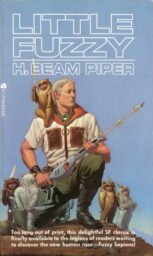
However, Zarathustra is a class-III uninhabited planet owned by the Zarathustra Company, which is farming, mining, and settling the planet at an incredible (and lucrative) rate. Should a sapient native species be discovered there, the planet would be reclassified and the company’s ownership would be made void. So when the first news of Jack’s visitors reaches the company, they’re quick to send their own scientists out to disprove any claims of significant intelligence.
The picture of Fuzzy intelligence is built up by degrees within the story, largely through Jack’s interactions and observations, but human treatment of the potentially sapient race remains questionable throughout the book. They are intelligent tool-makers capable of surviving in a dangerous eco-system in which they appear to be food for a number of larger predators (not least of which are the imaginatively named “damnthings” and “harpies”). They are inquisitive, and it is thanks to this quality that they learn that humans (as represented by Jack) are generally a safe bet—Jack gives them food, new tools, and toys and tolerates them bedding down in his cabin, so what’s not to like? They are treated, however, like little children at best and, at worst, like pet dogs. Early on, even Jack catches himself putting a bowl of water down for Little Fuzzy “as he would for a dog” and instead supplies a cup. There is an element of consternation in almost every interaction between humans and Fuzzies, perhaps more so because the argument for their sapience occurs at the same time that Fuzzy dolls and hats are being made and people are owning and naming their Fuzzies as if they are the “fur-bearing animals” that the company claims them to be.
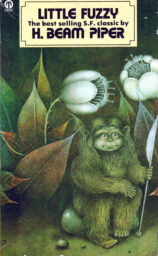
This book is now in the public domain and can be read for free on the Internet Archive’s Open Library or Project Gutenberg websites.
seattlein2025.org/2025/05/16/f…
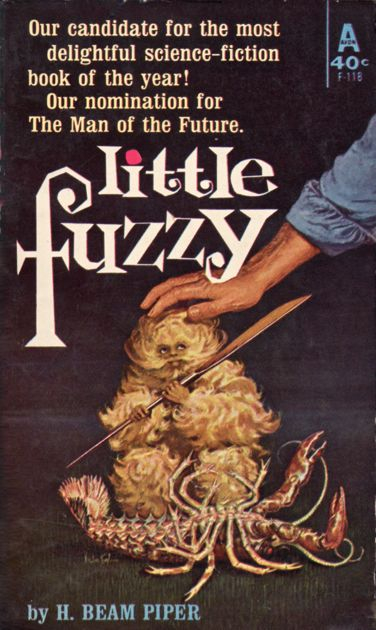
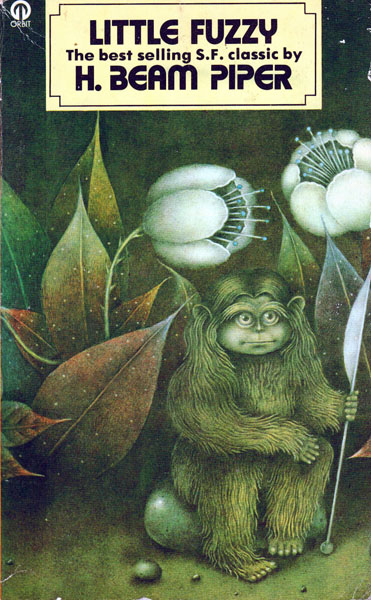
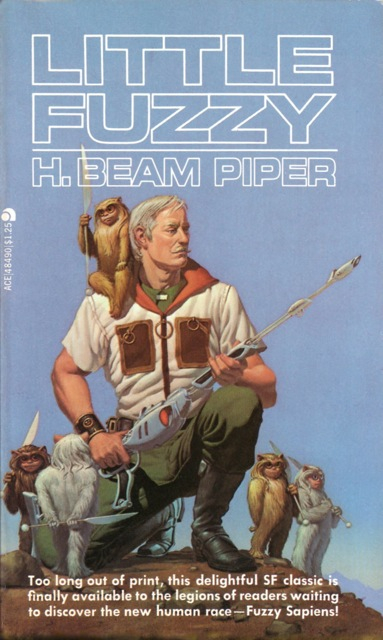
Little Fuzzy by H. Beam Piper | Open Library
Little Fuzzy by H. Beam Piper, 1962, Ace Books (Grosset & Dunlap), Avon edition, in EnglishOpen Library




































Sean Randall
in reply to Sean Randall • • •I do have a cable that does data.
She already has ... a lot of stuff on here.
James Scholes
in reply to Sean Randall • • •Sean Randall
in reply to James Scholes • • •I still use it for renaming swathes of things at once, and producing nice html summaries of complex collections.
James Scholes
in reply to Sean Randall • • •Sean Randall
in reply to James Scholes • • •Jayson Smith
in reply to Sean Randall • • •Sean Randall
in reply to Jayson Smith • • •I'm sure I have a backup on an old hard drive someplace, but my NAS only goes back to postchildbirth.
James Scholes
in reply to Jayson Smith • • •James Scholes
in reply to James Scholes • • •Sean Randall
in reply to James Scholes • • •A smattering of Douglas Adams, Blake's 7 and a few other things, I think.
Jayson Smith
in reply to Sean Randall • • •James Scholes
in reply to Jayson Smith • • •Sean Randall
in reply to James Scholes • • •James Scholes
in reply to Sean Randall • • •Sean Randall
in reply to James Scholes • • •one of my verbal masters, Darrow.
Pitermach
in reply to Sean Randall • • •Sean Randall
in reply to Pitermach • • •There were also a couple produced which are missing from the article here en.wikipedia.org/wiki/Blake%27…
clip attached, sorry for the terrible quality.
That's from here.
kaldorcity.com/audios/b7/logic…
Blake's 7 (audio drama) - Wikipedia
Contributors to Wikimedia projects (Wikimedia Foundation, Inc.)Jayson Smith
in reply to Sean Randall • • •James Scholes
in reply to James Scholes • • •Sean Randall
in reply to James Scholes • • •Jayson Smith
in reply to Sean Randall • • •Sean Randall
in reply to Sean Randall • • •Not sure the wife will need more, she has 42 days and 19 hours of play time on the card as is.
It's literally impossible for her to do all that in a week.
Bonus points if she finishes a single novel, I'd say, given the fact that this is the second time she's asked me to load up the exact same files.
I'll be doing a goodly chunk of rereading, personally. I like the fact that I can find little details I missed in a book last time around, whilst knowing that if I'm distracted I'm not missing anything vital.
I do have a few new books as well, of course. One never knows, does one?
In particular I'm intrigued by the new Emily Tesh, and the debut by Evan Leikam.
Katy T
in reply to Sean Randall • • •Sean Randall
in reply to Sean Randall • • •Had to look at the Stream user's manual because I had zero memory of how to turn off the damned keypad lock. Has the wife ever used it? Nope. Might she? Possibly. Is it vital info? NO, but I used to just *know* this sort of thing.
Keylocks with different on and off patterns annoy me generally, but a device for the blind that requires you to press 3 different buttons sequentially without a mistake seems harsh for a simple software keylock. I wonder if it's bothered anyone with physical or motor issues.
Katy T
in reply to Sean Randall • • •Katy T
in reply to Sean Randall • • •petes_bread_eqn_xls
in reply to Sean Randall • • •Sean Randall
in reply to Sean Randall • • •Sunday.
The Child (will have to stop calling her that soon) has asked for a digital camera to snap fun pics on vacation.
She has decided she wants one of these new cheap-ish things. I have no idea how suitable this will be, but it wasn't terribly expensive.
The grind of laundry both to wear and to pack and catching up on everything that needs to be abandoned for a week is tiresome, but there is light at the end of the tunnel!
victor tsaran
in reply to Sean Randall • • •Sean Randall
in reply to Sean Randall • • •victor tsaran reshared this.
Justin Yarbrough
in reply to Sean Randall • • •Sean Randall
in reply to Justin Yarbrough • • •Mayowa
in reply to Sean Randall • • •Sean Randall
in reply to Mayowa • • •Mayowa
in reply to Sean Randall • • •Jakob Rosin
in reply to Sean Randall • • •