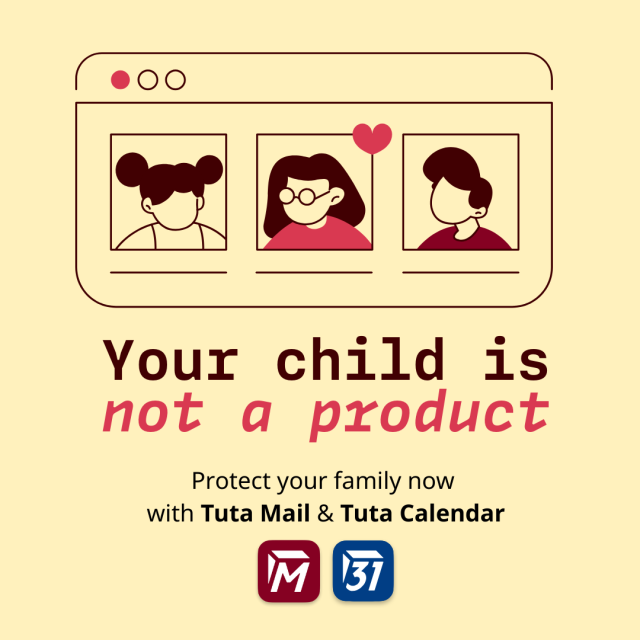
Your child is not a product.

Protect your family now with Tuta Mail 👉 Private Mail for those you ❤️

✅ End-to-end encrypted

✅ Green

✅ Open Source

✅ No tracking & No Ads

✅ Made in Germany

Get Tuta Mail Now: tuta.com/

#BackToSchool 🎓

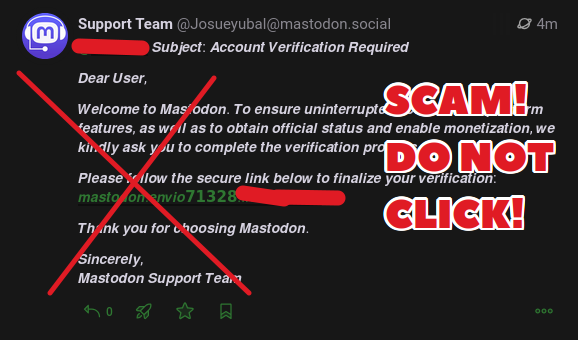
⚠️ More scam posts are spreading lies! (see attached screenshot below)
To set the record straight:
- You do not need to verify on Mastodon
- No legitimate Mastodon admin will ever demand you verify
- No legitimate Mastodon admin will ever ask for your bank card details
- There are no monetisation features on Mastodon
- There are no extra features for verified accounts on Mastodon

If you see a scam post, click ⋯ on the scam post, then "Report", and select the option to forward the report too.

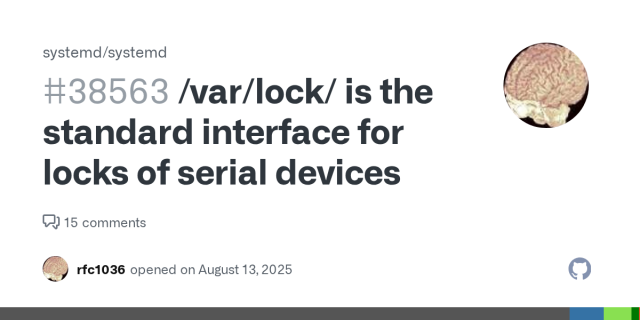
So there's a decades-old mechanism (and actual standard) how programs lock serial ports on unix-like systems in /var/lock. it's used in practice even in 2025 and #systemd >= 258 simply breaks it with "we don't care". I am not a systemd opponent, but that kind of behaviour [without a prior community-wide discussion or providing patches for known-affected projects and a grace period] is just alienating users and developers github.com/systemd/systemd/iss… bugs.debian.org/cgi-bin/bugrep… #systemd #debian

📣 Do-It-Blind (DIB) online Besprechung am Montag, 1. September, um 19:00 Uhr. Du bist eingeladen! bbb.metalab.at/rooms/joh-szv-o… Wöchentlich am Montag besprechen wir neue Formen der digitalen und inklusiven Zusammenarbeit. Mach mit! 🛠️ #make #blind #inklusion

Ежегодно напомняне, че можете да изслушате (или изтеглите с JDownloader и изслушате без реклами, нямам възражения) цялата ми новела „Вазев, 1887“ на линка по-долу. Има си дори деления за глави:

Вазев, 1887 (аудиокнига) – новела от Петър Тушков

youtube.com/watch?v=XvABnjUyuX…

This entry was edited (4 months ago)

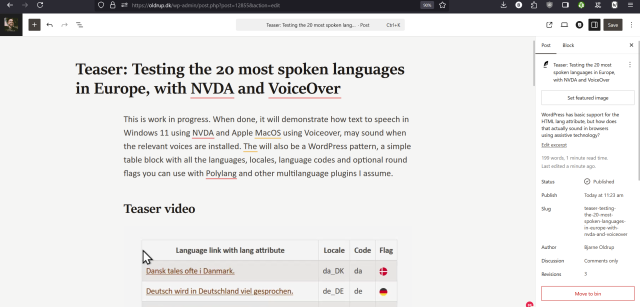
Will browsers and screen readers respect the #html lang attribute #WordPress allows us to set on paragraphs?

TL;DR; most browsers "read aloud" feature ignores element specific lang attribute, but dedicated screen readers like #NVDA and Apple #VoiceOver do fairly well!

I've installed the 20 most spoken languages in #europe on my PC and virtual Mac.

Blog post is in the making, so feel free to ask questions and send me on even more side quests 😁

Teaser at oldrup.dk/en/teaser-testing-th…

in reply to Bjarne Oldrup

Glad NVDA is working well switching languages in your tests! With the languages - note that NVDA uses Windows OneCore by default. It will happily switch languages AS LONG AS you have the voice pack for the new language installed in Windows. This post is old but should cover the process: nvaccess.org/post/in-process-1…

With eSpeak-NG, a popular synthesizer which we bundle with NVDA, it includes over 120 languages built in, from memory. And if using other synthesizers like Eloquence YMMV

Spustili jsme hlasování o přednáškách na letošní konferenci #LinuxDays Máme přihlášenou zhruba stovku témat, teď je na vás, abyste vybrali, co vás zajímá. Hlasovat můžete do neděle 7. září, pak se vrhneme na sestavování programu.

linuxdays.cz/2025/hlasovani/

Vorträge zu #Barrierefreiheit, in österreichischer Gebärdensprache gedolmetscht, gibt es am #ATag diesen September! 🎙️🤟

Anfang des Jahres durfte ich mit einem Vortrag am A-Tag dabei sein. Umso mehr freut es mich, dass es dieses Jahr mit dem A-Tag Light noch eine weitere Edition gibt!

Sei dabei, am 16. September 2025 in Wien (Strandbar Herrmann), von 17 bis 19 Uhr!

ℹ️ Die Veranstaltung ist komplett kostenlos, erfordert aber eine Anmeldung über die Webseite: atag.accessible-media.at/

In August we had a major update to #LibreOffice. But so much more is happening: conference news, a job opening at @tdforg, extension development, ODF backgrounders: blog.documentfoundation.org/bl… #foss #OpenSource

LibreOffice reshared this.

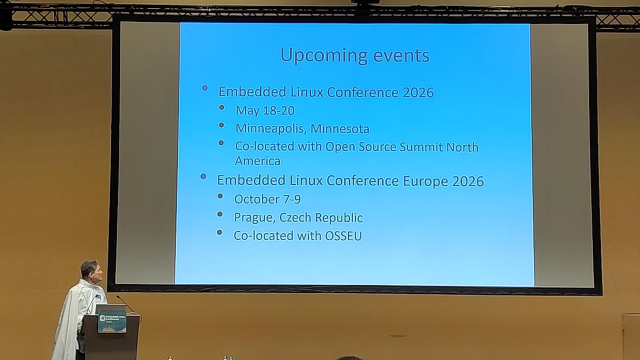
At the closing game of the Embedded Linux Conference Europe, Tim Bird announced the dates of the 2026 editions of the Embedded Linux Conference:

- May 18-20, 2026 in Minneapolis, Minnesota, for the North American edition

- October 7-9, 2026 in Prague, Czech Republic, for the European one.

How could it be any better for me, meeting some of the finest people in this industry in one of my favorite cities in Europe?

Save the dates!

This entry was edited (4 months ago)

NVDA 2025.3 Beta 3 is now available for download and testing.

Changes introduced in Beta 3:
- Updates to translations
- Bug fix for SAPI 5 where NVDA did not announce certain gestures

See the release announcement for full changes and download: nvaccess.org/post/nvda-2025-3b…

#NVDA #NVDAsr #ScreenReader #PreRelease #NewVersion #Update #Beta #testing #fix #fixes #Software

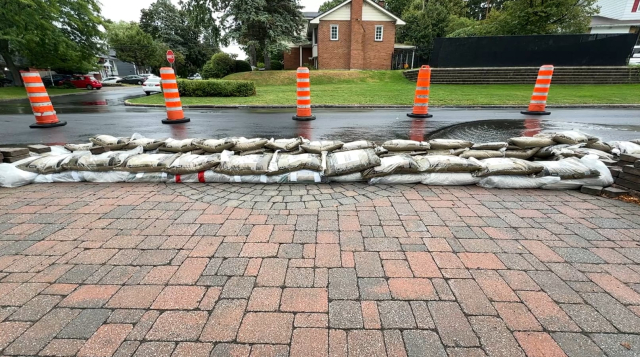
Pierrefonds residents frustrated as no crews in sight after watermain breaks before long weekend

ctvnews.ca/montreal/article/pi…

The management of this city....

A IL de vez em quando acerta. É raro, é muito, muito raro, mas lá de onde a onde, naquela do relógio parado dar as horas certas duas vezes por dia, lá atingem o alvo.

ciberlandia.pt/@d3/11512447043…

Did you know there's a German non profit association (Verein) behind #NewPipe?

[1]You can donate to it, or even join the association.

And also, did you know they are looking for two freelancers for android development and sysadmin things?

[2][1] newpipe-ev.de/about
[2] newpipe-ev.de/opportunities

This entry was edited (1 month ago)

Bubu ☎️: 3016 reshared this.

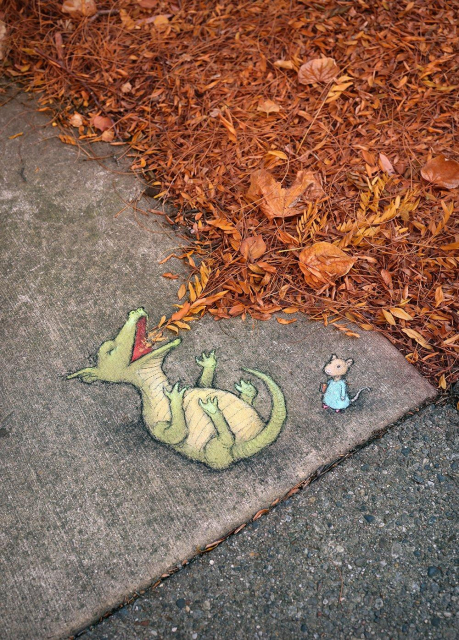
In Which Nadine Amuses a Dragon and Makes Autumn Happen ❤ Whimsical Dragon Art Brings Autumn to Life - David Zinn’s Street Chalk Creations: streetartutopia.com/2025/08/29…

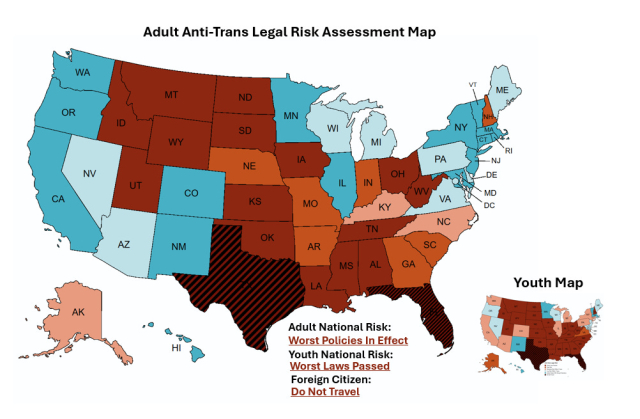
ICYMI, the new trans legislative risk map is out. Particularly scary for me to see California move to light red for the youth map. That’s historically been an indicator that restrictions for adults will follow erininthemorning.com/p/anti-tr…

#AndroidAppRain at apt.izzysoft.de/fdroid today brings you 14 updated and 1 added apps:

* Umihi Music: a lightweight Material YouTube Music player 🛡️

RB Status: 700 apps (53.7%)

1 #Magisk module has been updated at apt.izzysoft.de/magisk

Enjoy your #free #Android #apps with the #IzzyOnDroid repo :awesome:

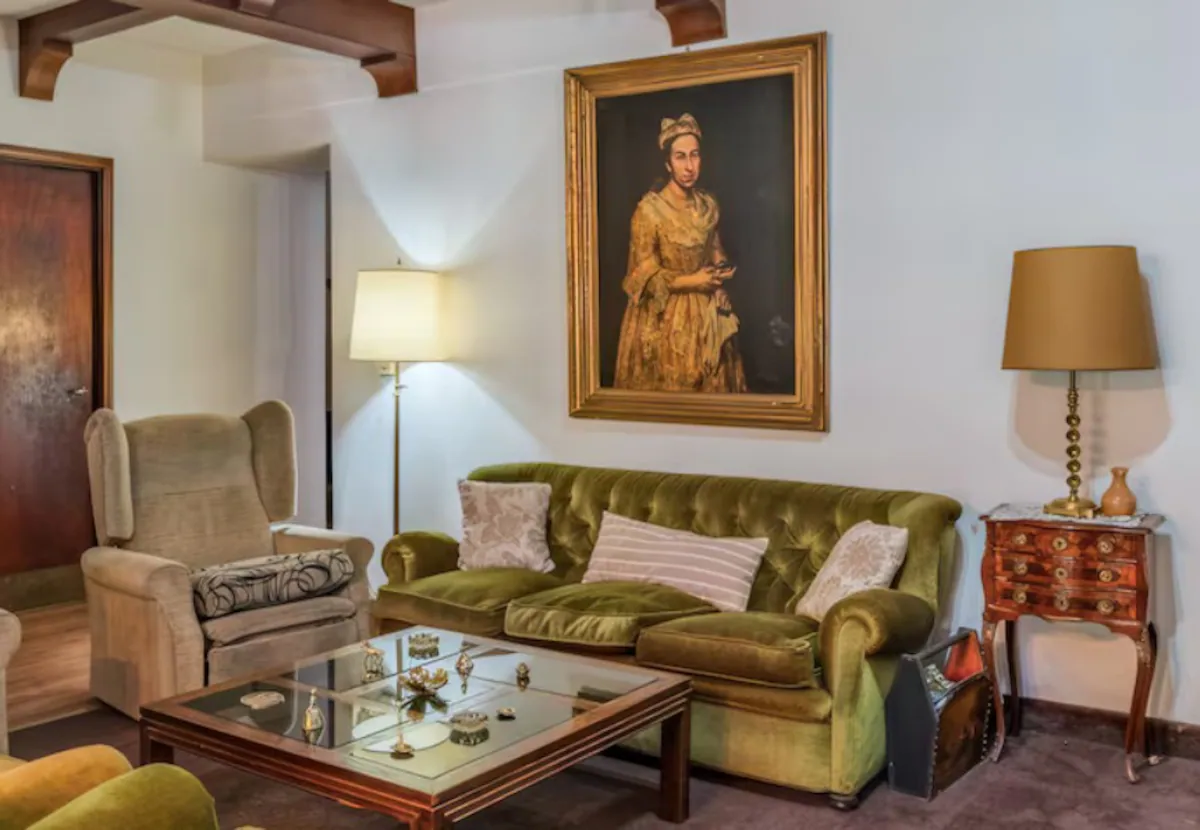
Pro tip: si pones una casa a la venta, procura que los cuadros que tu abuelito el de las SS se trajo cuando llegó a #Argentina🇦🇷 no aparezcan en las fotos

#inmobiliaria #noticias
elpais.com/argentina/2025-08-2…

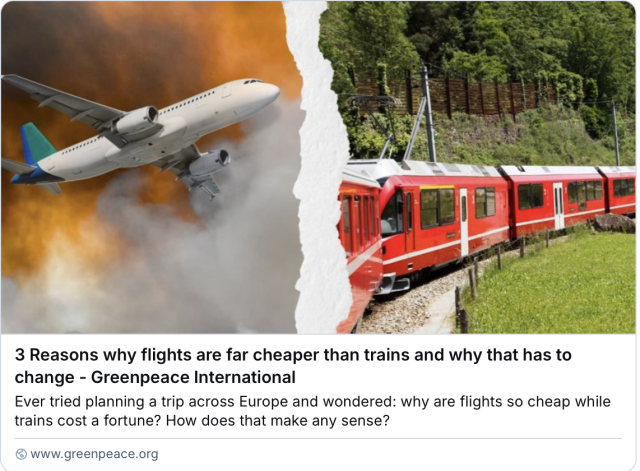
If trains are the greener option, why are we basically being punished for choosing them?

The difference in trains vs planes ticket prices isn’t a coincidence, it’s the result of a transport system that rewards pollution.

Learn more: act.gp/460kBvh

Come explore a large random selection of forever open source #TTRPG resources, from games to SRDs to art and more!

thoughtpunks.com/open-source-t…

#OpenSource #TabletopGames #IndieGames

Is it possible to allow sideloading *and* keep users safe?


shkspr.mobi/blog/2025/08/is-it…

In which I attempt to be pragmatic.

Are you allowed to run whatever computer program you want on the hardware you own? This is a question where freedom, practicality, and reality all collide into a mess.

Google has recently announced that Android users will only be able to install apps which have been digitally signed by developers who have registered their name and other legal details with Google. To many people, this signals the death of "sideloading" - the ability to install apps which don't originate on the official store0.

I'm a fully paid-up member of the Cory Doctorow fanclub. Back in 2011, he gave a speech called "The Coming War on General Computation". In it, he rails against the idea that our computers could become traitorous; serving the needs of someone other than their owner. Do we want to live in a future where our computers refuse to obey our commands? No! Neither law nor technology should conspire to reduce our freedom to compute.

There are, I think, two small cracks in that argument.

The first is that a user has no right to run anyone else's code, if the code owner doesn't want to make it available to them. Consider a bank which has an app. When customers are scammed, the bank is often liable. The bank wants to reduce its liability so it says "you can't run our app on a rooted phone".

Is that fair? Probably not. Rooting allows a user to fully control and customise their device. But rooting also allows malware to intercept communications, send commands, and perform unwanted actions. I think the bank has the right to say "your machine is too risky - we don't want our code to run on it."

The same is true of video games with strong "anti-cheat" protection. It is disruptive to other players - and to the business model - if untrustworthy clients can disrupt the game. Again, it probably isn't fair to ban users who run on permissive software, but it is a rational choice by the manufacturer. And, yet again, I think software authors probably should be able to restrict things which cause them harm.

So, from their point of view it is pragmatic to insist that their software can only be loaded from a trustworthy location.

But that's not the only thing Google is proposing. Let's look at their announcement:

We’ve seen how malicious actors hide behind anonymity to harm users by impersonating developers and using their brand image to create convincing fake apps. The scale of this threat is significant: our recent analysis found over 50 times more malware from internet-sideloaded sources than on apps available through Google Play.


Back in the early days of Android, you could just install any app and it would run, no questions asked. That was a touchingly naïve approach to security - extremely easy to use but left users vulnerable.

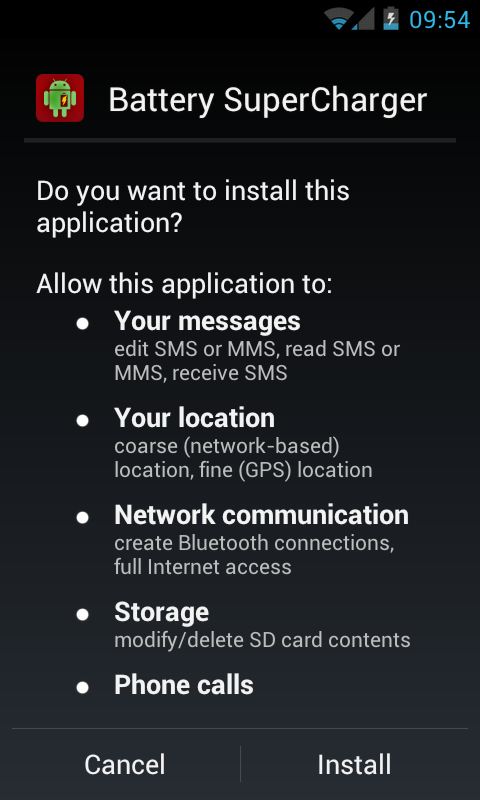
A few years later, Android changed to show user the permissions an app was requesting. Here's a genuine screenshot from an app which I tried to sideload in 2013:

A terrifying list of permissions.

No rational user would install a purported battery app with that scary list of permissions, right? Wrong!

We know that users don't read and they especially don't read security warnings.

There is no UI tweak you can do to prevent users bypassing these scary warnings. There is no amount of education you can provide to reliably make people stop and think.

Here's the story of a bank literally telling a man he was being scammed and he still proceeded to transfer funds to a fraudster.

It emerged that, in this case, Lloyds had done a really good job of not only spotting the potential fraud but alerting James to it. The bank blocked a number of transactions, it spoke to James on the phone to warn him and even called him into a branch to speak to him face-to-face.


Here's another one where a victim deliberately lied to their bank even after acknowledging that they had been told it was a scam.

Android now requires you to deliberately turn on the ability to side-load. It will give you prompts and warnings, force you to take specific actions, give you pop-ups and all sorts of confirmation steps.

And people still click on.

Let's go back to Google announcement. This change isn't being rolled out worldwide immediately. They say:

This change will start in a few select countries specifically impacted by these forms of fraudulent app scams, often from repeat perpetrators.

September 2026: These requirements go into effect in Brazil, Indonesia, Singapore, and Thailand. At this point, any app installed on a certified Android device in these regions must be registered by a verified developer.


The police in Singapore have a page warning about the prevalence of these scams. They describe how victims are tricked or coerced into turning off all their phone's security features.

Similarly, there are estimates that Brazil lost US$54 billion to scams in 2024 (albeit not all through apps).

There are anecdotal reports from Indonesia which show how easily people fall for these fake apps.

Thailand is also under an ongoing onslaught of malicious apps with some apps raking in huge amounts of money.

It is absolutely rational that government, police, and civic society groups want to find ways to stop these scams.

Google is afraid that if Android's reputation is tarnished as the "Scam OS" then users will move to more secure devices.

Financial institutions might stop providing functionality to Android devices as a way to protect their customers. Which would lead to those users seeking alternate phones.

Society as a whole wants to protect vulnerable people. We all bear the cost of dealing with criminal activity like this.

Given that sideloaded Android apps are clearly a massive vector for fraud, it obviously behoves Google to find a way to secure their platform as much as possible.

And Yet…


This is quite obviously a bullshit powerplay by Google to ensnare the commons. Not content with closing down parts of the Android Open Source Project, stuffing more and more vital software behind its proprietary services, and freezing out small manufacturers - now it wants the name and shoe-size of every developer!

Fuck that!

I want to use my phone to run the code that I write. I want to run my friends' code. I want to play with cool open source projects by people in far-away lands.

I remember The Day Google Deleted Me - we cannot have these lumbering monsters gatekeeping what we do on our machines.

Back in the days when I was a BlackBerry developer, we had to wait ages for RIM's code-signing server to become available. I'm pretty sure the same problem affected Symbian - if Nokia was down that day, you couldn't release any code.

Going back to their statement:

To be clear, developers will have the same freedom to distribute their apps directly to users through sideloading or to use any app store they prefer.


This is a lie. I can only distribute a sideloaded app if Google doesn't nuke my account. If I piss off someone there, or they click the wrong button, or they change the requirements so I'm no longer eligible - my content disappears.

They promise that Android will still be open to student and hobbyist developers - but would you believe anything those monkey-punchers say? Oh, and what a fricking insult to call a legion of Open Source developers "hobbyists"!

I hate it.

I also don't see how this is going to help. I guess if scammers all use the same ID, then it'll be easy for Android to super-nuke all the scam apps.

Perhaps when you install a sideloaded app you'll see "This app was made by John Smith - not a company. Here's his photo. Got any complaints? Call his number."

But what's going to happen is that people will get their IDs stolen, or be induced to register as a developer and then sign some malware. They'll also be victims.

So What's The Solution?


I've tried to be pragmatic, but there's something of a dilemma here.

  1. Users should be free to run whatever code they like.
  2. Vulnerable members of society should be protected from scams.

Do we accept that a megacorporation should keep everyone safe at the expense of a few pesky nerds wanting to run some janky code?

Do we say that the right to run free software is more important than granny being protected from scammers?

Do we pour billions into educating users not to click "yes" to every prompt they see?

Do we try and build a super-secure Operating System which, somehow, gives users complete freedom without exposing them to risk?

Do we hope that Google won't suddenly start extorting developers, users, and society as a whole?

Do we chase down and punish everyone who releases a scam app?

Do we stick an AI on every phone to detect scam apps and refuse to run them if they're dodgy?

I don't know the answers to any of these questions and - if I'm honest - I don't like asking them.


  1. Post by @Gargron
    View on Mastodon


    ↩︎


#android #google #rant #scam