LLVM CFI and Cross-Language LLVM CFI Support for Rust, bughunters.google.com/blog/480….

> add LLVM CFI and cross-language LLVM CFI (and LLVM KCFI and cross-language LLVM KCFI) to the Rust compiler as part of our work in the Rust Exploit Mitigations Project Group. This is the first cross-language, fine-grained, forward-edge control flow protection implementation for mixed-language binaries that we know of.

Really interesting project.

#RustLang #llvm #security #safety #ffi

"Doo do doo do doo do do doo...♪"

... take a walk on the wild side ...

♫ A Walk On The Wild Side ♫
#NowPlaying #NSR Lou Reed
youtube.com/watch?v=yKOQapYcyh… #LouReed

Science makes human lives better.

Cystic fibrosis, once a death sentence, is now fully treatable in the vast majority of cases. A breakthrough drug alleviates all symptoms and allows sufferers to live completely normal lives.

I know someone who died from CF. I'm sorry he didn't live long enough to see this day.


theatlantic.com/magazine/archi…

The #GUADEC2024 call for abstracts for those looking to be *sponsored* has passed (due to visa reqs & travel lead time), BUT the call for both in-person (if you don’t need sponsorship) and remote talks IS STILL OPEN!

events.gnome.org/event/209/abs…

If you’ve been working on something interesting in GNOME or GNOME-adjacent spaces and can present remotely or get yourself to Denver in July, you still have just over two weeks to propose a talk!

#GNOME #GUADEC #OpenSource #Linux #FOSS #FLOSS

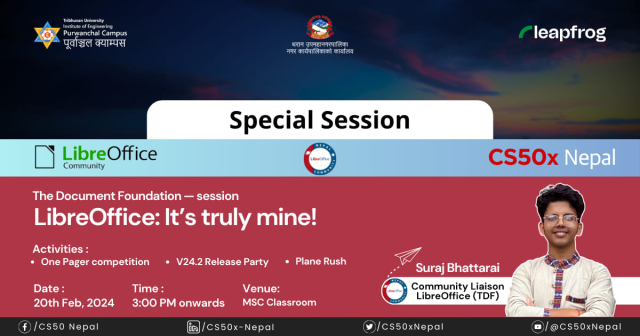
Our Nepali Community celebrated the #LibreOffice 24.2 Release Party with CS50x Nepal students 🥳 blog.documentfoundation.org/bl… #foss #opensource

LibreOffice reshared this.

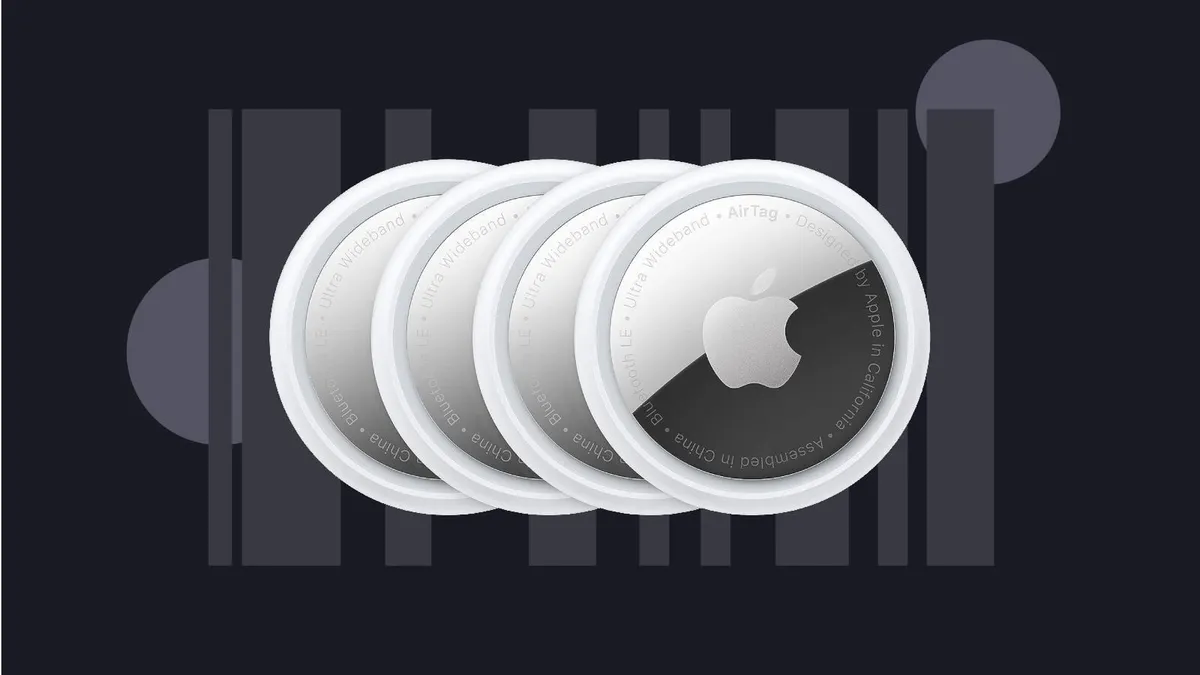
It's possible to build an app with zero tracking. 😎😎😎

But not every app developer does that.

Check out all the apps that track you and how you can stop this: ➡️ tuta.com/blog/app-tracking/

#Tuta #Gmail #Privacy

Don’t fuck with moon dust. No seriously, do not fuck with moon dust.

Absent any moisture or atmosphere, millennia of asteroid impacts have turned lunar regolith (soil) into a fine powder of razor sharp, glass-like particles. What’s more, the solar wind imparts an electric charge on the dust, causing it to cling to any and every surface it touches through static electricity. On earth, sand tends to get smoother over time as wind and water tumble the grains about, eroding their sharpness. Not so on the moon – lunar dust is sharp and deadly. This is Not A Good Time if you’re an explorer looking to visit our celestial neighbor.

During Apollo, the astronauts faced a plethora of unexpected issues caused by dust. It clung to spacesuits and darkened them enough that exposure to sunlight overheated the life support systems. Dust got in suit joints and on suit visors, damaging them. It ate away layers of boot lining. It covered cameras. Upon returning to the cabin, astronauts attempting to brush it off damaged their suit fabric and sent the dust airborne, where it remained suspended in the air due to low gravity.

Inhaling moon dust causes mucus membranes to swell; every Apollo astronaut who stepped foot on the moon reported symptoms of “Lunar Hay Fever.” Sneezing, congestion, and a “smell of burnt gunpowder” took days to subside. Later Apollo missions even sent a special dust brush with the team to help clean each other and equipment. We don’t know exactly how dangerous the stuff is, but lunar regolith simulants suggest it might destroy lung and brain cells with long-term exposure. 1
In fact the dust is so nasty that it destroyed the vacuum seals of sample return containers. We no longer have any accurate samples of lunar dust, “Every sample brought back from the moon has been contaminated by Earth’s air and humidity […] The chemical and electrostatic properties of the soil no longer match what future astronauts will encounter on the moon.” 2
Whats worse, the solar-charged dust gets thrown up off the moon’s surface via electrostatic forces. The moon doesn’t technically have an atmosphere, but it does have a thin cloud of sharp dust itching to cling to anything it can find.

And it probably isn’t just the moon. “A 2005 NASA study listed 20 risks that required further study before humans should commit to a human Mars expedition, and ranked "dust" as the number one challenge.” 3
The coolest solution I’ve heard about in next-gen spacesuit design is a mesh of woven wires layered into the suit. When activated, the wire mesh would form an anti-static electric field that repels dust. Quite literally a force field. 4
#astronomy #apollo #moon #lunardust

reshared this

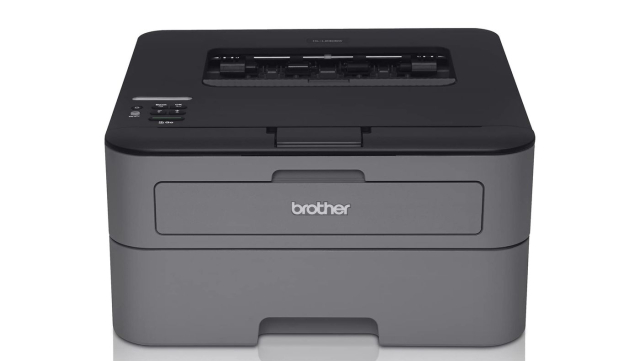
theverge.com/23642073/best-pri…

"We have the $270 Brother MFC-L2750DW, which adds a sheet-fed scanner, because my wife is a lawyer and scans things for judges or whatever she does with it. It doesn’t matter."

this is probably the best article i've ever read on the verge

Hello peuple d'#OSM, si y'a des gens partants pour faire un projet du mois sur les écoles on peut faire ça, on était deux ou trois motivés pour avancer sur ce sujet ici:

forum.openstreetmap.fr/t/proje…

#openstreetmap #écoles #teamProf #cartographie #mapping

This family of surfaces of constant negative curvature are shown tiled with triangles, mapped onto the surface from a tiling of the hyperbolic plane.

A map that preserves distances & angles is called an isometry. But how can we construct an isometry like this?

One way would be to find the geodesics on the surface, and map them to geodesics in the hyperbolic plane.

But in this case, it turns out to be easier to do something a bit different. A natural coordinate system on any surface of constant negative curvature is given by the “asymptotic curves” on the surface. These are curves whose tangents at each point lie in a special direction, where a plane that contains a normal to the surface slices the surface to produce a curve with zero curvature *at that point*.

If we call the coordinates whose grids line are asymptotic curves u and v, and call the angle between the grid lines ω(u,v), then any surface of constant Gaussian curvature K=–1 satisfies:

∂_{u,v} ω(u,v) = sin(ω(u,v))

And if we calculate the curvatures of the grid lines of varying u and v, they are:

–∂_u ω(u,v)

and

∂_v ω(u,v)

You might ask what I mean by the curvature of these lines: do I mean their curvature as “space curves” in R^3, which is just the magnitude of the rate of change of their unit-length tangent vector? Or do I mean their “geodesic curvature” within the surface, which measures how they change direction relative to a geodesic of the surface, which acts as a kind of standard for a curve of constant direction?

The nice thing is, for asymptotic curves (which is what these grid lines are) the two measures of curvature are exactly the same!

#GoToSocial bugfix release v0.14.1!

👢
🐛

github.com/superseriousbusines…

There was a bug in 0.14.0 which was causing SQLite-backed instances to sometimes become unresponsive, with lots of errors in the logs containing interrupted(9) (see github.com/superseriousbusines….

We poked around and this looks like an issue in our SQLite dependency, so we stepped down to the most recent stable version, and also added some code to prevent the problem from rendering an instance unresponsive.

No db migrations or config file changes between v0.14.0 and this version, so upgrading is as simple as updating your docker container or stopping GtS, untarring the release, and starting GtS again.

For instructions to update to this release from versions < v0.14.0, see the v0.14.0 release notes, but replace v0.14.0 with v0.14.1 throughout.

Thanks!

Other than the fresh new default, 46 will come with a fresh set of wallpapers to pick from. Ready for some new pixels?

blog.jimmac.eu/2024/gnome46-wa…

#gnome #gnome46 #release #inkscape #blender3d #python

This entry was edited (1 year ago)

This is essentially a mutual aid request. I’m looking for freelance work and really need people to share this with their networks. Thank you!

linkedin.com/posts/kaikatschth…

#mutualAid

No need to paraphrase. First paragraph says it all:

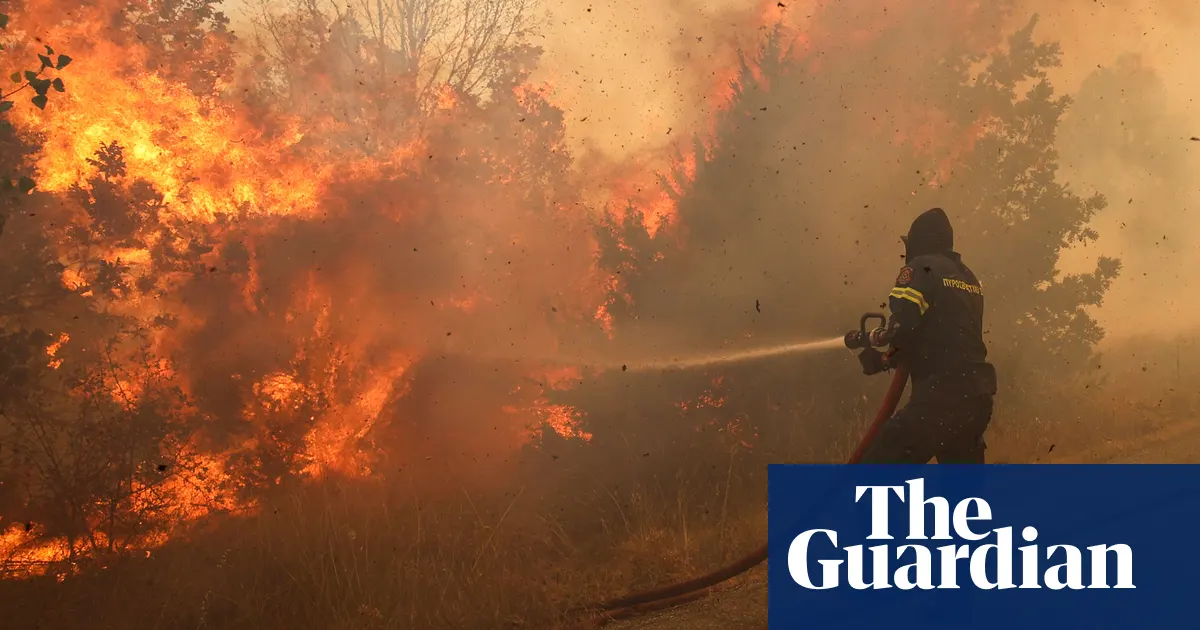
"Claims that artificial intelligence will help solve the climate crisis are misguided, with the technology instead likely cause rising energy use and turbocharge the spread of climate disinformation, a coalition of environmental groups has warned."

theguardian.com/technology/202…

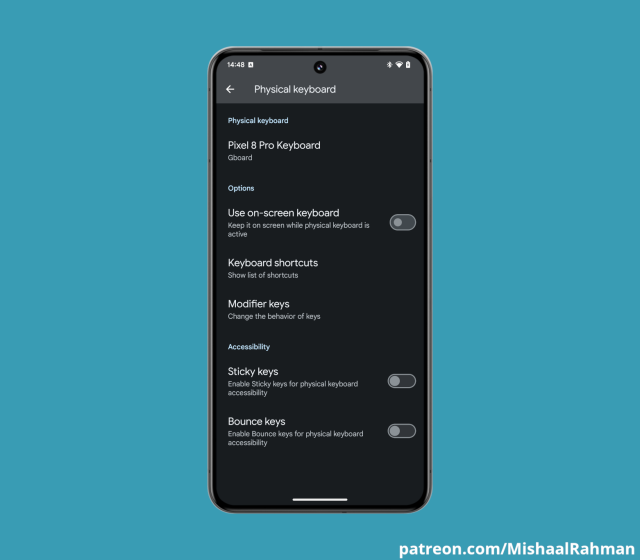
When you connect a physical keyboard to your device in Android 14 QPR3 Beta 2, you can now enable two new accessibility options: "sticky keys" and "bounce keys".

Sticky keys make it easier to enter keyboard shortcuts in quick succession. When you press a modifier key like Ctrl or Alt with sticky keys enabled, it'll stay pressed so you don't have to hold it down while pressing other keys.

Bounce keys lets the system ignore rapid, repeated presses of the same key.

in reply to David Goldfield

@DavidGoldfield I must agree with Bryan. FOr me in my work place for example, we use outlook web access. WHen entering email addresses or trying to select an email from a suggested result, until about 3 weeks ago, JAWS would tell me which address was entered. I could just press tab to confirm it, and move on. Now, with Speech and braille, JAWS just says collapsed, and I have to press Space, enter to collapse the list, and enter again, and even then, I have no way of knowing what I have just selected. I'm notgoing to go on a rant about it, but Considering how crucial email is in our work, the fact that I can't access triditional desktop apps is quite telling.
This entry was edited (1 year ago)

Tired: Justin Bieber
Wired: Heinrich Biber

We tend to think of 20th-century classical music as more experimental than what came before, and that's largely true, but there have been some astounding explorations in music for a long time — like this 1673 piece by Heinrich Biber. This suite for string orchestra starts out straight, but at 1:45 it bursts into polytonality.

Biber was a court musician in Salzburg, and a famous violin virtuoso of his day. This piece is called "Battalia à 10", or roughly "Battalion for 10". It depicts an army preparing for war, getting drunk, marching, and fighting a battle - and it ends with a "lament for wounded musketeers". The second movement is a quodlibet, a type of 17th century drinking song in which people sing different folk songs simultaneously. Biber titled it “The lusty society of all types of humor”, and it mixes Slovak, Bohemian, Austrian and German tunes playing in different keys. He wrote on the score "here it is dissonant everywhere, for thus are drunkards accustomed to bellow with different songs.”

The melody in the third violin part here is the German folk song "Kraut und Rüben haben mich vertrieben" (“cabbages and turnips have driven me away”) — a melody which J .S. Bach later used in his Goldberg Variations of 1741. Were people eating too many cabbages and turnips at that time in Germany?

youtube.com/watch?v=dMVI7z5GYR…

This entry was edited (1 year ago)