Search

Items tagged with: openSource


Take a technical dive into Open Document Format (ODF), the native format of #LibreOffice and available in many other office suites: blog.documentfoundation.org/bl… #foss #OpenSource


Digital Sovereignty in Practice: Web Browsers as a Reality Check


Reading in Servo’s latest weekly report that it’s now passing 1.7 million Web Platform Subtests, I started wondering: How much investment would it build it into a competitive, independent browser, in the context of all this talk on digital sovereignty?

Servo is an experimental web browser engine written in Rust, originally developed by Mozilla Research as a memory-safe, parallel alternative to traditional browser engines like Gecko and WebKit. After Mozilla laid off the entire Servo team in 2020, the project was transferred to Linux Foundation Europe, where it continues to be developed with minimal funding from individual donors and Igalia, a team of just five engineers. Servo’s progress demonstrates what’s possible with intentional investment in independent browser projects.

As initiatives like EuroStack propose €300 billion investments in digital infrastructure and researchers proposing comprehensive roadmaps for “reclaiming digital sovereignty” through democratic, public-led digital stacks, browsers are an ideal test case to ground these ambitious visions in reality.

The current browser landscape reveals how concentrated digital control has become. Roughly 75% of global web traffic flows through browsers based on Google’s Chromium engine; not just Chrome, but Microsoft Edge, Samsung, and dozens of others. Apple’s Safari dominates iOS but remains locked to their ecosystem. Firefox, once a genuine alternative, has declined to under 5% market share globally. This means American companies control how billions of users worldwide access the web. Every search, transaction, and digital service flows through infrastructure ultimately controlled by Silicon Valley. For societies valuing their independence and sovereignty, this represents a fundamental vulnerability that recent geopolitical events have made impossible to ignore.

Digital infrastructure is as important as energy or transportation networks. Unlike physical infrastructure, however, digital systems can be controlled remotely, updated unilaterally, and modified to serve the interests of their controllers rather than their users. Browsers exemplify this challenge because they’re both critical and seemingly replaceable. In theory, anyone can build a browser. The web standards are open, and rendering engines like Servo prove it’s technically feasible.

In practice, building browsers requires sustained investment, institutional coordination, and overcoming network effects that entrench existing players. If democratic societies can successfully coordinate to build and maintain competitive browser alternatives, it demonstrates their capacity for more complex digital sovereignty goals. If they cannot, it reveals the institutional gaps that need addressing.

Firefox offers important lessons about the challenges facing independent browsers. Mozilla has indeed faced difficulties: declining market share, organizational challenges, and ongoing technical issues. The organization has also alienated its most dedicated supporters by pivoting toward advertising, AI initiatives and cutting their impactful public advocacy programs.

However, Firefox remains the only major browser engine not controlled by Apple or Google, serving hundreds of millions of users worldwide. Its struggles reflect structural challenges that any alternative browser would face: the enormous engineering effort required to maintain web compatibility, the network effects favouring dominant platforms, and the difficulty of sustaining long-term technical projects through diverse funding sources.

Servo’s recent progress illustrates both the potential and the resource constraints of independent browser development. Since 2023, Igalia’s team of just five engineers has increased Servo’s Web Platform Test pass rate from 40.8% to 62.0%, added Android support, and made the engine embeddable in other applications, even demonstrating better performance than Chromium on Raspberry Pi. This progress on a shoestring budget shows what focused investment could achieve, while also highlighting how resource-constrained independent browser development remains.

Yet, building a competitive alternative browser infrastructure would require substantial but manageable investment. Here is a ballpark estimation I made based on existing browsers: Annual operating costs would include:

  • Engineering Team of ±50 developers, designers, managers etc.: €15 million.
  • Quality Assurance and Testing Infrastructure: €10 million
  • Security Auditing and Vulnerability Management: €10 million
  • Standards and Specification Development: €5 million.

At this point I would just round up to around 50-70 million annually, which I’m sure would comfortably cover everything I missed. The proposed EuroStack initiative already envisions €300 billion over multiple years. Browsers represent a tiny fraction of what democratic societies already spend on strategic infrastructure. This calculation proves that the cost isn’t the primary barrier: the European Space Agency for example has had a budget of €7.8 billion in 2024. Europe can afford to build a browser.

It would probably take around 3-4 years to fully build an alternative browser from scratch, less so if it’s a fork of one of the existing ones. Forking Chromium/Gecko or building upon Servo’s foundation could reduce this timeline to 18-24 months for basic functionality, though achieving full web compatibility and market readiness would still require several additional years of refinement. The initial development sprint needs to be followed by a sustained engineering effort needed afterward, for maintaining compatibility with evolving web standards, fixing security vulnerabilities, and keeping pace with performance improvements.

The core challenge isn’t technical; it’s institutional. How do you sustain long-term technical projects through democratic processes that span multiple countries with different priorities, resources, and political systems? Successful models exist. The European Space Agency coordinates complex multi-national technical projects. CERN manages cutting-edge research infrastructure across dozens of countries. The Internet Engineering Task Force maintains critical internet standards through voluntary coordination among global stakeholders. The “Reclaiming Digital Sovereignity” proposal specifically addresses this challenge by advocating for “new public institutions with state and civil society representation” to govern universal digital platforms, alongside “multilateral agreements on principles and rules for the internet” as safeguards for autonomous, democratically governed solutions.

Browser development could follow similar patterns: international frameworks that respect national sovereignty while enabling coordinated action, governance structures that balance technical expertise with democratic accountability, and funding mechanisms that provide stability across political cycles. The Reclaiming Digital Sovereignity’s report’s emphasis on “democratic international consortia” and “public knowledge networks led by a new public international research agency” provides concrete institutional models that could be adapted for browser development. Germany’s Sovereign Tech Agency represents another model for public investment in digital infrastructure for the public interest.

With all that being said, browsers represent one of the more achievable digital sovereignty goals. They’re built on open standards, rely heavily on open source components, and face fewer network effects than platform-based services. Other areas of the technology stack would be far more challenging, and far less open.

Success here would demonstrate that democratic societies can coordinate effectively on complex technical infrastructure and pass the first hurdle. Failure would reveal institutional gaps that need addressing before attempting more ambitious digital sovereignty goals. Democratic digital sovereignty is challenging but feasible, if societies are willing to think institutionally, invest sustainably, and build incrementally rather than trying to recreate Silicon Valley with different ownership structures.

Ultimately, the real question isn’t whether democratic societies can build alternative technologies, but whether they can build the democratic institutions necessary to govern them effectively across the complex realities of international coordination, competing priorities, and long-term sustainability. I believe browsers offer an ideal place to start testing these institutional innovations. The technical challenges are surmountable. The institutional ones remain to be proven.

Views expressed are personal and do not represent any organization.

#digitalSovereignity #funding #internetStandards #openSource #publicInterest


Oh, wow! The German IT Planning Council decided yesterday to consolidate a bunch of disparate communication tools into a unified system based on Matrix and MLS.

Here's the record of their decision and the other options they considered: gitlab.opencode.de/it-planungs…

#Matrix #OpenSource #FOSS #ProtocolsNotPlatforms #DPI #DPG


We take it for granted how lucky we are to have #opensource software.

It really is magical because not only the source code is publicly available, it's free.

Please, do your part. donate 💰

@davx5app is a good example.


Open Document Format (ODF) is the standard format for #LibreOffice. Learn about ODF compliance and interoperability in our latest blog post: blog.documentfoundation.org/bl… #foss #OpenSource #openstandards


Just listening to the speech of the @EUCommission's DG Connect Director Thibaut Kleiner, who celebrates #FOSS and the global ecosystem of #opensource developers as well as the #NGI programme but somehow his convictions seem to not be enough for the Commission to massively scale up investments in the #digitalcommons. What am I missing? 🤔

#NGIForum25


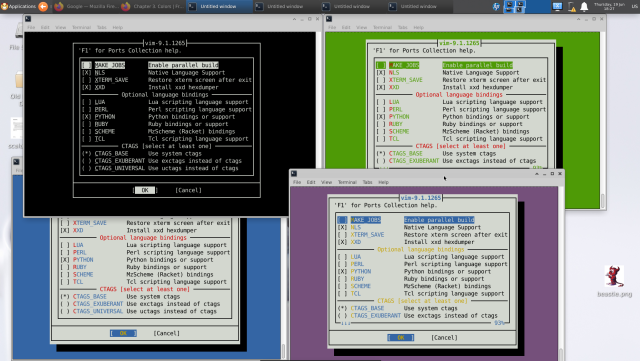
#FreeBSD provides the Ports Collection, a convenient way to install applications. Some ports allow users to configure options before building and installing. By default, this configuration is done through an interactive menu in the terminal.

To improve readability and #Accessibility especially for users with low vision or color blindness, it's important to offer simple and customizable color options. These features have recently been implemented and documented in the preview version of the FreeBSD Accessibility Handbook:
freebsd-accessibility-9d667f.g…

The next step is to extend these features to all terminal-based graphical components.

I'd love to hear from you:
Do you use any accessibility features in the terminal?
Which color-related assistive technologies make the biggest difference in your daily workflow?

Together, we can make FreeBSD more accessible for everyone. #ThePowerForEveryone #FreeBSD #Accessibility #OpenSource #LowVision #ColorBlindness #AssistiveTechnology #AccessibilityMatters


“The reality is also that money doesn’t solve all problems, unfortunately. It can create wrong incentives, it can increase stress and pressure, it can rip communities apart, it can do good in the short term but harm in the long term. We need to take all of these factors into account, if we want to channel support into our shared digital infrastructure, into #OpenSource communities.”

6/ #UNOpenSourceWeek


Da gibt es die Initiative

stifter-helfen.de/
Sie vermitteln vor allem #Software #Lizenzen an #NGO's oder gemeinnützige Vereine zu Sonderkonditionen.

Sooft ich mich dort in den letzten Jahren für einen Verein informiert hatte, begegneten mir hauptsächlich Angebote für #Microsoft-Produkte.

Nun war ich auch mal beruflich in einem gemeinnützigen Unternehmen beschäftigt, welches solche Sonderlizenzen direkt von Microsoft in Anspruch nahm. Das ging ne Weile gut, bis Microsoft die Regeln änderte...

Das ist ein Grund, weshalb ich es als Vereinsvorstand ablehne, auf solche Sonderangebote einzugehen.

Nun hat stifter-helfen grad nachgefragt, warum unser Verein denn die Dienste nicht nutzen würde. Auf der Webseite heißt es, es wären über 90.000 Organisationen in ihren Datenbanken....

Eine Frage im Antwortformular lautet:

Was müsste sich ändern, damit Stifter-helfen wieder interessant für Ihre Organisation wird?

Da habe ich folgendes eingetragen:

Gemeinwohlorientierte, datenschutzmäßig unumstrittene OpenSource Software offerieren, die der Richtlinie Public Money - Public Code entspricht.

Ich gehe davon aus, dass unser #Verein nicht der Einzige ist, bei dem nachgefragt wird 😎
publiccode.eu/de/
#PublicMoneyPublicCode #Förderung #Gemeinnützigkeit #digitaleGesellschaft #OpenSource


🌍📄 Docs, l’éditeur de texte libre et collaboratif de La Suite numérique, a été reconnu "bien public numérique" (Digital Public Good) par la Digital Public Goods Alliance ce matin à l’ONU lors de la semaine Open Source des Nations Unies.

🔗 digitalpublicgoods.net/r/docs-…

Ce label marque une étape importante pour cette solution issue du partenariat franco-allemand-néerlandais 🇫🇷 🇩🇪 🇳🇱

#LogicielsLibres #OpenSource #DigitalPublicGoods #ONU #Europe #Docs #SouverainetéNumérique

cc @numerique_gouv


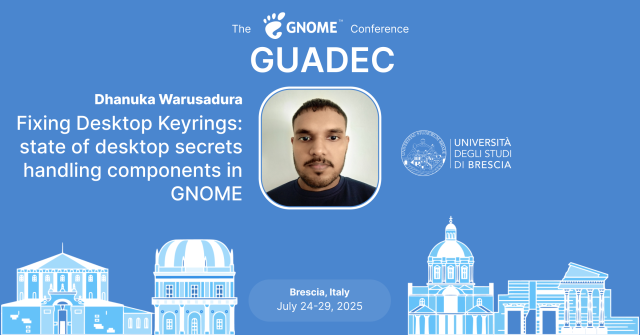
🔐 "Fixing Desktop Keyrings"
with Dhanuka Warusadura at #GUADEC2025
📅 24 July 🕒 12:30 CEST 📍 Brescia
🧩 GNOME 49 plans to replace gnome-keyring with a new D-Bus Secret Service. Here’s what’s changing.

🔗 events.gnome.org/event/259/con…

#GNOME #Security #Keyring #OpenSource


🍜 "State of libsoup"
with Patrick Griffis at #GUADEC2025
📅 24 July 🕒 12:30 CEST 📍 Brescia
🔧 From 3.0 to what’s next—Patrick gives an update on GNOME’s HTTP library libsoup.

🔗 events.gnome.org/event/259/con…

#GNOME #libsoup #Networking #OpenSource


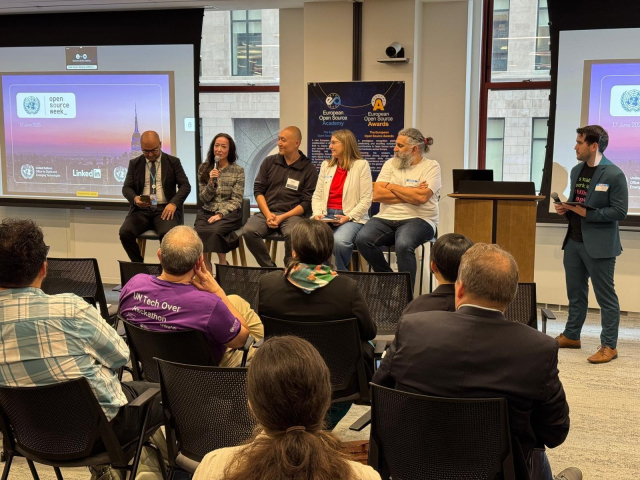
#EOSAcademy hosted a session on
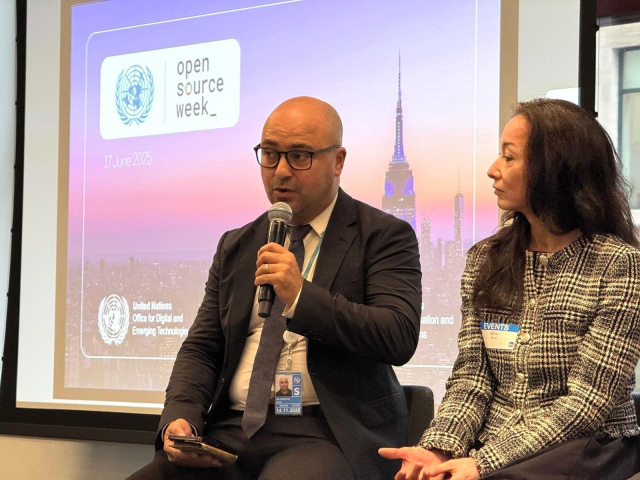
#OpenSource Skills in the #AI Era – Perspectives from the European Open Source Academy at #UNOpenSourceWeek

The panel was moderated by @nicholas gates ( @OpenForumEurope ) with excellent insights from : David Cuartielles ( Malmo University), @Amandine ( @matrix ), Sachiko Muto (RISE, OpenForum Europe), Walid Mathlouthi ( International Telecommunication Union), Joshua Tan (Metagov).

Read more about the Academy: lnkd.in/eFG3ZQwk


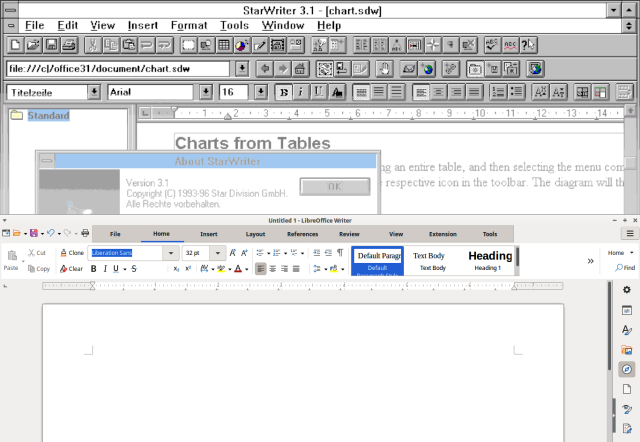
We've come a long, long way... (Top screenshot is StarOffice from the mid-'90s, and bottom is LibreOffice today.) Learn more about the software's roots, with Stefan Soyka: blog.documentfoundation.org/bl… #foss #OpenSource #freesoftware


Who uses Open Document Format, the native format of #LibreOffice? Well, Argentina, Belgium, Brazil, Denmark, Finland, France, Germany, India, Italy, Netherlands, Slovakia, South Africa, Spain, Switzerland, Taiwan, UK and Uruguay for starters: blog.documentfoundation.org/bl… #foss #OpenSource #freesoftware #openstandards


💬 Zkuste otevřený a bezpečný chat bez reklam a sledování.
MXChat.cz běží na Matrixu – otevřeném standardu pro komunikaci, kde máte kontrolu nad svými daty.

📱 Alternativa k WhatsAppu nebo Messengeru, ale bez šmírování a algoritmů.
🔐 Soukromí je základ, ne funkce navíc.
👥 Vhodné pro přátele, rodinu i komunitu.
✅ Snadné přihlášení přes Oscloud.
✅ Pravidené aktualizace

➡️ chat.mxchat.cz
➡️ web.mxchat.cz
Přidejte se – otevřená komunikace má smysl.
#mxchat #opensource


Open Source Accessibility Summit!
Sunday, Oct 12, Raleigh, NC USA
"Improving the accessibility of open source software"
2025.allthingsopen.org/open-so…
#opensource #oss #a11y #accessibility #events #event #raleighNC


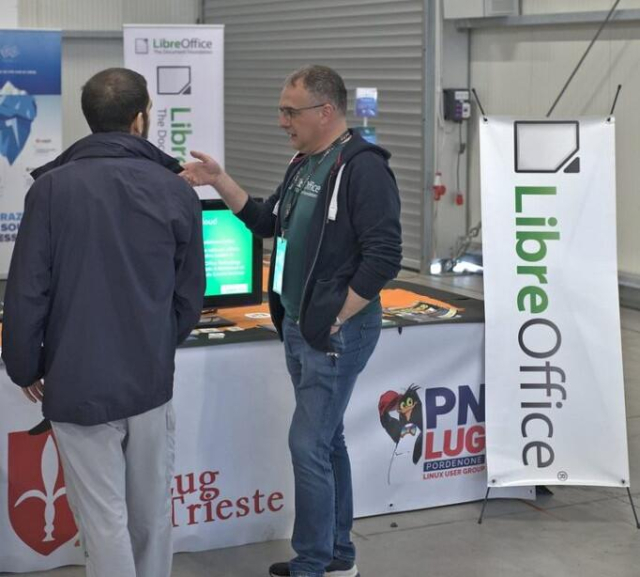
LibreOffice isn't just an app – it's a worldwide community of people who work on code, documentation, QA, design, marketing and more. Meet us at local events, like recently in northern Italy: blog.documentfoundation.org/bl… #foss #OpenSource


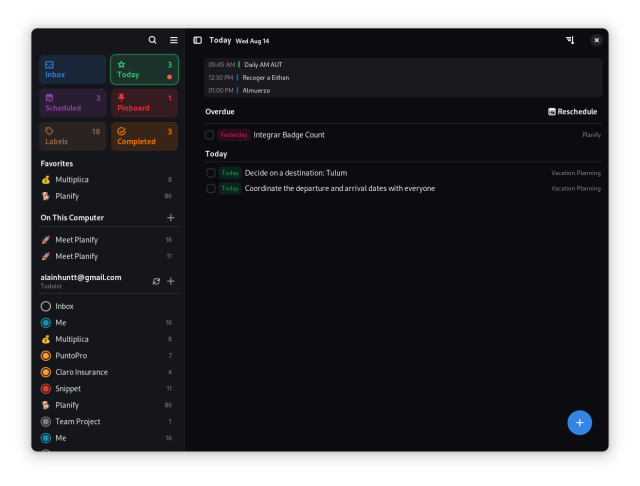
🗓️ Planify mi bylo doporučeno v komunitní místnosti o #triliumnext – a musím říct, fakt super!
Konečně krásná co padne do #Gnome, jednoduchá a funkční aplikace pro správu úkolů, která se napojí na #Nextcloud #oscloud přes CalDAV.

Nextcloud (backend) + DAVx⁵ + Tasks.org (Android) + Planify (desktop)
Funguje to skvěle dohromady.

#FOSS #Planify #Nextcloud #CalDAV #Linux #OpenSource #oscloud
github.com/alainm23/planify


Our next major #LibreOffice release is coming up in August! Help us to test the new features and iron-out any wrinkles before the release: qa.blog.documentfoundation.org… #foss #OpenSource


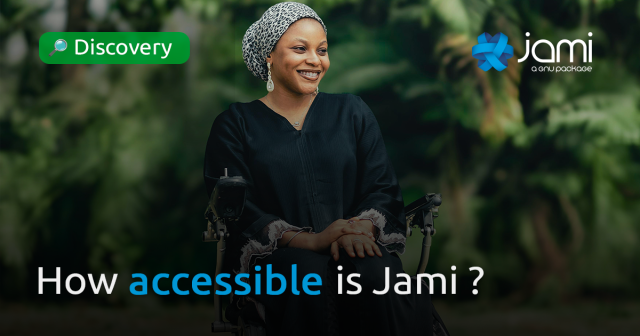
🌍 Accessibility matters for everyone.

Whether permanent or temporary, disability can affect us all at some point in our lives. That’s why accessibility isn’t a bonus feature: it’s a necessity.

At Jami, we’re committed to making private communication truly inclusive. From screen reader support to keyboard navigation, here’s where we stand and where we’re going: jami.net/how-accessible-is-jam…

#Accessibility #Inclusion #TechForGood #OpenSource #Jami #PrivacyMatters #AccessibilityMatters


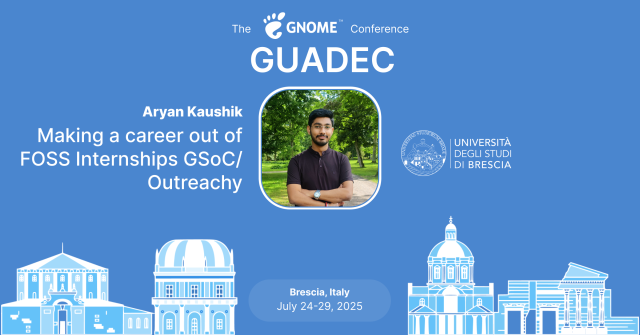
🎓 "Making a career out of FOSS Internships (GSoC/Outreachy)"
with Aryan Kaushik at #GUADEC2025
📅 24 July 🕒 12:05 CEST 📍 Brescia

💼 FOSS can lead to real careers. Aryan explains how GSoC & Outreachy changed lives—and why you should get involved too.

🔗 events.gnome.org/event/259/con…

#OpenSource #GSoC #Outreachy #GNOME


Tired of software tracking you, and using your content to feed AI services? Switch to free and open source software – like #LibreOffice, which is backed by a non-profit (@tdforg) and has zero interest in your data: blog.documentfoundation.org/bl… #foss #OpenSource #privacy


All open source projects can use more contributions, so here are some places where you can start for @rockylinux !

This page has a list of active Special Interest Groups, like the Cloud or Security SIGs. There's also a list of areas where you can lead the change in making a SIG for it, like for embedded systems or storage applications!
wiki.rockylinux.org/special_in…

#RockyLinux #FlockToFedora #FedoraFlockSponsor #Linux #OpenSource


Want to start a Repair Café in your area?

You can!

Repair Café International enables local groups around the world to start their own:

repaircafe.org/en/join/start-y…

@RepairCafeInternational supports #EndOf10 to prevent #eWaste!

#RCInternational #RepairCafe #RightToRepair #Linux #FreeSoftware #OpenSource #FOSS #FLOSS #Windows #Win10