Anyone self-host PeerTube?
I love YouTube, and by that I mean watching it; I would never upload there, especially now, with all of their silly censorship of things that don't even need censoring.
I feel like I need a PeerTube instance.
Anyone self-host PeerTube?
I love YouTube, and by that I mean watching it; I would never upload there, especially now, with all of their silly censorship of things that don't even need censoring.
I feel like I need a PeerTube instance.
About Bluesky and federation:
Edit: There might be some mistakes, and my information could be outdated, but the point still stands - Bluesky wasn't built on 100% federation from the start.
I've been wondering about Bluesky's decentralization again. I can't think of any reason why I'd want to self-host Bluesky in its current form. I cannot 100% self host "my own Bluesky".
Their main selling points for building their own protocol were easier migration and better discoverability, but right now there's no simple way to migrate my Bluesky account to my own instance. And hosting the centralized parts yourself isn't really possible, or if it were, not affordable, they haven't made that feasible, by design, it seems.
Even if you self-host a PDS, Bluesky's Relay only indexes up to 10 accounts from it. You can run more, but they won't federate, the central infrastructure decides what gets seen. They control this (source: docs.bsky.app/blog/self-host-f….). You can self-host a PDS (Personal Data Server), but you still depend on Bluesky's centralized Relay and AppView. There's no production-ready alternative infrastructure from what I gather.
It feels like I'd be renting a room in a hotel that someone else is running anyway, when I want my own hotel.
If Mastodon gGmbH vanishes tomorrow, my instance keeps running and federating with everyone else. If Bluesky PBC vanishes, the ecosystem would need to scramble to stand up replacement infrastructure that doesn't really exist yet.
ATProto keeps getting evaluated on its promises while other systems get evaluated on their merits. The "portability" selling point depends on infrastructure that isn't mature enough to actually catch you if Bluesky falls.
I trust W3C, the builders and fathers of the World Wide Web, ActivityPub and the Fediverse.
#Decentralization #SelfHosting #SelfHosted #Mastodon #Fediverse #Bluesky #Servers
For a high-level introduction to data federation, as well as a comparison to other federated social protocols, check out the Bluesky blog.docs.bsky.app
Jeff Bezos is saying the quiet part out loud. They want to kill local computing.
You will own nothing and be happy. You will rent your computing power from the cloud. You pay a subscription for the privilege of using a computer.
AI demand is artificially spiking DRAM prices and Big Tech is pushing "AI PCs," the squeeze is on to force us into a rental model.
Reject this future. 
Keep your hardware local.
Run #Linux. 
Own your data.
The "cloud" is just a landlord for your data.
#NoAi #FOSS #OpenSource #Privacy #SelfHost #SelfHosting #BigTech #RightToRepair #RAM #Amazon #EatTheRich
SelfHosting week2, phase 1.
Setup: Hostinger provider, KVM2 VPS plan. 2 CPU cores, 8 GB RAM, 100 GB storage, Debian 12, YunoHost 12.1.39 stable, WordPress 6.9 branch.
WordPress procedure, I assumed it had to be the easiest, where I am mostly skilled in; obviously, it wasn't.
First of all, because YunoHost installs a plugin called "Companion auto update" which gives an error just on admin page. F-off to it. In that case I deactivated it through terminal, but I found the error's origin thanks to an LLM which interpreted the log for me. If I were unexperienced with web sites advanced configurations, I couldn't have figured it out.
My current multilingual approach on production website, has been a very satisfying experience but I'm noticing it requires too much attention in long term; full-site editing (gutenberg), manual template switch for each English or Italian post, some custom code to manage search and taxonomies. But any deep maintenance could break everything.
So I decided to follow an advice from @2ndkauboy a German blogger who wrote about MultiLingualPress, plug-in connected to MultiSite WordPress platforms during Advent period in his "Plugin Advent Calendar".
Having a VPS now I assumed to be 100% free to perform Multisite and began to build it: YunoHost's WordPress installer asked me if I wanted MultiSite or not, I confirmed YES.
The first obstacle was it did not work as I desired: my idea was to get "domain.extension/" as main site while "domain.extension/english" as second language website but YunoHost refused to place WordPress into the main directory, namely subdomain.domain.extension/, with multisite setup on.
So I removed WordPress from @yunohost by command: "sudo yunohost app remove wordpress"
Re-installed through the same script, sudo yunohost app install wordpress, this time answering "NO" to multisite option, and it accepted to provide the / directory as location.
Enabled MultiSite manually by editing wp-config.php file and installing it, then added extra-lines in the wp-config as well, after the network creation, using subdirectories for multisite setup. YunoHost uses nginx, so I went to modify the subdomain's WordPress nginx configuration; in that case as well, LLM helped me.
But then came trouble: I was logged off WordPress admin. No way to recover the password, no way to access its dashboard.
So, I gave up.
Tried another day: remove, re-install, set MultiSite manually. This time I used another e-mail address and when I got stuck, I managed to reset its password. But after setting main and secondary web sites, the result was wp-admin on main site worked, while /english/wp-admin returned an error: "ERR_TOO_MANY_REDIRECTS".
No way to make it work at all!
So, I resigned. Removed, re-installed with multi-site on natively, by setting the path to subdomain.domain.ext/wp/
having /wp/ and /wp/english/ seemed to be the less evil.
In the end the too_many_redirects error was still there, and disappeared only when I added this string:
try_files $uri $uri/ /index.php?$args;
into the nginx WordPress-specific configuration, under the "location" setting.
Not bad, I assumed it was OK.
But installing MultilingualPress, the plugin suggested by the German blogger of before, wp-admin returned a critical error. Maybe a database, or something else.
Increased the php memory to 256M in wp-config.php and the multilingual press then resulted as active, in the network setup.
So I tried to connect the two blogs, setting related languages and trying to flag relations one another.
But nothing worked. The relations weren't flagged, and going to network / plugins, returned an error again.
So, in the end, I've resigned at the moment, to create two subdomains. English and Italian. Where I have two separate WordPress installations.
I'd like to try again the Multisite experience, though.
#accessibility #a11y #debian #multilingual #multisite #SelfHost #SelfHosting #WordPress #Yunohost
#SelfHosting week 0, phase 1B: DNS records settings. Performed @_elena 's instructions on her "self hosting for newbies" part 2. Except for the post-install as I run it through terminal and not through web UI. For an ms-dos-born it's easier to perform a simple command such as "yunohost tools postinstall" rather than go to web, then type, then search for the various UI elements.
Everything went smooth, except for letsencrypt at first. But in the end it seems to have worked. It got stuck because hostinger panel didn't get one suggested parameter, the numeric 3600, every record has a parameter which is 3, 4 or 5 numbers.
Created the domain and subdomain to point it to yunohost admin interface, and then obstacle came.
Opening browser to subdomain, just returns "connection timed out".
Checked for nginx parameters through yunohost terminal, using the desired Sudo commands.
Then, "sudo yunohost diagnosis run"
"sudo yunohost diagnosis show --issues --human-readable"
and I got explanation on reverse dns which was wrong.
After that, I searched on the web (and on AI, I admit) the position on hostinger panel to set them, and I found "set tpr record"
placed the desired domain name.
And now it's time to wait for propagation. But what about the "connected timeout", in the article posted in blog.elenarossini.com no such obstacle was mentioned.
I'm back to my 20s when I spent the night (it's almost 4 in the morning), learning commands.
Last but not least, accessibility issue: I'm using an app called WebSSH pro, downloaded on app store. Set it up, and VoiceOver for iOS does not read the keys I press on keyboard so I'm very slow to type commands there. Pc is better. In a few hours I'll try hostinger's terminal.
UPDATE: I have just found I set one DNS wrong, now I'll wait for it to propagate. Next update in some hours. I placed a useless number. Such as 72.162 (wrong) instead of 72.62 (right).
Like when you start developing on your own and everything crashes due to a missing semicolumn in a string of code.
There is a recently discovered critical vulnerability that affects all Matrix homeservers of the Conduit lineage. If you're using a Rust-based Matrix server (which are basically Conduit and forks), please urgently upgrade to the following versions:
If you're not able to upgrade right now, you should urgently implement this workaround in your reverse proxy.
Attackers exploiting this flaw can arbitrarily kick any user out of a room, join rooms unauthorized on the same server, and can also ban same-server users. They effectively constitute a severe denial of service from an unauthenticated party, and it has been exploited in the wild.
# Continuwuity 0.5.0 > _there just happens to be a lot of fires to put out recently_ We're thrilled to announce Continuwuity **v0.5.Ellis Git
When you #selfhost something publically, do you trust it's usermanagement? It's password protection?
Or do you add more things yourself, like ratelimiting or a central auth service (like Authelia e.g.).
Super přednáška @Štěpán Škorpil ukazující jak na #selfhosting
Co nasadit a jak se k tomu dostat z PC a telefonu v kostce
My way of rebelling against techbros and autocrats:
December 2024: quit all Big Tech platforms and start #selfhosting essential services
December 2025: write guides for newbies about how to self-host
I'm also in discussion with a blogger I admire to start a podcast about tech... where we'll focus on solutions (instead of problems)... aiming to inspire others to join in...
It's been a really heavy year but these little acts of rebellion give me hope ✨
I'm going to admit that I am doing something immature in my #homelab and I'm looking for opinions. I've got multiple #XCPng hosts, all using local storage. I have no NFS or iSCSI storage. That's kinda silly. Shared storage is super useful and I'm literally not using it.
Unless I go to some serious effort to make a high-performance SAN, I expect network storage performance to be so-so for VM storage, but maybe I'm too pessimistic. I currently only have copper gigabit in the rack. No fiber, no 2.5G copper or anything like that. I'm not sure if that's going to be viable for NFS or iSCSI.
I could dedicate a host to running TrueNAS Core with a bunch of storage. But what has always bugged me about this is that my storage host becomes a single point of failure for all the compute nodes. #TrueNAS is super reliable but everything has to reboot once in a while, and these stupid enterprise-grade servers take anywhere from 4-8 minutes to boot. If I had a single storage node, and I needed to reboot it for an OS upgrade, everything would hang for a while. That's no good. Not updating the OS on the storage system is also not good.
So what am I supposed to be doing for shared storage on a #Xen cluster? How do I avoid a storage host becoming a single point of failure? How do you update and reboot a storage node, without disrupting everything that depends on it?
Ok so hey #SelfHosting
I want a #SelfHosted web-type Office Suite ala Google Sheets/Docs and I don't want it to be part of some gigantic resource-chewing albatross like #NextCloud
I would like to do all my Word Processing and Spreadsheeting and so forth through a web interface, which is served from my #Debian server (docker is fine) and saves the documents as normal files in a defined directory.
Does such a thing exist? I do NOT need feature-rich, I do not need it to save MSOffice docs that I can send to a printing shop with all bugs intact, I just want to stop losing shit to hard drive wipes, which I'm sorry but nuking my hard drive is a lifestyle choice at this point and I don't care what you think about it.
I have had the thought that maybe #LibreOffice has some sort of plugin or something which could store files in an Object Storage type thingy that I could self-host instead, cause I've been planning to get some sort of bucket online since forever...
@arcanechat Containers have solved this problem of compatibility, if you want more self hosters to run your stuff you make a simple docker compose example.
I had a cheeky comment prepared for today, saying that you shouldn't rely on Cloudflare if you can afford it, and that you don't truly self-host when you use it, but I could not post it because one of the services I don't self-host —my Mastodon instance— depends on #Cloudflare, too. 😅
People who self-host (anything, not just Mastodon). Are you running services at your house? If so, are you hiding them behind a VPS that tunnels to your home's IP?
CC @neil , because you're the first person I thought of that would be able to answer.
Hey all you selfhosters and homelabbers. When you are in need of a new fancy domain, where du you get it und how much d you roughly pay for it monthly. Are there any tld's which are really cheap? I mean there really seem to be people out there collecting that stuff and i think that must be quite expensive when you collect exessively.
Question for those of you who host a LLM by themselfs with Ollama, llama.cpp and use it for example for generating alt texts for images.
What LLM do you recommend? Which one generates a good description for screen reader users with the least amount of computing?
Whats your experience with that? Bonus points for LLM's which perform really good in CPU only situations.
Ubiquiti is using mongodb 3.6 in its installation instructions for self-hosting the UniFi controller.
Support for mongodb 3.6 ended in April 2021, as far as I can tell.
So while I've got an up to date UniFi installation, the database behind it is *very* old.
Updating mongodb to something more modern (e.g. 7) is painful.
Very painful.
Fortunately - with lots of backups - uninstalling mongodb 3.6 and purging unifi, then installing mongodb 7 and reinstalling unifi, then restoring unifi from backup, worked.
#Linux #FOSS #selfhosting
The self hoster's paradox...
Everything working well: "I'm bored, there's nothing to play with 🥱"
Something breaks: "This is not how I want to spend my Sunday night, why do I do this 😭"
#selfhosting #fediadmin #homelab
Hey @delta! Reading this delta.chat/en/2025-05-22-brows… got me thinking. I live in Firefox but miss Chrome’s one-click “Install PWA as app”. What about a Tauri-based helper + a Firefox extension that wraps a PWA into a desktop app in one step? Hosting stays light: the PWA is cached; relays/self-hosted instances can serve the client. Keeps control with admins. Interested? 👍🏻
#Firefox #PWA #Tauri #DeltaChat #FOSS #OpenSource #SelfHosting #WebExtensions
As part of the project to port Delta Chat Desktop from Electron to Tauri1, we’ll showcase a setup where our Desktop app runs in Firefox and does not depend on Electron or Chromium anymore. This vid...delta.chat
In early September, The Matrix Foundation homeserver went down.
I'm extremely proud of our SRE team. They had a Disaster Recovery Plan and monthly exercises to apply it, resulting in no data loss despite a 24h outage.
I've learned a lot about how to properly backup/restore a Postgres database when writing this post with SREs. We also learned how to better prevent and be resilient to human error.
Thanks all for the hugops during the outage!
matrix.org/blog/2025/10/post-m…
Matrix, the open protocol for secure decentralised communicationsMatthew Hodgson (matrix.org)
TIL that the president of Signal believes that people who run Mastodon and/or Matrix servers do so "in most cases" on hyperscaler* infrastructure.
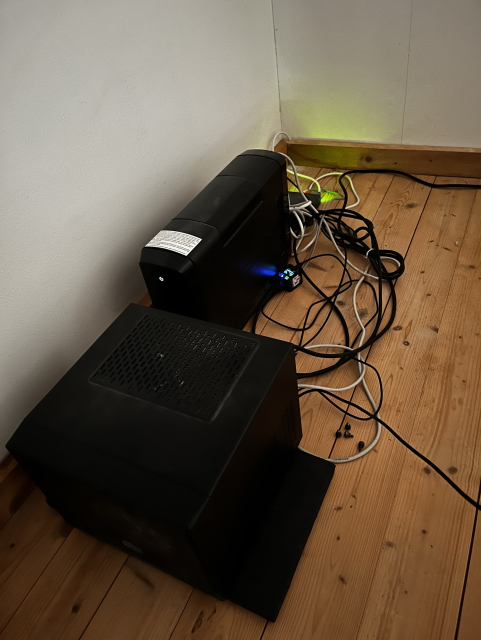
This is my Mastodon server. And its UPS. And its networked KVM for when things get really hairy.
It's also my Matrix server. And Nextcloud. And Git. And Home-Assistant. And Jellyfin. And SearXNG. And Peertube.
When people objected to her claims, she doubled down and proclaimed condescendingly that we "don't have a clear understanding of this space".
TIL that I don't feel confident in recommending people to use Signal. Something's very off here.
*) "hyperscaler" basically means the big cloud infra providers with provisioning APIs that allow you to scale your resources up/down automatically with usage
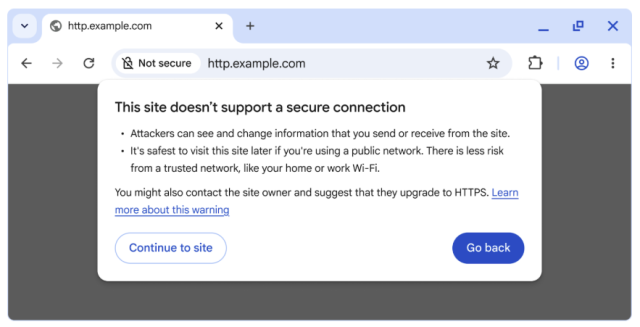
Google is going to make HTTPS required by default in Chrome in a year.
In the post there is quite a bit of talk about the problem of obtaining a cert for local network names. Hopefully their push to make everything-HTTPS will include local network addresses too. We really badly need it.
They kind of seem to say they will, but it's all talk until shown otherwise: "In the future, we hope to work to further reduce barriers to adoption of HTTPS, especially for local network sites."
security.googleblog.com/2025/1…
#chrome #security #selfhosting
One year from now, with the release of Chrome 154 in October 2026, we will change the default settings of Chrome to enable “Always Use Secu...Google Online Security Blog
Sending mail from residential ip be like:
It's easily solvable using a "free" SMTP relay. But the privacy benefits of self-hosting are lost.
I'm using smtp2go to deliver to outlook and gmail. I have no idea if smtp2go is good or no. Do you have any recommendation?
#mail #SelfHosting #email #relay
Today's AWS debacle is the perfect example of the reason why in the last few years I started to be less enthusiastic about Signal, and more oriented to federated or even P2P solutions like XMPP and Jami. I wrote about it already:
gagliardoni.net/#im_battle_202…
Signal was down for few hours today, after an outage that affected AWS:
mastodon.world/@Mer__edith/115…
Let's ignore for a second the blind reliance on AWS or any other cloud provider. In a decentralized system, this would not have happened, or at least it would have not impacted so many users.
Yes, I am a cryptographer myself, I know that Signal's encryption is the best. But encryption is not everything. Availability issues, geopolitical troubles, risk of enshittification, limitations on users' freedom to use and control the software lead to a lack of trust, even in a supersecure solution. And I say that with honest admiration for the folks at Signal, who are doing a great job.
May they prove me wrong over and over again.
#signal #im #aws #amazon #privacy #security #digitalsovereignty #selfhosting #fediverse #federation #p2p #enshittification #xmpp #jami #politics #opensource #freesoftware #libre
Which self hosted website uptime monitoring tool are the cool kids using nowadays?
On November 1st 2025 I’m going to dismantle the entirety of infrastructure that powers tt-rss.org, cgit, this forum, and other related sites.Tiny Tiny RSS: Community
So among the various things i #selfhost is my NAS. It's just a desktop that I installed a nice disk controler and some 12K SAS drives and #TrueNAS. But it lives, like a lot of my kit, in the garage. And it's hot in the garage tonight. Ambient air temp is like 82F/28C at 23:00 at night.
Most of the time it's fine. CPUs tend to run around 45C just doin normal stuff. But when I do an scp of a film I've digitized on my laptop, it goes over gigabit ethernet and that seems to warm up the CPUs. For the whole like 45-90 seconds the scp is running, the cores get super hot. Then it calms down.